

How to Care for a Watch: Daily Habits That Extend Its Life
Small daily choices—how you set it down, when you rinse it, how you store it—often matter more than occasional “deep care.” This guide focuses on practical habits that reduce wear, protect water resistance, and keep your timepiece feeling consistent over time.
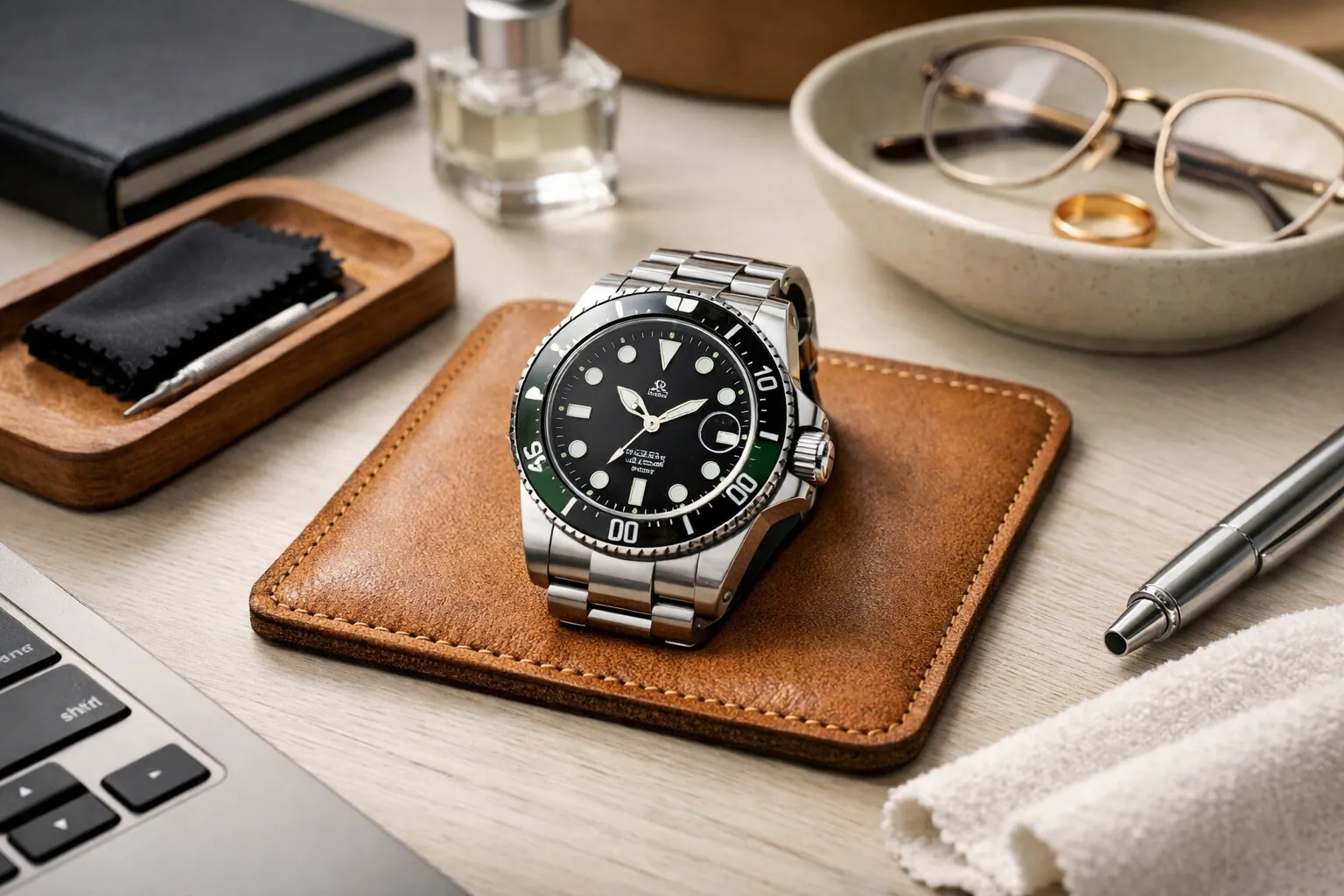
When people search “how to care for a watch,” they often expect a single magic rule. In reality, watch longevity is usually the result of friction management: reducing unnecessary impacts, moisture exposure, chemical contact, and small handling mistakes that compound over months. Below are habits you can adopt without turning ownership into a chore.
1) Start with a simple baseline: what actually wears out
A watch is a sealed system with moving parts (and seals) that experience gradual stress. The biggest “life shorteners” are rarely mysterious: shock, grit, moisture, and chemicals. If you want a quick mental model, think of your watch like a precision instrument—durable for daily use, but happiest when you remove avoidable risks.
2) Daily handling habits that pay off the most
Set it down like a lens, not like a key
Most micro-scratches and case edge scuffs happen off-wrist: on countertops, near sinks, next to laptops. Use a soft surface (desk mat, tray, or cloth), and avoid “crown-down” resting if your surface is gritty. If you rotate watches, a dedicated resting spot prevents accidental drops.
Keep it away from lotions, perfume, and strong cleaners
Skincare and household chemicals can dull metal finishes and accelerate strap aging (especially leather and some rubbers). A simple habit: apply products first, let them dry, then put on your watch. When cleaning at home, remove the watch before using detergents or solvents.
After a normal day
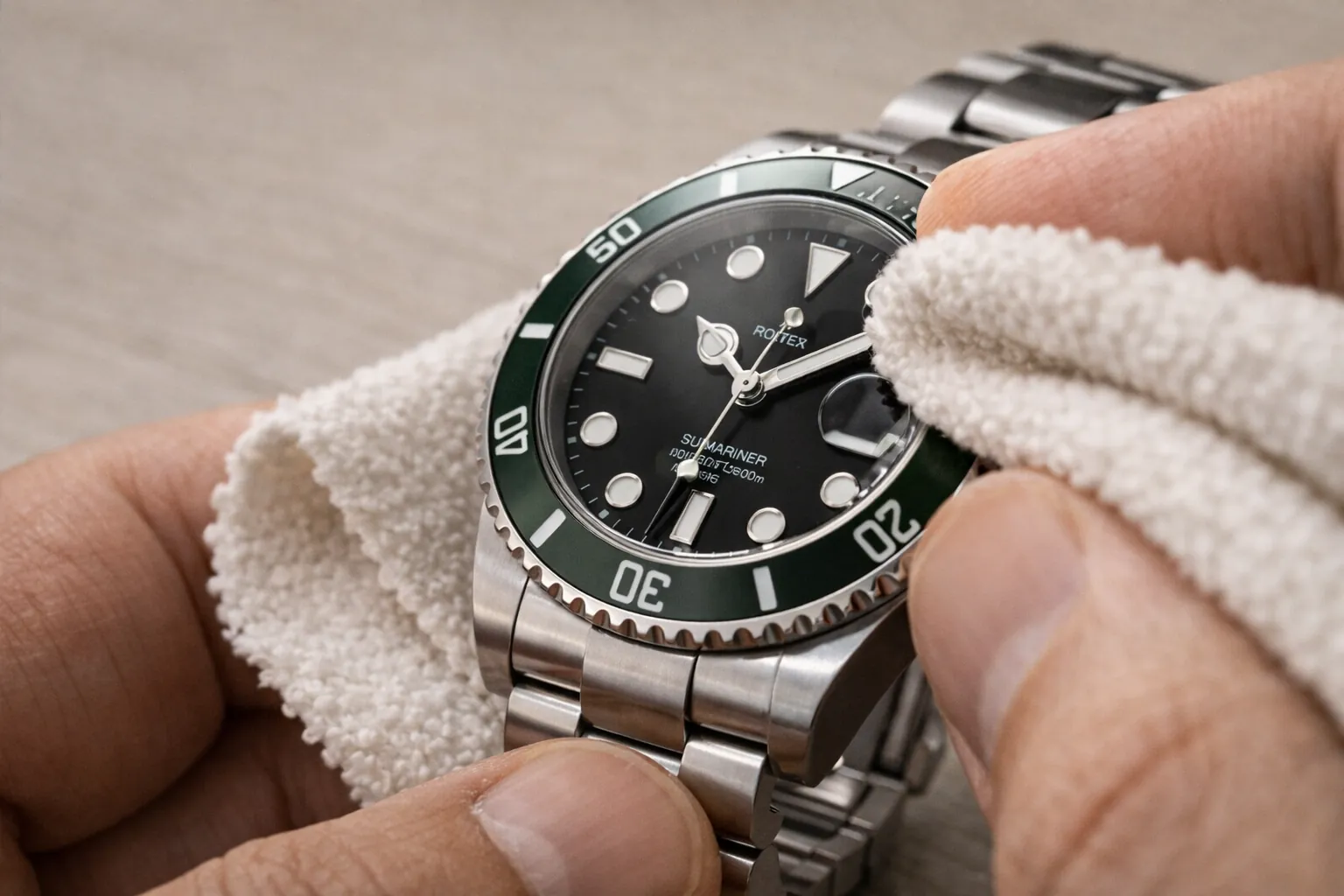
Wipe the case and bracelet with a clean, dry microfiber cloth to remove sweat, dust, and oils.
After heat / humidity
Let it air-dry before storage; avoid trapping moisture inside a closed box immediately after wear.
Be intentional about water contact
“Water-resistant” isn’t the same as “water-proof forever.” Seals age, temperature changes create pressure differences, and soapy water can slip past weaker gaskets more easily than plain water. If you do get it wet (rain, hand washing, rinsing), dry it carefully around the crown and caseback. For owners who frequently wear a watch outdoors, it’s helpful to understand how comfort and durability factors show up in real routines—this overview on daily wear watch considerations can help you decide what habits matter most for your lifestyle.
3) Crown and pushers: the “small actions” that prevent big issues
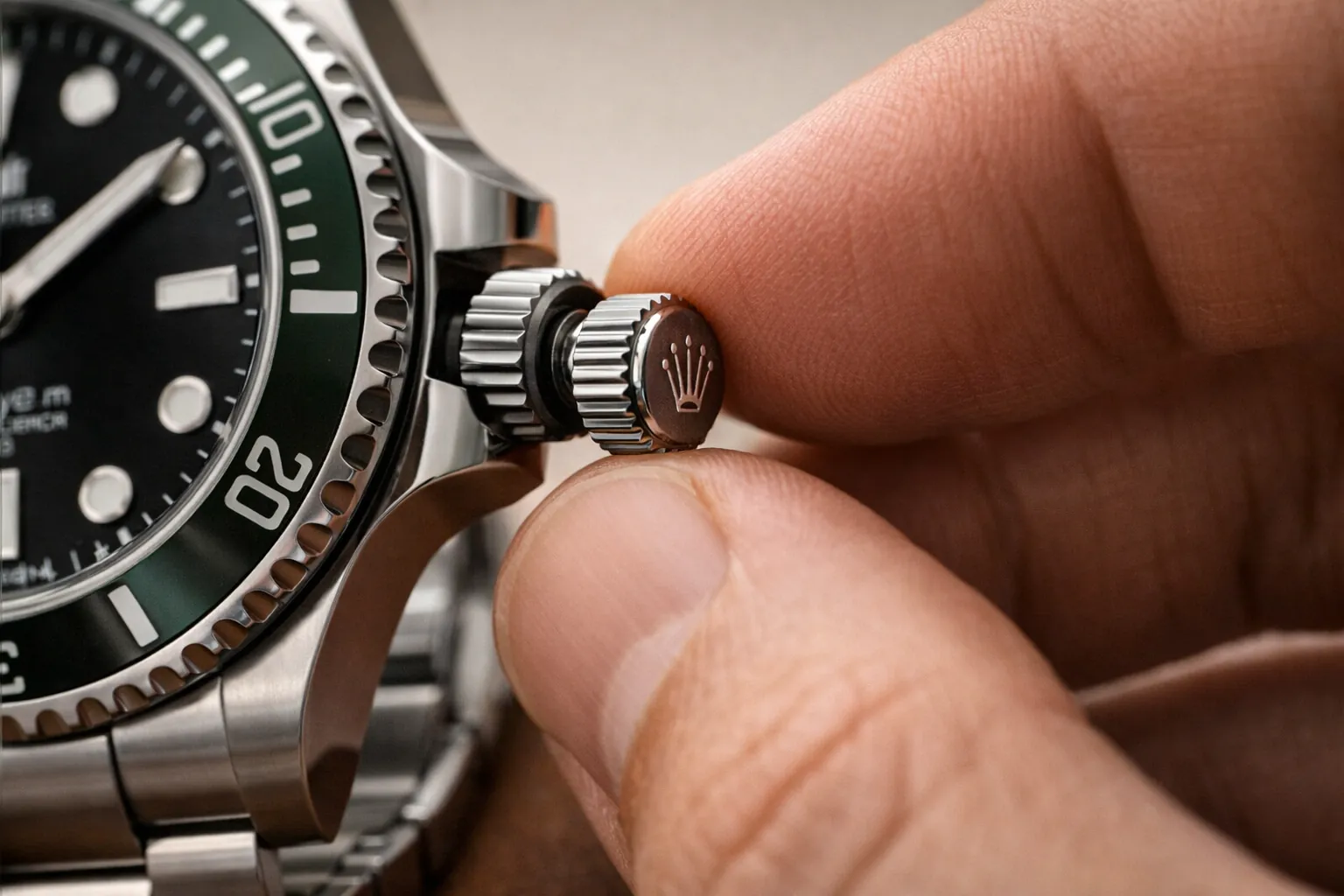
The crown is a common entry point for dust and moisture. Two habits protect it:
- Always confirm the crown is fully closed after setting the time/date.
- Avoid operating the crown or pushers while wet (especially after swimming or heavy rain).
If your watch has chronograph pushers, treat them like precision controls: press firmly but gently, and avoid repeated “fidget clicking.” That kind of repeated stress doesn’t break a watch overnight, but it can accelerate wear in the long run.
4) Storage and rotation: how to avoid “silent” damage
Storage problems are subtle: magnetic exposure, humidity, and abrasion from contact with other items. A good storage setup is simple:
- Separate surfaces: keep watches from touching each other to avoid bracelet-to-case scratches.
- Dry environment: avoid storing right next to steamy bathrooms or damp windowsills.
- Magnet awareness: don’t store on speakers, tablets with magnetic covers, or charging docks.
If you rotate watches, an easy habit is to assign “workdays” and “weekend” pieces. This reduces daily strap wear and helps you notice changes early (like a crown that feels rough or a clasp that loosens).
5) Cleaning: gentle, regular, and material-aware
The goal of cleaning isn’t to make your watch look brand-new every day—it’s to remove sweat salts and grit that act like fine sandpaper. Keep your approach light:
For metal bracelets and cases
Use a microfiber cloth regularly. If you need more, a slightly damp cloth (water only) followed by drying works well for most daily grime. Avoid abrasive pads. If your watch is safe for rinsing, rinse briefly with clean water and dry thoroughly—especially between bracelet links.
For leather straps
Leather dislikes water and sweat. Rotate straps if you live in a humid climate or wear your watch during hot commutes. Wipe gently and let it dry naturally. Never “heat-dry” leather.
For crystals and coatings
Crystal clarity depends on both the material and any coatings. If you’re deciding what care habits are realistic for your usage (especially regarding scratch risk), this comparison of sapphire vs mineral glass can help you choose a cleaning style and expectation level that fits your watch.
6) The early signals you shouldn’t ignore
Caring for a watch isn’t only prevention—it’s also noticing when something changes. Small symptoms are useful data:
- Timekeeping shifts that persist over several days (not just one odd day).
- Crown feels rough or becomes harder to close.
- Condensation under the crystal after temperature changes (treat as urgent).
- Bracelet/clasp looseness that increases quickly.
The value of noticing early is that it prevents secondary damage. Think of it as “small fixes” versus “big repairs.” Even if you don’t know the cause, logging the symptom and when it happens (after water, after impact, after travel) helps you act decisively.
7) A simple weekly routine (that doesn’t feel obsessive)
If you want one repeatable routine, use this once-a-week approach:
- 2 minutes: microfiber wipe, check crown is fully closed, quick visual for debris at the lugs.
- 1 minute: clasp/strap check (tightness, sharp edges, unusual looseness).
- 30 seconds: set it down in the same safe spot so it’s never “floating” around your desk or sink.
Conclusion: care is mostly about reducing “avoidable moments”
The best watch-care habits aren’t complicated: store it safely, keep it clean in a gentle way, avoid chemicals, be mindful with water, and handle the crown with intention. Do those consistently and your watch will typically stay more comfortable, look better over time, and feel more reliable day to day—without you needing to constantly think about it.