

Polishing and Brushing Quality in Replica Watches Explained
For many buyers, “replica watch polishing and brushing quality” is the detail that makes a watch feel convincing on the wrist. This guide focuses on how to understand finishes, what to look for under normal lighting, and how to judge consistency—without turning a blog page into a sales page.
Polishing and brushing are not just “cosmetic.” They affect how edges catch light, how surfaces hide wear, and whether a watch looks crisp or soft at arm’s length. A strong finish is typically defined by uniform texture, clean transitions, and stable symmetry.
On this page
- Polished vs brushed: what you’re really seeing
- Brushing quality: grain, direction, and coverage
- Polishing quality: clarity, distortion, and edge control
- The most revealing part: transitions and chamfers
- Bracelet and clasp finishing: where shortcuts show
- A practical inspection checklist (no tools needed)
- Care and expectations: keeping finishes looking sharp
Polished vs brushed: what you’re really seeing
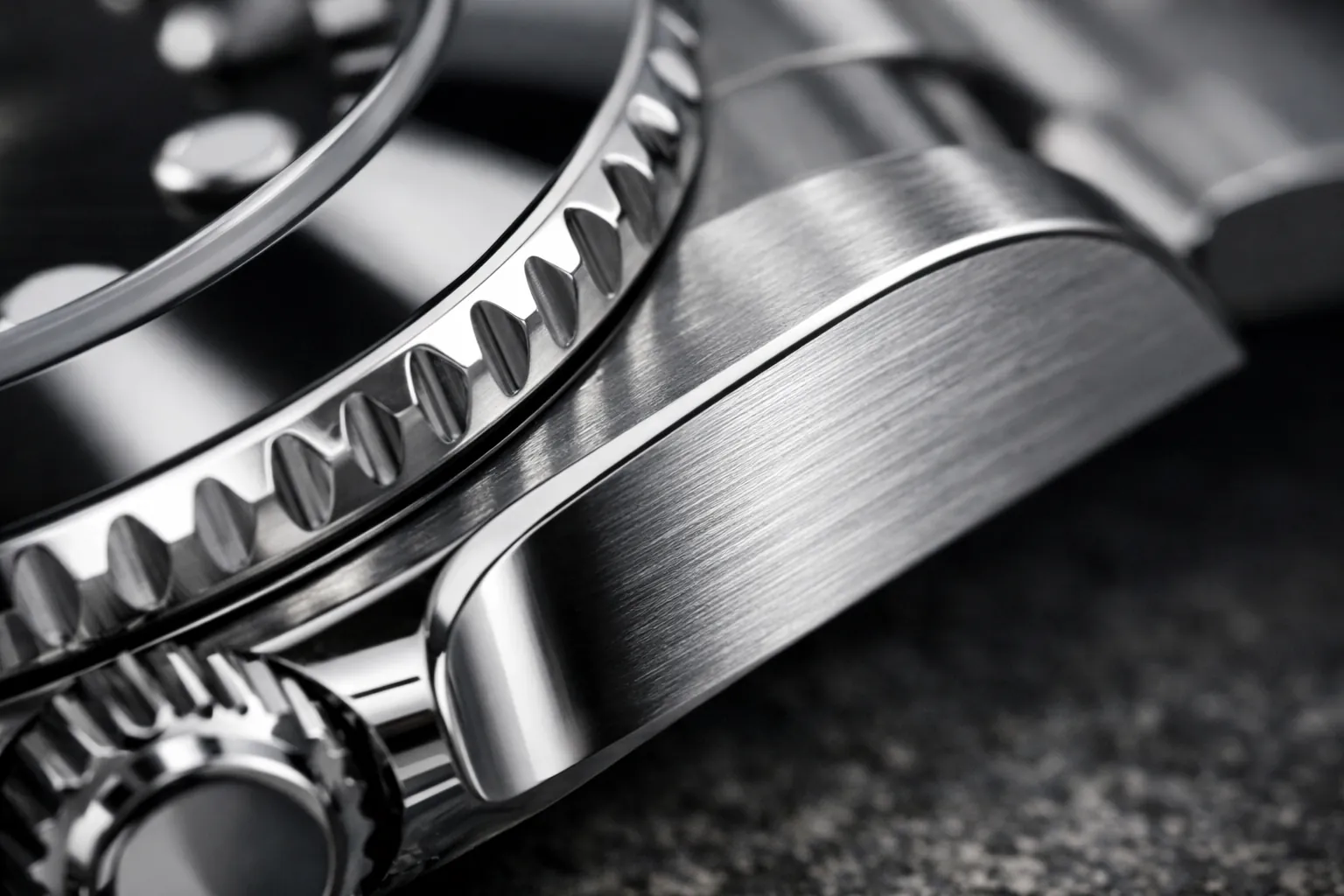
Most watch cases combine two surface languages: polished (mirror-like, high reflectivity) and brushed (satin-like, directional micro-lines). The goal is contrast. When the finishing is executed well, the watch looks structured—lugs look intentional, bezel edges look defined, and the case appears “shaped,” not melted.
A useful mental model: polishing controls reflection clarity, while brushing controls reflection diffusion. If either treatment is uneven, light will “break” in a distracting way—patchy highlights on brushed surfaces, or wavy reflections on polished facets.
Brushing quality: grain, direction, and coverage
Brushing is often described as “grain,” but quality is less about how visible the lines are and more about whether the texture is consistent. A good brushed finish typically shows:
| What to check | What “good” looks like | What it usually means |
|---|---|---|
| Grain uniformity | Even, uninterrupted texture across the entire surface | Stable tooling and controlled pressure across the part |
| Direction alignment | Lines run in one deliberate direction, especially across lugs and bracelet tops | Finishing done as a planned step, not an afterthought |
| Edge respect | Brushing stops cleanly at borders without “spilling” into polished areas | Good masking/technique and attention to transitions |
Under everyday room light, the easiest test is to tilt the watch slowly. On a well-brushed plane, the highlight travels like a soft band and stays even from one end to the other. If the band breaks into patches, the surface likely has inconsistent grain density.
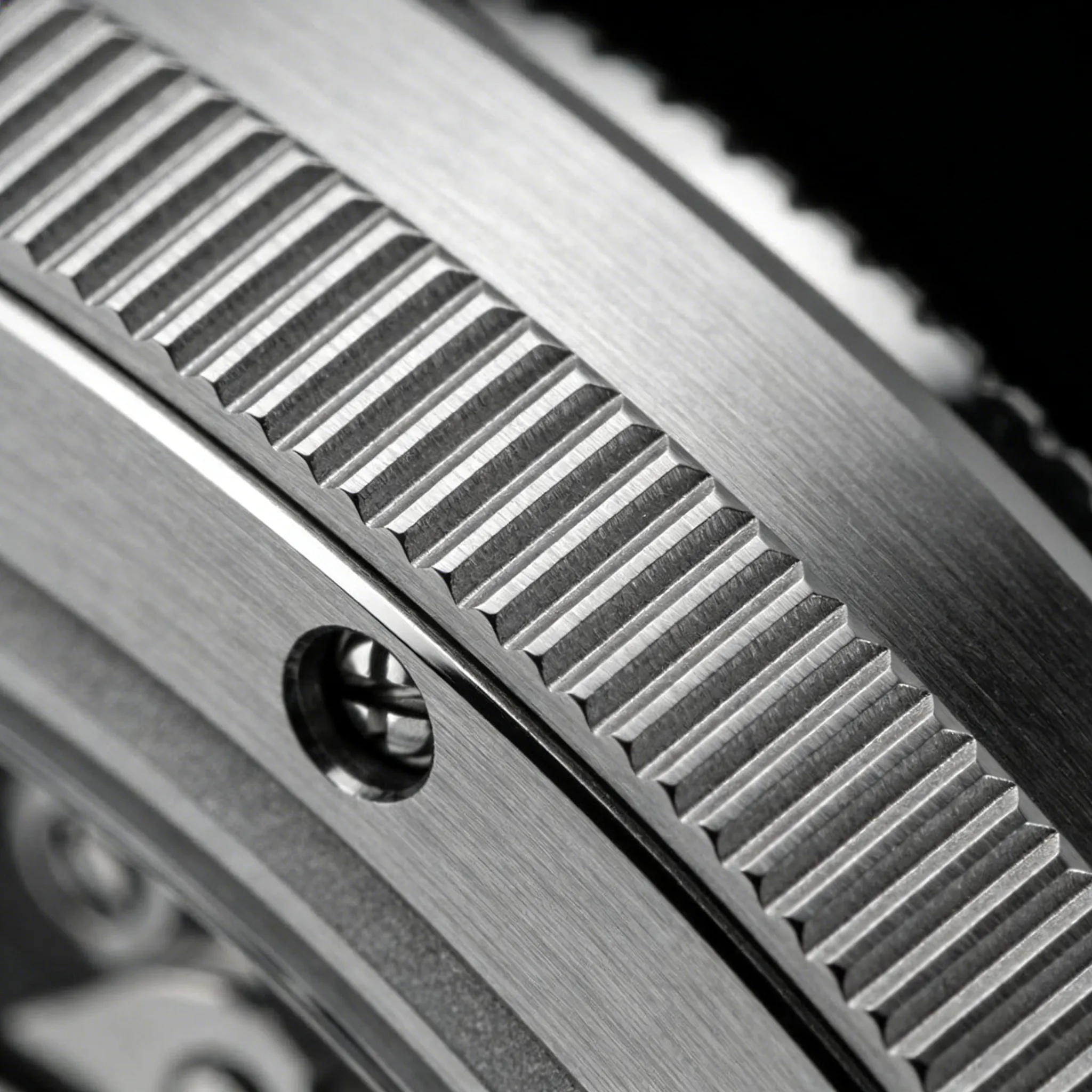
People sometimes assume “more visible lines = better.” In practice, the best result is a controlled satin effect: visible enough to diffuse light, refined enough to look uniform at arm’s length.
Surface appearance can also vary by steel grade and coating—material choice influences how brushing “takes.”
Polishing quality: clarity, distortion, and edge control
Polishing gets attention because it’s instantly visible, but the deeper signal is how reflections behave. A high-quality polish typically shows clear reflections with minimal waviness. When you move the watch under light, reflections should glide smoothly along the polished facet rather than ripple.
The other tell is edge control. Polishing removes micro-material; done excessively, it rounds edges and softens the geometry. A crisp case design depends on edges staying intentional—especially where polished and brushed areas meet.
Where to focus first
If you only inspect three areas, make them: (1) the bezel edge (or bezel lip), (2) the lug chamfer (if present), and (3) the side of the case where curvature transitions into flat planes. These zones reveal whether finishing was “shaped” carefully or simply buffed.
The most revealing part: transitions and chamfers
The line between polished and brushed surfaces is where finishing becomes craftsmanship. A clean transition looks like a deliberate boundary—straight (or consistently curved) and symmetrical left-to-right. If the line looks fuzzy, uneven, or drifts as it travels down the case, the watch can lose that “engineered” feeling.
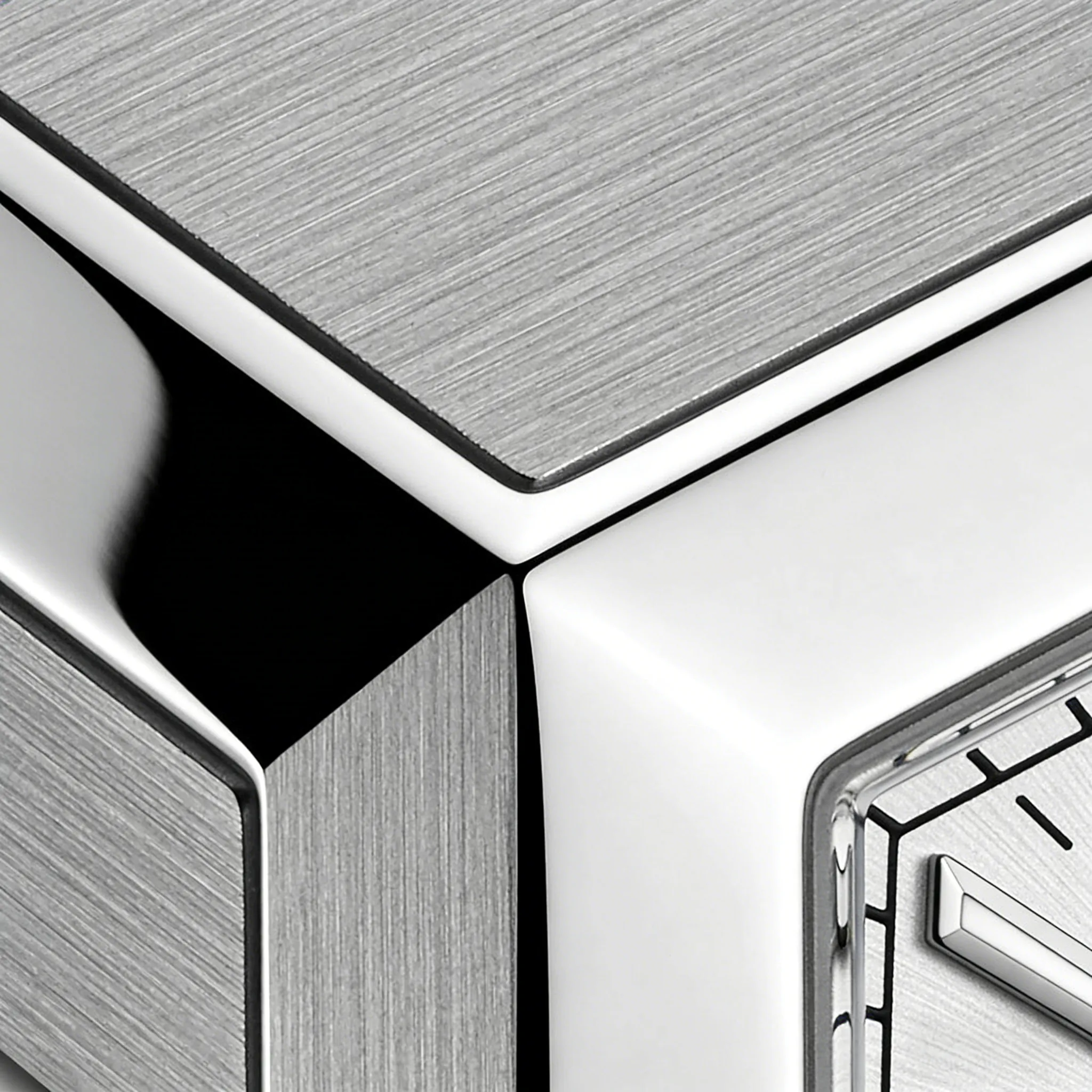
Chamfers (beveled edges) deserve special mention. On designs that use them, chamfers act like a “light rail.” When they’re consistent, the watch looks precise. When they vary in width, the case can look asymmetrical.
Bracelet and clasp finishing: where shortcuts show
Buyers often judge a watch by the case, but bracelets are where wear and handling accumulate—and where finishing consistency matters most. Look for alignment of brushing across links, clean transitions on link edges, and a clasp surface that matches the bracelet’s visual language.
A simple test: lay the bracelet flat and view it from a low angle. If brushing direction changes unexpectedly from link to link, the bracelet can look “busy” under light. If the direction is consistent, the bracelet reads calmer and more premium.
If you want to go deeper into materials and how they influence finishing behavior, see replica watch case materials explained . For bracelet-specific construction and fit signals, see replica watch bracelet quality explained .
A practical inspection checklist (no tools needed)
You don’t need a loupe to judge replica watch polishing and brushing quality. Use stable indoor lighting and move slowly. Here’s a quick, practical checklist:
- Brushing looks even as you tilt
The highlight band should travel smoothly without patchy breaks. - Grain direction is intentional
Top surfaces and bracelet tops should look aligned, not randomly oriented. - Polished reflections aren’t wavy
Mirror surfaces should not distort straight lines excessively. - Edges stay crisp
Over-polishing can round geometry; crisp boundaries read more “engineered.” - Transitions are clean
The brushed–polished line should look deliberate and symmetrical. - Bracelet finishing matches case language
A cohesive finish makes the whole watch feel intentional.
Care and expectations: keeping finishes looking sharp
Even excellent finishing changes with wear. Brushed surfaces are generally better at disguising micro-scratches, while polished areas show them more readily (because reflections are clearer). To preserve appearance, avoid abrasive cloths and harsh compounds; gentle wiping and careful storage usually go a long way.
If you’re comparing options across different styles, remember that finishing “reads” differently by design. A tool-style diver may lean on broader brushed planes, while dressier designs often emphasize polished facets and sharp transitions. The best approach is to judge each watch by whether its finish looks consistent with its intended character.
If you want a clear, centralized reference for how we evaluate overall build details (not just finishing), you can also review our quality standards . It helps put polishing/brushing into context with alignment, tolerances, and wear-focused considerations.
Takeaway: High-quality polishing and brushing is about controlled light—uniform satin diffusion, clear mirror reflections, and crisp transitions. If you can confirm those three pillars in normal lighting, you can make a more confident comparison without over-focusing on hype or marketing terms.