

Sapphire vs Mineral Glass Watch Explained: Clarity and Scratch Resistance
A practical, materials-first breakdown of how sapphire crystal and mineral glass differ in real use—especially when it comes to dial clarity, reflections, and long-term scratch behavior.

What Is a Watch Crystal, and Why Does It Matter?
The watch crystal is the transparent layer protecting the dial and hands. It influences optical clarity, protects against daily scuffs, and shapes how the watch looks after months or years of wear. Because it is the most exposed surface, crystal material often has a bigger effect on long-term appearance than people expect.
Sapphire Crystal: Engineered for Hardness and Clarity
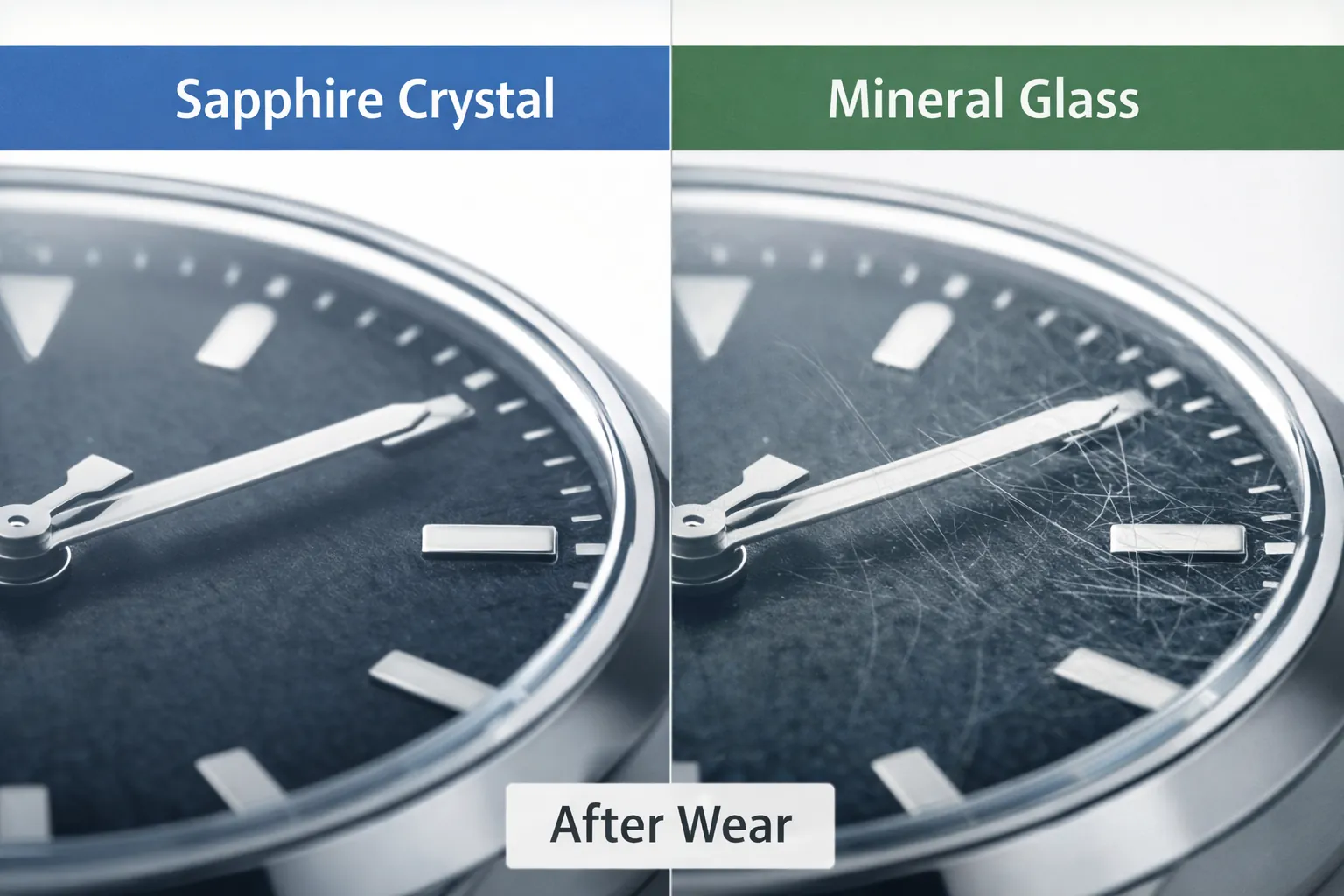
Scratch resistance in daily use
Sapphire crystal is extremely hard, which is why it tends to stay visually clean for longer. In typical wear, it resists many marks caused by pocket items, desk contact, and fine particles. Scratches still happen in edge cases, but they are less common in day-to-day conditions.
Optical clarity and reflections
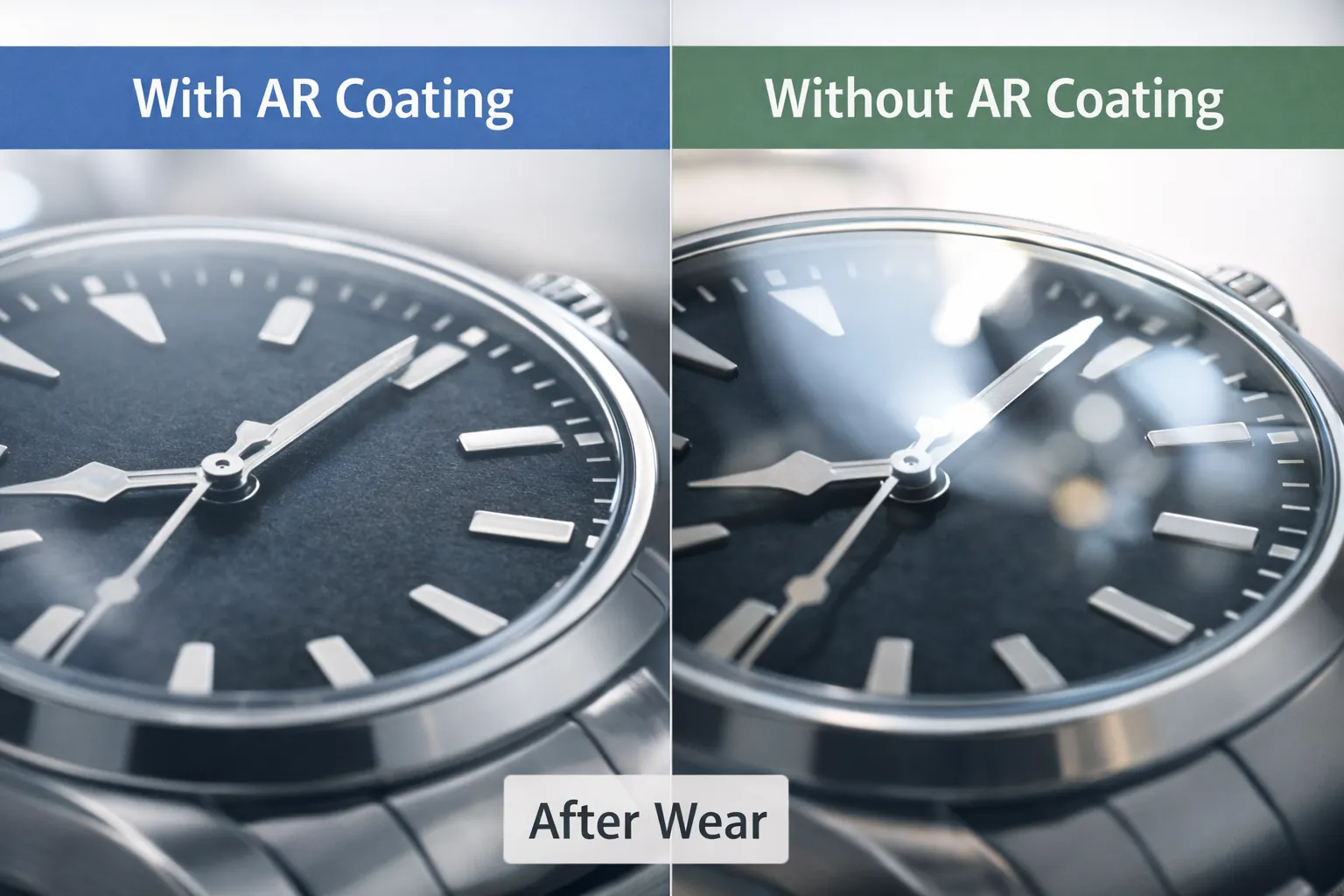
Sapphire can reflect more light, so many watches use anti-reflective coating to reduce glare and improve readability across angles. In bright environments, this can be the difference between a dial that stays crisp versus one that looks mirrored.
Mineral Glass: Balanced Toughness and Accessibility
Mineral glass is a hardened glass commonly used in many watches. It is typically more prone to surface scratches than sapphire, but it can be more tolerant of sudden knocks. In practice, mineral glass may show fine wear earlier, yet often handles unpredictable impacts in a forgiving way.
Many visible marks come from everyday surfaces rather than dramatic events—desk edges, abrasive dust, or contact with rough materials. Understanding those sources helps set realistic expectations regardless of crystal type.
Sapphire vs Mineral Glass: A Practical Comparison
| Aspect | Sapphire | Mineral Glass |
|---|---|---|
| Scratch resistance | Generally higher | Generally lower |
| Impact tolerance | Can crack under sharp impact | Often more forgiving |
| Reflections | May need coating to reduce glare | Often acceptable without coating |
| Long-term appearance | Tends to stay clearer longer | May accumulate fine scratches |
The practical takeaway is not that one material is always “better,” but that the better choice depends on how a watch is worn and which trade-offs matter most in real life—scratch-free clarity, or tolerance for accidental impacts.
Common Misconceptions About Watch Crystals
A common misunderstanding is that sapphire makes a watch indestructible. In reality, scratch resistance and impact resistance are different properties. Another misconception is that visible wear always implies poor quality; often it simply reflects predictable long-term aging of the surface.
Why Crystal Choice Matters Over Time
Over years of use, the crystal heavily influences perceived care and legibility. A clearer surface keeps dial details sharp and reduces distracting light scatter, while micro-scratches can gradually soften contrast and catch reflections.

Crystal material is only one factor; overall watch construction also shapes durability and how wear presents over time. Understanding both helps you judge a watch more accurately without relying on assumptions.
If you’re comparing watches primarily on daily readability and long-term cosmetic stability, focus on two things: surface hardness (scratch tendency) and reflection control (glare). That combination usually explains most real-world differences people notice.