


What Damages Watches? Common Risks Explained
Most watch damage doesn’t come from dramatic accidents—it comes from small, repeated exposures in daily life. This guide breaks down the most common risks so you can recognize them early and wear your watch with more confidence.
A watch is made to be worn—but it’s also a compact mechanical system (or a sealed electronic one) that reacts to your environment. The most common problems are rarely “one big event.” Instead, they build up from small risks that repeat day after day.
A useful way to think about watch protection is not “avoid everything,” but “know which moments create avoidable stress”: sharp knocks, moisture and steam, magnets, chemicals, grit, and long gaps without maintenance.
Physical Impact: The Most Obvious Risk
Impacts are the most direct source of damage—especially when a watch meets hard edges like desks, door frames, or gym equipment. Even light knocks that leave no visible mark can shift tiny components or accelerate internal wear over time.
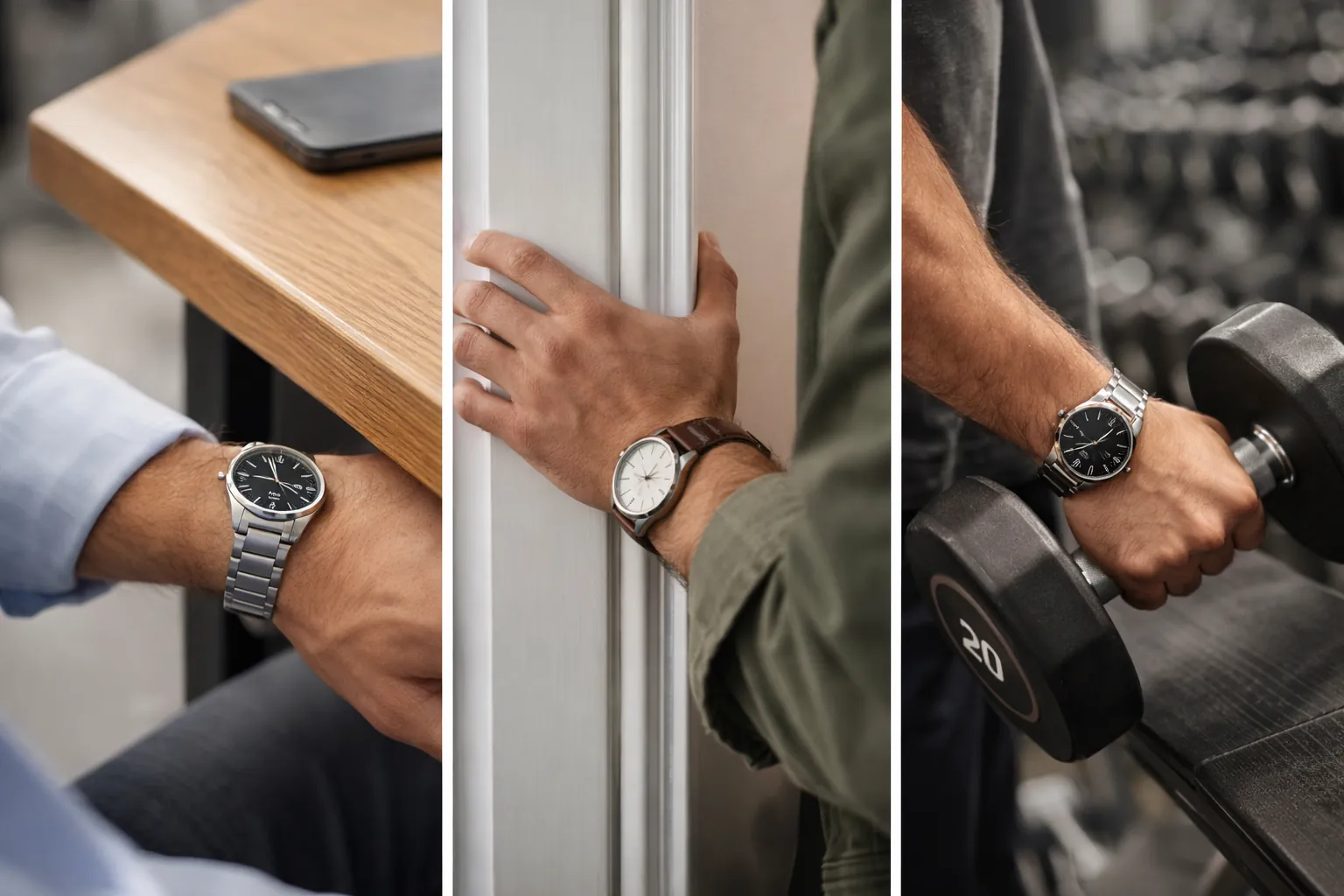
The pattern is usually predictable: tight spaces, fast hand movement, and repeated contact. The safest mindset is to notice common collision zones and adjust your habits slightly—no drama required.
Common impact situations
Quick mental checklist
- Desks and table edges during typing, writing, or reaching for items.
- Door frames and cabinets when turning or carrying bags.
- Gym equipment (dumbbells, bars, machines) during setup and reracking.
Water Exposure: More Than Just “Waterproof”
Water resistance is not a permanent “shield.” Seals age, gaskets compress, and heat can expand components in ways that make moisture intrusion more likely—especially in steamy environments like bathrooms.
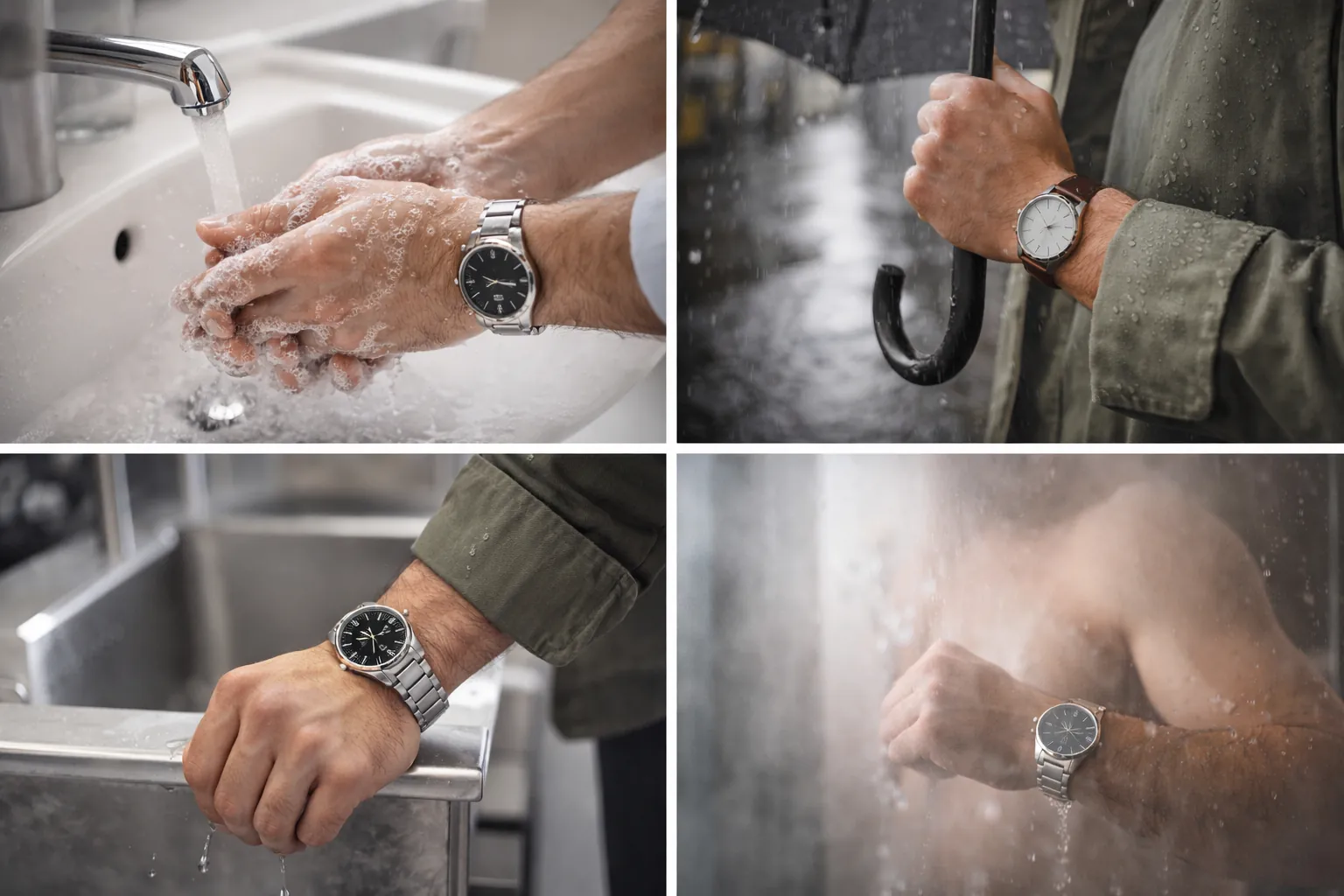
Steam is often more problematic than quick splashes because it carries moisture into small openings and then condenses. If moisture enters the case, corrosion can begin quietly long before you see fogging.
Magnetic Fields: The Invisible Disruptor
Phones, laptops, speakers, tablet covers, and wireless chargers all create magnetic exposure opportunities. The effect is often subtle: timekeeping becomes inconsistent rather than “broken.”
Storage and Maintenance: The Slow Damage Path
Dust, humidity, chemicals (perfume, sunscreen, cleaning sprays), and long gaps without basic care can shorten lifespan. The key risk here is accumulation—small friction and residue building up over time.
If you want to go deeper, use the related reading links in the sidebar for targeted topics (daily wear habits, maintenance signals, movement longevity, and movement differences).