

Sizing Guide
Watch for Small Wrist Guide: Choosing the Right Size
A practical framework to evaluate fit using diameter, lug-to-lug, thickness, and strap proportions—so your next watch feels balanced, comfortable, and natural.
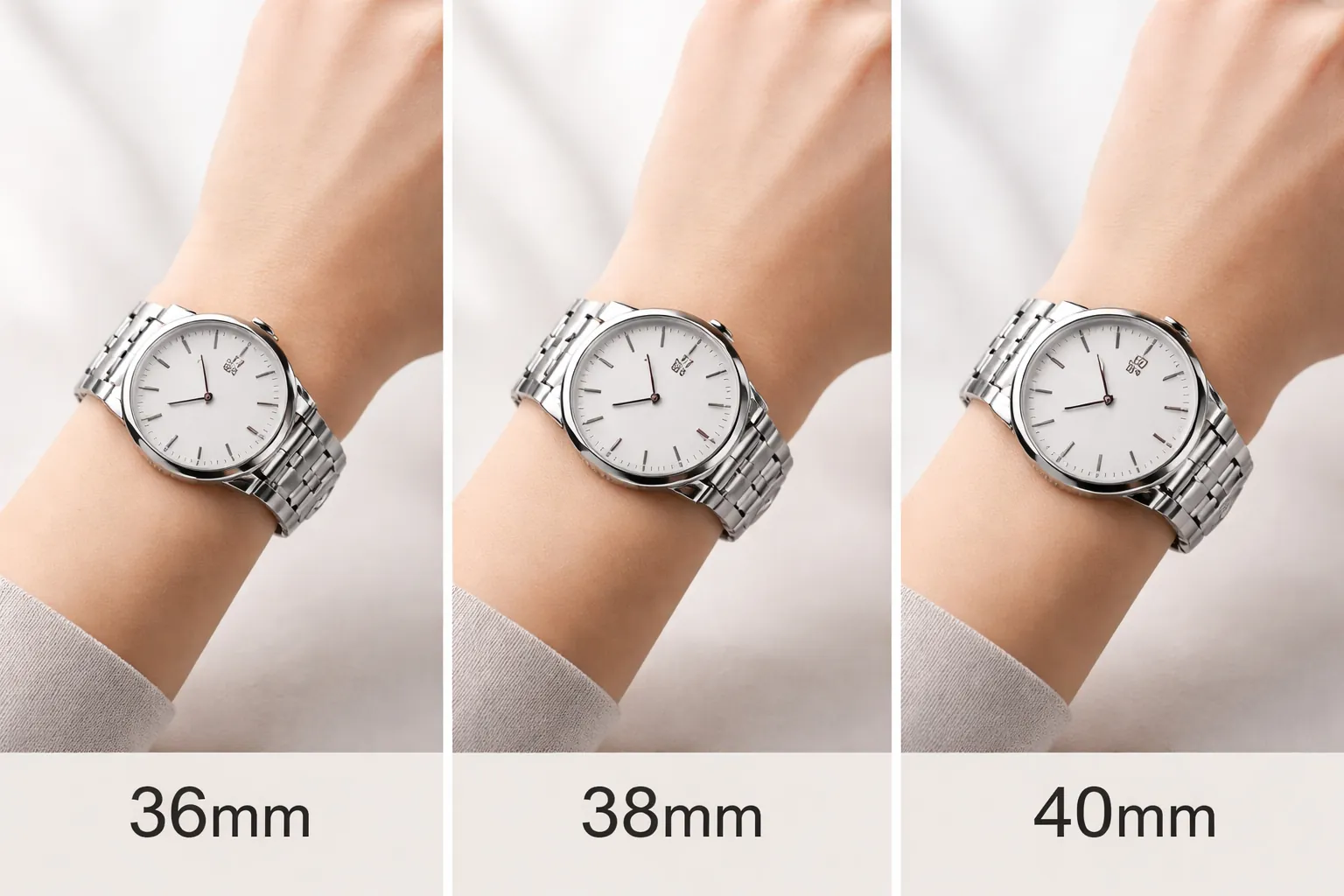
Why small-wrist sizing feels tricky
Many watches look balanced in photos, but appear oversized once worn. Fit isn’t only aesthetic—proportions affect comfort, wearability , and how often you’ll actually wear the watch.
This guide explains how watch sizing actually works for smaller wrists, which measurements matter most, and how to judge fit before committing.
What “small wrist” typically means
“Small wrist” often refers to a wrist circumference under about 6.5 in (16.5 cm), but proportions vary. Two wrists with the same circumference can wear differently depending on shape and bone structure—so a single number rarely tells the full story.
Measurements that matter most
Case diameter: a starting point
For smaller wrists, 34–38mm is commonly comfortable, but modern design can change how a diameter wears. Thin bezels, dial opening, and lug shape can make a watch feel different than the spec suggests—because fit is really about multiple dimensions working together .
Lug-to-lug length: often more important than diameter
Lug-to-lug controls how much horizontal space the watch occupies. If the lugs extend past the wrist edges, the watch will look and feel too large regardless of diameter. As a general reference, under ~46mm is often ideal for small wrists, 46–48mm can work, and beyond ~48mm commonly overhangs.

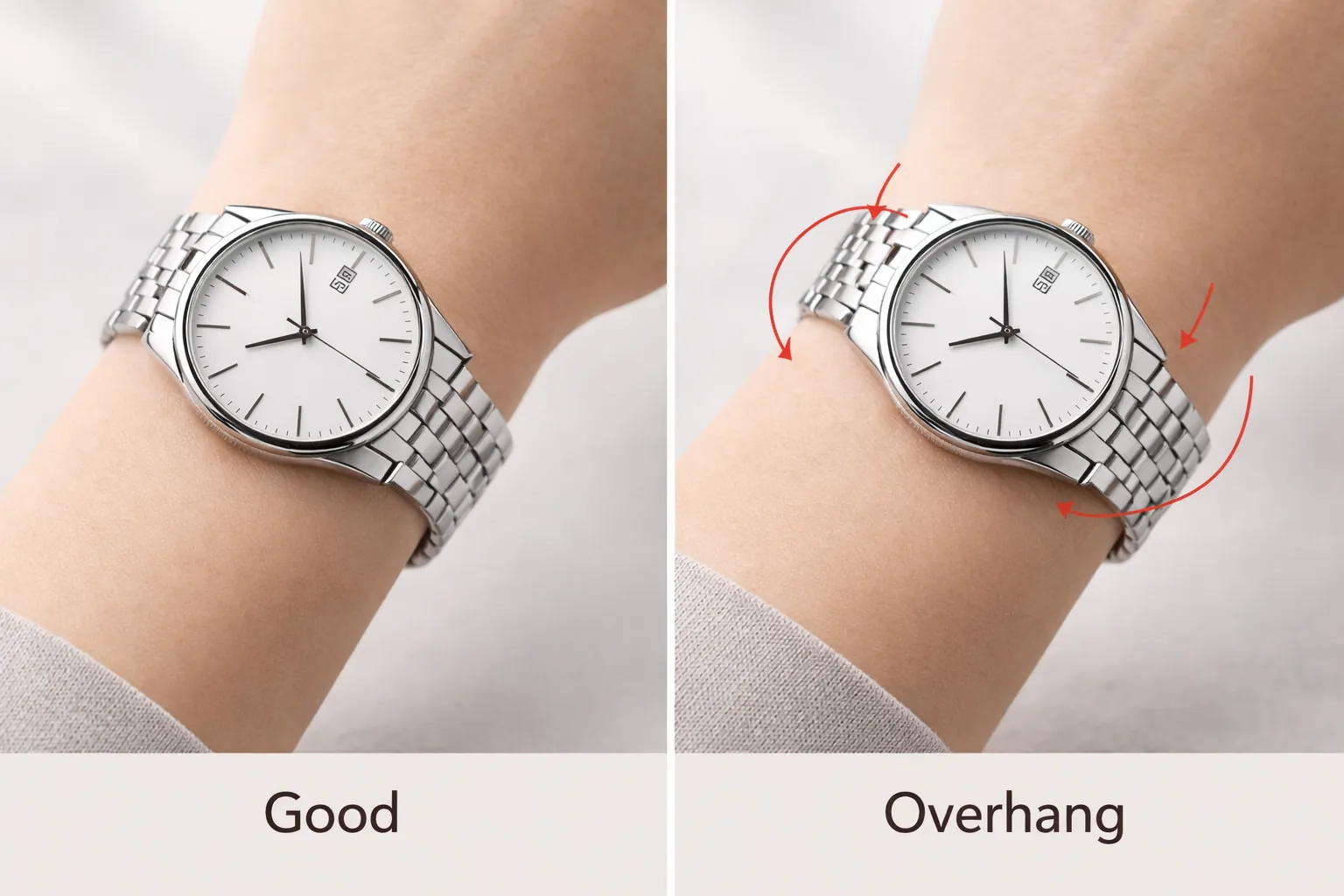
Case thickness: the overlooked factor
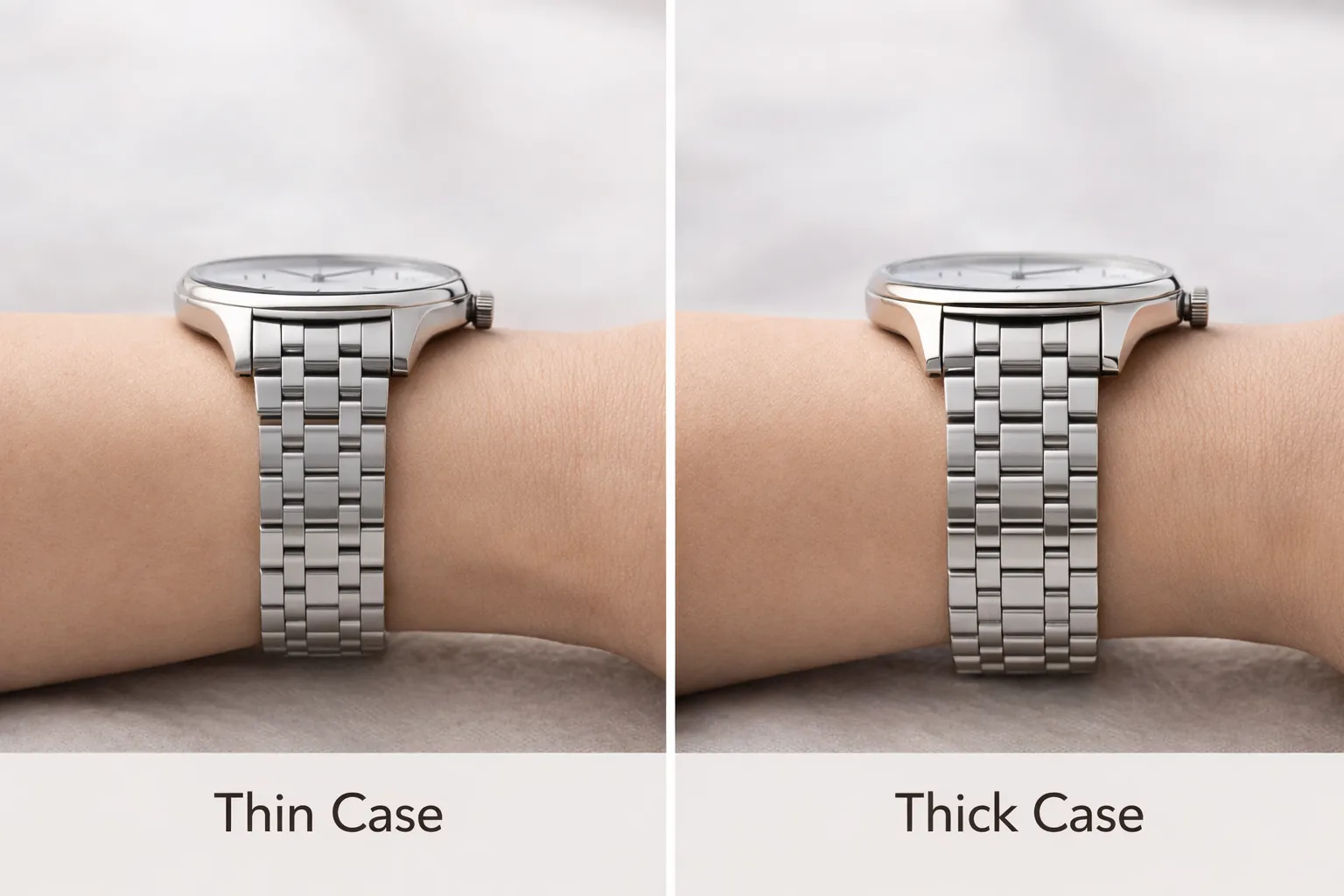
Thickness changes how a watch behaves on the wrist. A moderate diameter can still wear bulky if the case is tall, especially on smaller wrists where leverage is higher and it can feel top-heavy and unstable .
- Under ~10mm often feels discreet and comfortable.
- ~10–12mm tends to balance presence and wearability.
- Over ~12mm may feel bulky depending on wrist shape and strap.
Dial design and visual balance
Perceived size isn’t purely physical. Simpler dials often appear smaller and cleaner, while busy layouts, heavy bezels, and oversized elements can make a watch feel larger than the numbers suggest.
Quick visual cues: minimal text, slimmer markers, and calmer layouts usually look more proportional on smaller wrists.
Strap width, taper, and materials
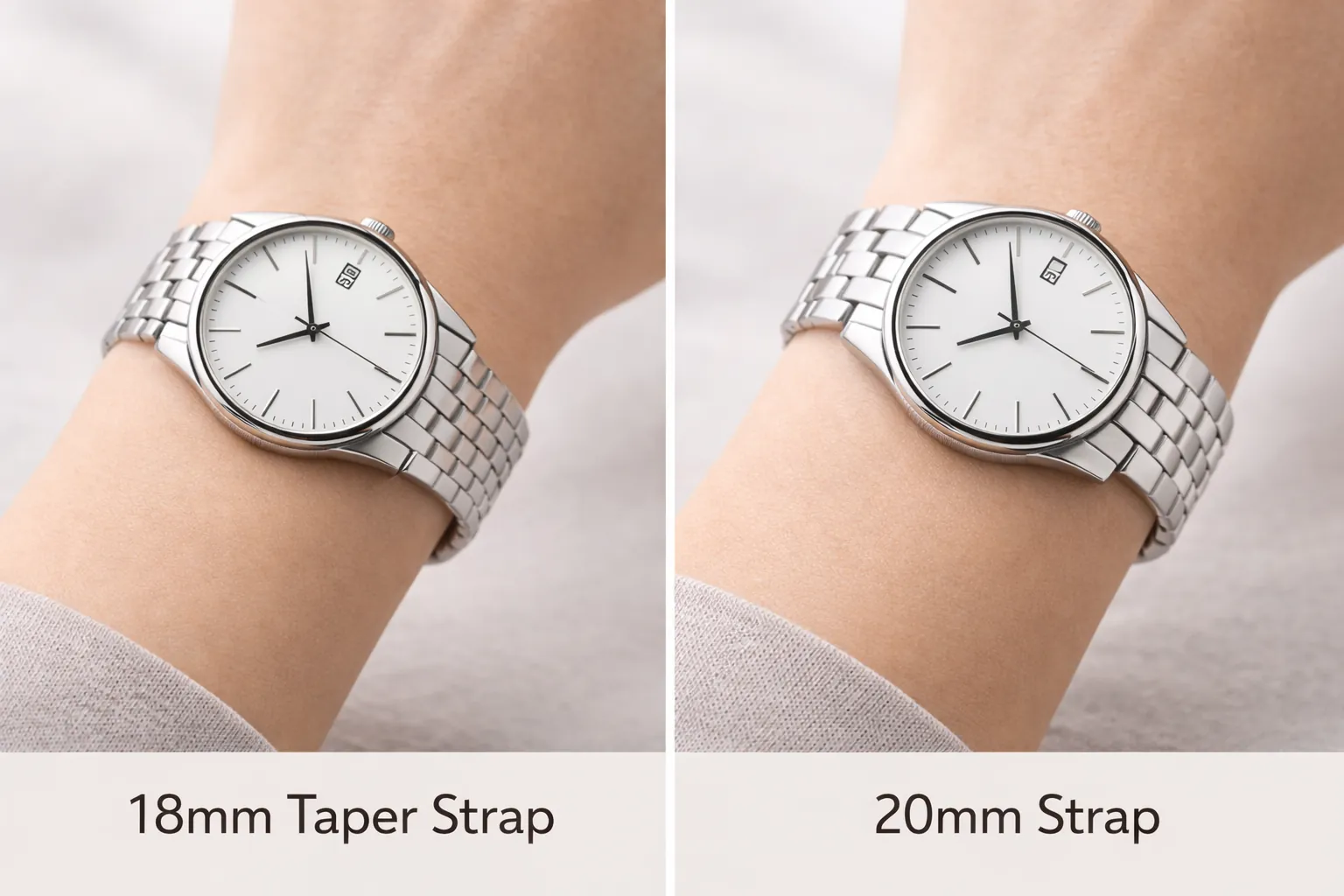
Strap proportions can make a well-sized case look too large—or perfectly balanced. A strap that’s too wide can overpower a smaller wrist, and strap width can overpower a small wrist even when the case is reasonable.
If you’re choosing a bracelet, construction and articulation matter. Paying attention to overall balance helps avoid a fit that looks fine on paper but feels awkward in daily wear.
How watch style changes how it wears
Different styles carry different proportions. Dress watches often wear smaller due to thinner cases and simpler dials, while chronographs and many sports watches may wear larger because of added thickness and dial complexity.
Common mistakes to avoid
- Judging only by diameter while ignoring lug-to-lug and thickness.
- Choosing trends over proportions (larger isn’t always better).
- Going too small without considering your overall build and style.
How to evaluate fit before committing
When browsing online, look for full specs (including lug-to-lug and thickness), wrist shots on smaller wrists, and side profiles that show case height. Comparing measurements to a watch you already own that fits well is often the fastest shortcut.
Final thoughts
A great fit is a combination of proportions. When you consider diameter, lug-to-lug, thickness, and strap balance together, it becomes much easier to choose a watch that feels natural on a small wrist—without guesswork.