

Mechanical Replica Watch Performance Explained: Accuracy and Durability
A neutral, engineering-style guide to understand how mechanical timekeeping behaves in real life—what “accuracy” really means, what drives durability, and how to evaluate performance over time.
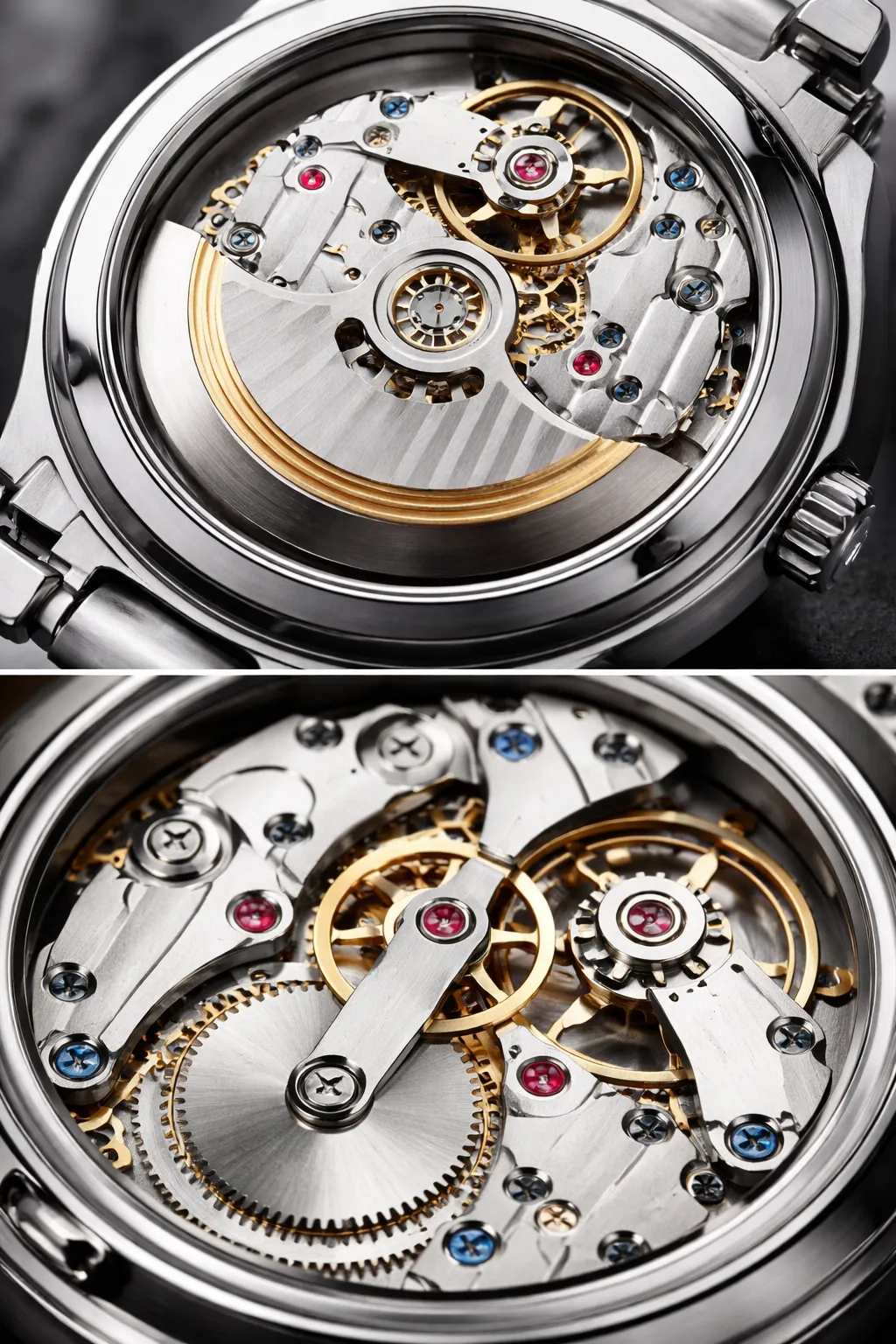
Movement behavior, not marketing numbers
Mechanical performance is best understood as consistency across time, positions, and daily wear—rather than one-day results.

Why accuracy is a range
Mechanical systems respond to position, shock, and lubrication. Quartz uses an electronic timebase, so it behaves differently.
What “Performance” Means in a Mechanical Replica Watch
Mechanical watches rely on stored energy, gear transmission, and balance regulation. Performance is best viewed as controlled mechanical behavior over time—including timekeeping, stability, and how the build handles daily wear.
- 1Accuracy (daily deviation)
- 2Stability (consistency across conditions)
- 3Durability (case, crown, crystal, bracelet)
- 4Longevity (how performance holds over months/years)
Movement lifespan expectations
Practical perspective on service intervals and what “lasting” means in mechanical use.
Read: How long does a watch movement last?
What to look for
Prioritize week-level consistency, sensible construction, and stable behavior across normal wear conditions.
Accuracy: Why Mechanical Timekeeping Is a Range
Mechanical accuracy is typically expressed as seconds gained or lost per day. Unlike quartz, a mechanical watch is influenced by position variance, micro shocks, and lubrication behavior—so the same watch can show slightly different outcomes day to day.
- ARegulation quality affects baseline deviation.
- BPosition variance (dial up / crown down, etc.) shifts rate.
- CWear + lubrication influence stability over time.
- DDaily environment (vibration, temperature, handling) adds variation.
Durability: Performance in Daily-Wear Context
Durability is best judged in realistic scenarios—desk work, commuting, light activity—where small impacts, crown handling,
and moisture exposure can accumulate. Understanding common risks helps evaluate durability more objectively.
Read: What damages watches (common risks)
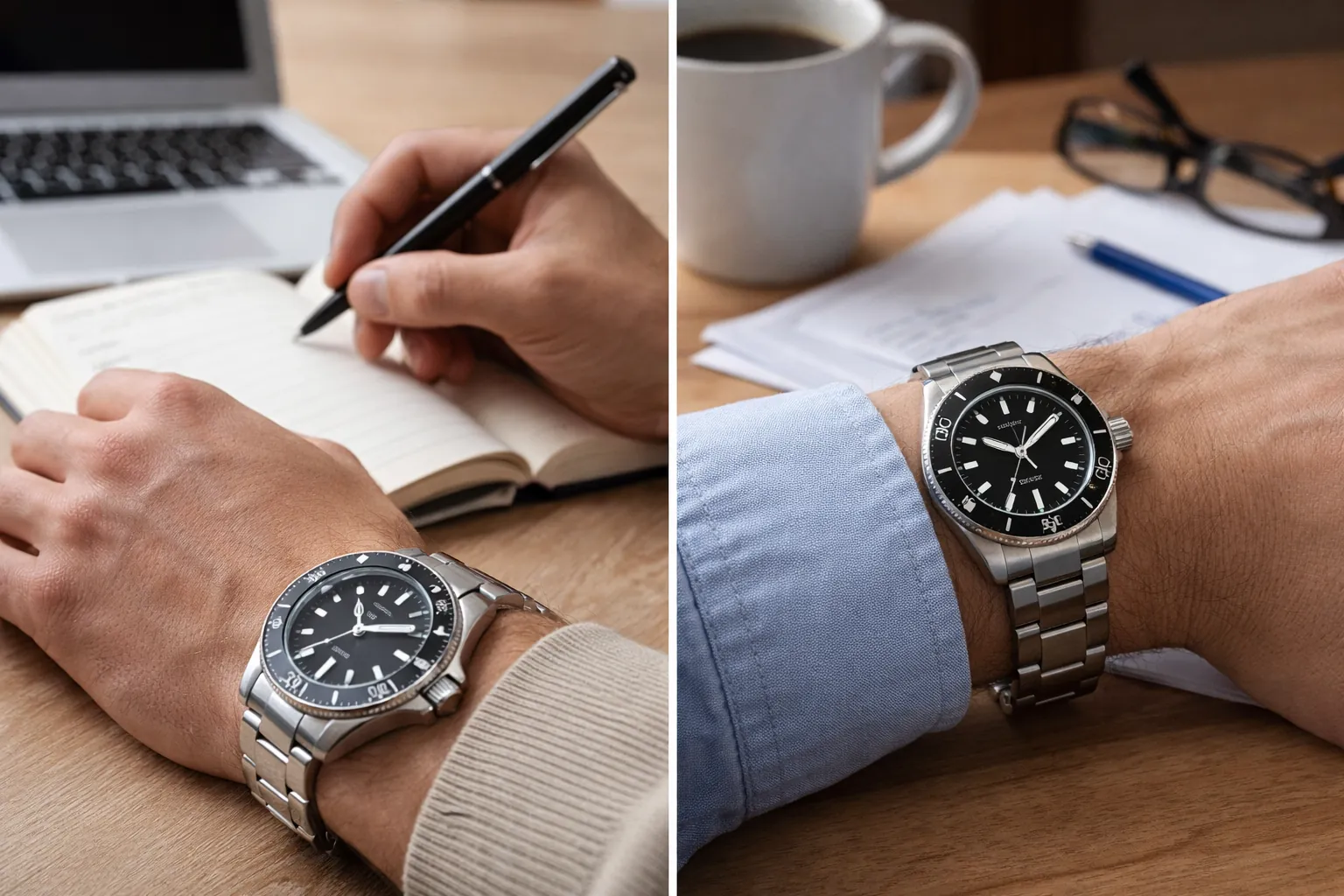
What “durable” usually means
Stable timekeeping, secure crown operation, dependable bracelet fit, and resistance to typical knocks and friction.
How to observe durability
Look for changes in crown feel, timing stability, and crystal/case wear patterns over weeks—not single-day impressions.
Construction Details That Drive Durability
Durability comes from tolerances and structure: case geometry, crown tube fit, gasket compression, and crystal seating.
A build-focused lens can clarify why two similar-looking watches perform differently in long-term daily wear.
Read: Watch construction quality (structure & assembly)
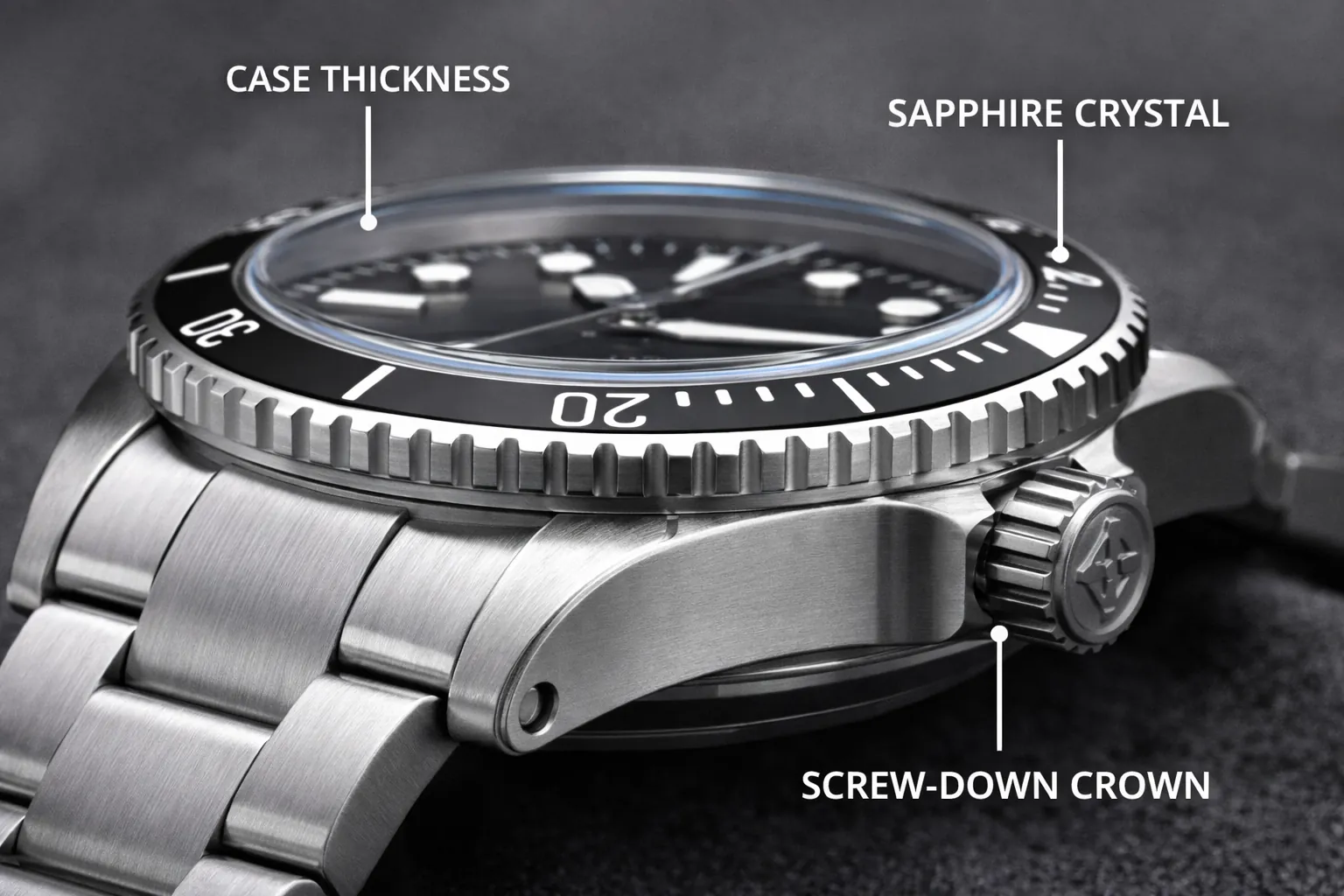
- 1Case geometry helps distribute minor impacts.
- 2Crown threading improves sealing stability when handled properly.
- 3Crystal fit affects edge protection and long-term wear behavior.
A Practical Way to Evaluate Performance
To keep evaluation neutral and consistent, look at behavior over time:
- ①Track 7+ days of daily deviation (not one day).
- ②Observe consistency across normal routines and positions.
- ③Watch power behavior (how timing changes from full wind to low reserve).
- ④Look for drift trends over months—gradual changes matter more than single spikes.
Conclusion
Mechanical replica watch performance is best understood as a balance of accuracy, stability, and durability. Mechanical accuracy is typically assessed as a range, and durability is most meaningful when judged in realistic daily-wear conditions.