

Structure and Assembly: What “Construction Quality” Really Means
A practical breakdown of how case structure, internal fit, alignment, and bracelet integration shape real-world wear and long-term consistency—without relying on marketing language.
Key idea: construction quality is how well parts work together as a single system—fit, alignment, and stability matter as much as appearance.
What “Watch Construction Quality” Really Refers To
Construction quality isn’t one feature. It’s the combined result of structural consistency, assembly precision, and how reliably the watch holds those tolerances over time. A watch can look “clean” in photos, but still feel uneven on the wrist if case geometry, internal seating, and interfaces aren’t integrated.

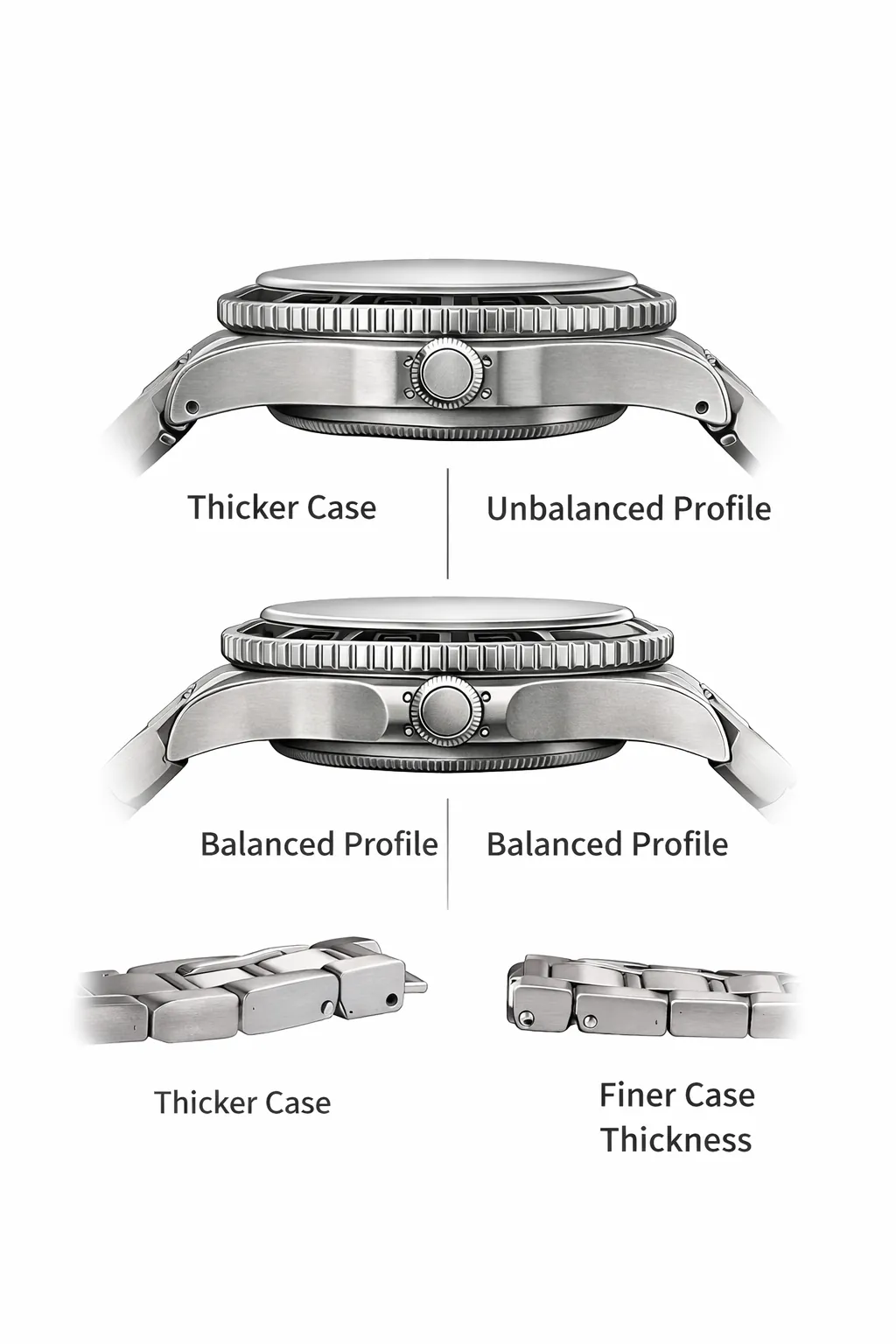
Case Structure: Thickness, Proportion, and Balance
The case is the foundation. Beyond finishing, construction quality shows up in proportions (diameter vs. thickness), clean transitions, and consistent spacing between bezel, mid-case, and caseback. Balance matters because it affects comfort and perceived solidity—especially during daily wear.
Movement Placement and Internal Fit
Movement “specs” don’t tell the full story. Construction quality depends on how the movement sits inside the case: stable positioning, predictable crown feel, and smooth interaction between functions. Proper internal fit reduces looseness and improves long-term consistency.
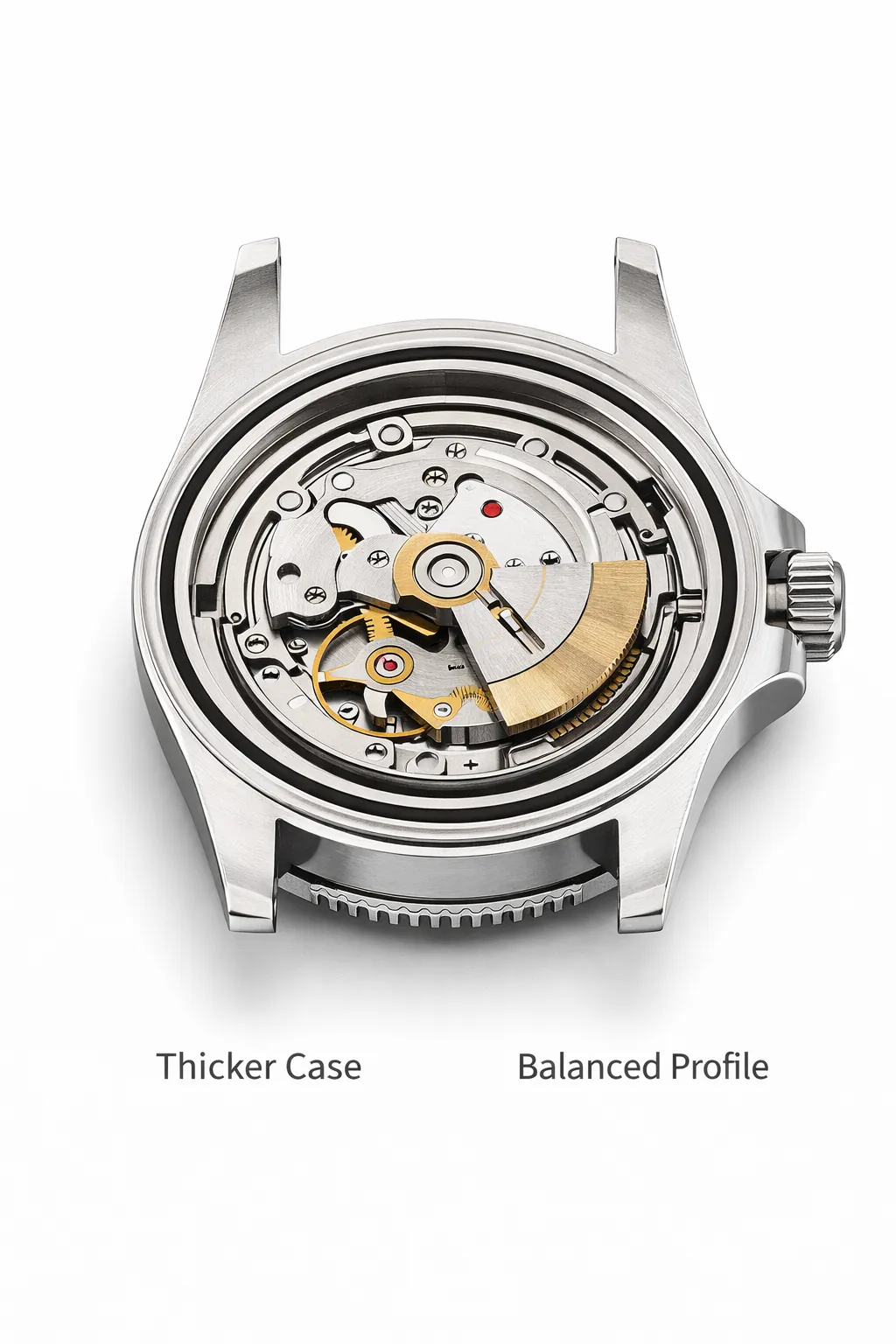
Two watches can share a similar movement type, yet feel completely different—because the fit and interface details are what you interact with every day.
Dial, Hands, and Alignment Discipline
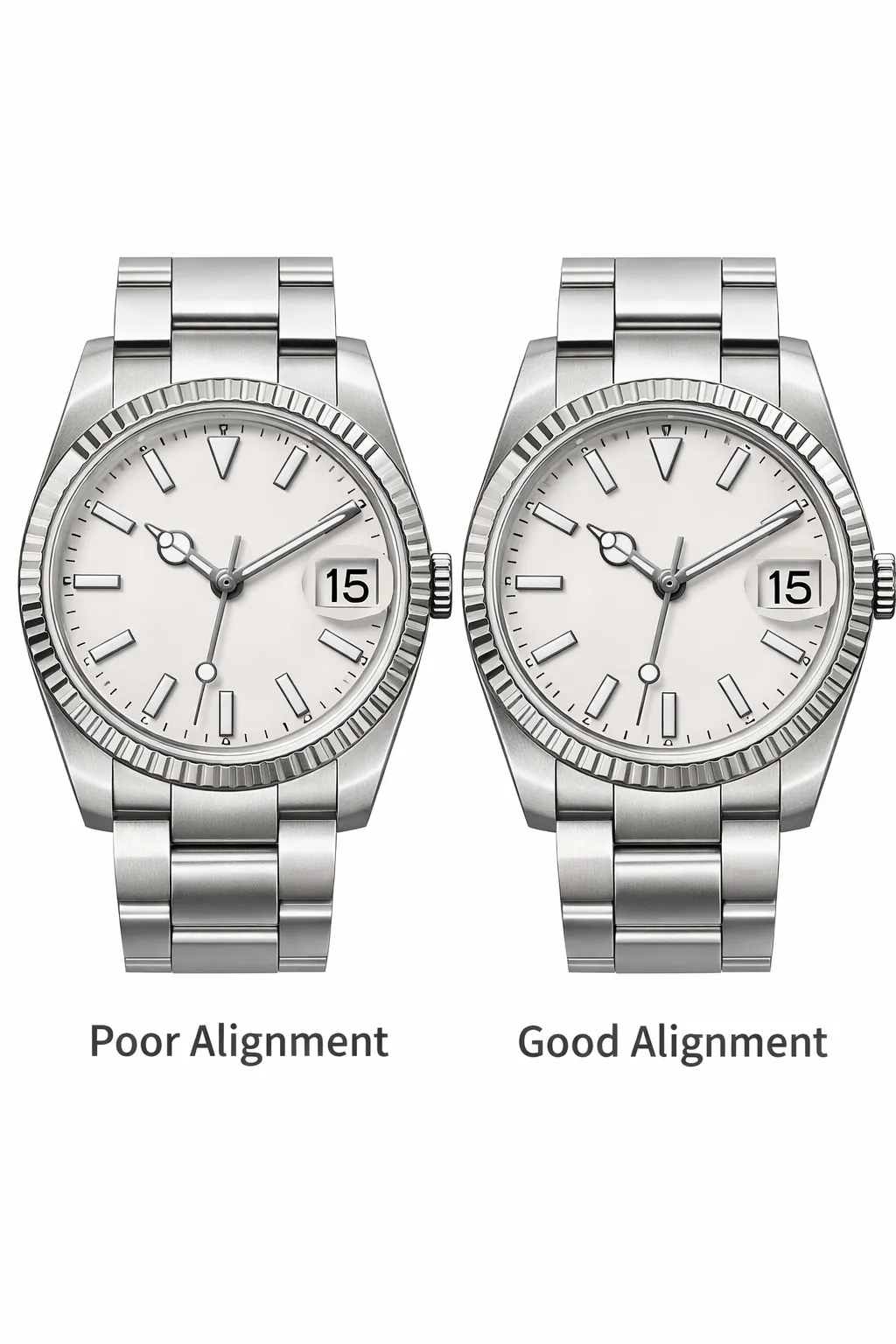
Alignment is one of the clearest signals of careful assembly. Look for consistent hand spacing, centered printing, and marker/date alignment. These details don’t require tools—just attention and a few viewing angles.
Crystal, Bezel, and External Interface Integration
Interfaces are where construction quality becomes “felt.” Crystal seating, bezel alignment, and clean boundary transitions affect visual clarity and handling. The goal isn’t perfection in isolation—it’s coherent integration.
Bracelet Attachment and On-Wrist Integration
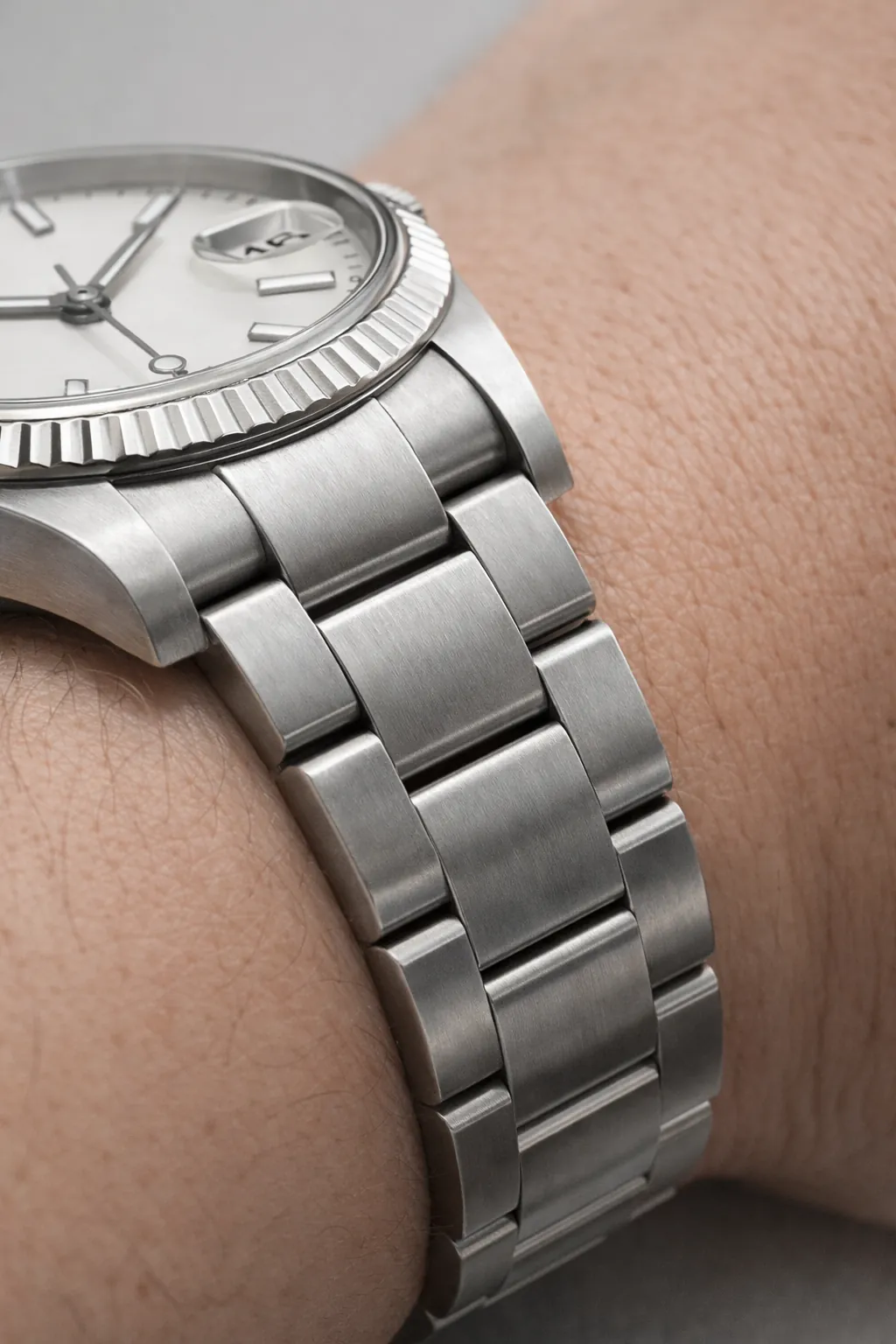
Bracelet quality is less about shine and more about articulation, end-link fit, and how naturally it drapes. Strong integration keeps the watch stable and comfortable through movement.
Consistency and Tolerance Control
The difference between “one good sample” and true construction quality is consistency. Reliable assembly shows repeatable alignment, predictable control feel, and fewer random variances. That consistency is what supports long-term satisfaction.
How to Evaluate Construction Quality Without Technical Tools
- Balance on wrist: does it sit stable without shifting?
- Control feel: is the crown action smooth and consistent?
- Alignment cues: do hands/markers/date look centered from multiple angles?
- Interface continuity: do crystal/bezel/case boundaries look clean and even?
- Bracelet behavior: does it articulate naturally and connect tightly at the case?