


Replica Watch Feel on Wrist: How Weight and Balance Affect Wear
If you’re searching “replica watch feel on wrist”, you’re usually trying to answer a practical question: Will it feel secure, comfortable, and “right” over long hours? The answer depends less on raw weight and more on how that weight is distributed across your wrist.
Why “feel” is more than grams
Two watches can weigh the same yet wear completely differently. The difference is usually the center of gravity (how “top-heavy” the watch is), plus contact quality (how well the caseback, lugs, and bracelet/strap spread pressure). A well-balanced replica can feel stable and premium even if it’s not the heaviest piece in your box.
Comfort rule of thumb: A watch feels “right” when it stays centered on the wrist with minimal bracelet tension, and it doesn’t tilt or slide when you rotate your forearm.
What actually drives the replica watch feel on wrist
1) Case thickness & top-heaviness
Thickness isn’t just aesthetics. A taller case can move mass upward, increasing the “pendulum” effect—especially on slimmer wrists. This can make a watch feel like it wants to roll outward. A lower, well-proportioned case usually feels more planted and less tiring in daily wear.
2) Material density (and where it’s used)
Steel bracelets add weight, but they also add support by distributing load around the wrist. Rubber straps typically reduce total weight and can improve grip, yet they can also concentrate pressure if the strap is too stiff or the clasp sits awkwardly.
3) Caseback shape & lug curvature
A caseback that matches wrist curvature increases contact area, which reduces pressure points. Similarly, lugs that curve down can make a larger case wear smaller, improving stability.

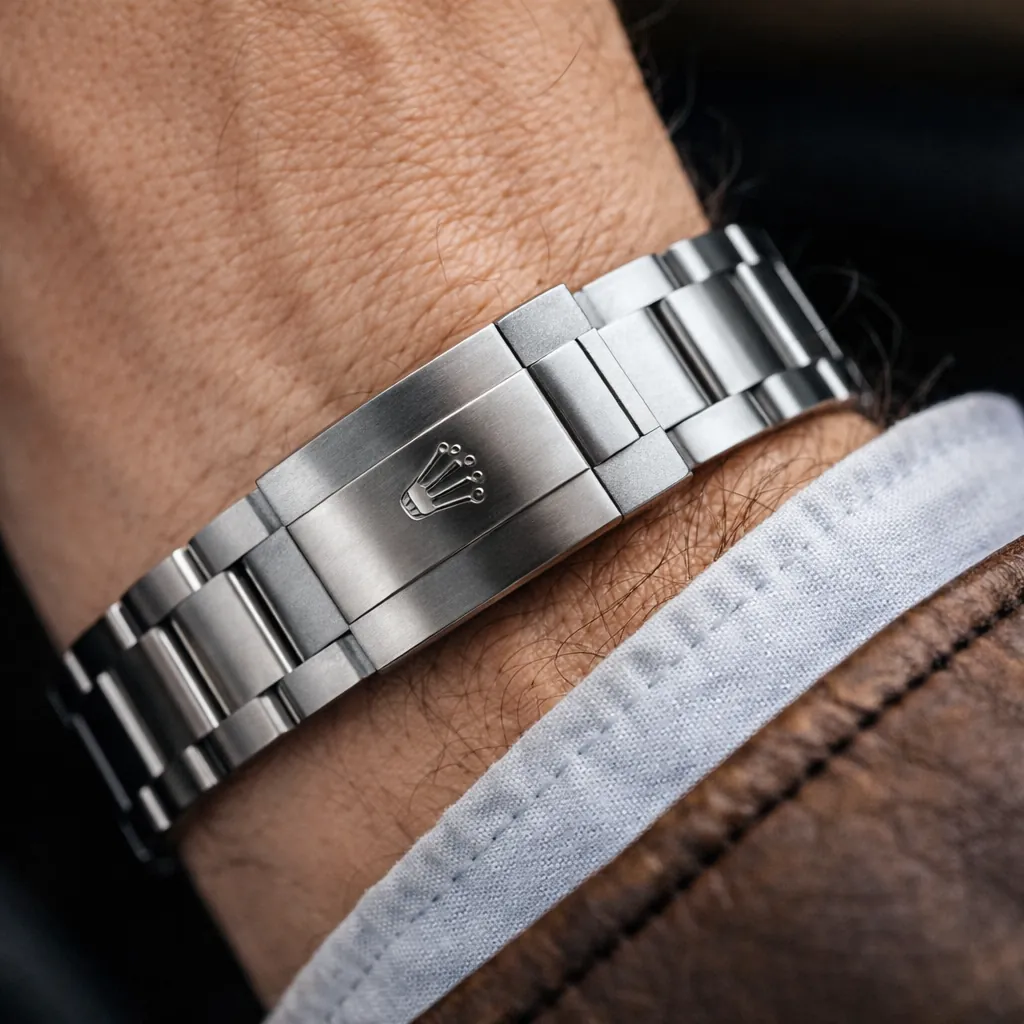
Bracelet and clasp: the “hidden” comfort system
Many people blame weight when the real issue is fit. A bracelet that’s slightly loose can cause the head to drift and rotate, making the watch feel heavier than it is. Too tight, and you’ll get hot spots near the clasp or at the case edges. The best feel is usually a secure-but-not-restrictive fit that allows small swelling changes throughout the day.
| What you feel | Likely cause | Fast adjustment idea |
|---|---|---|
| Head “rolls” outward when walking | Top-heavy case + bracelet slightly loose | Remove half-link if available; tighten micro-adjust one step |
| Clasp presses or irritates | Clasp sitting on wrist bone; uneven link sizing | Rebalance links so clasp sits centered under wrist |
| Feels heavy only after hours | Pressure concentrated at one point | Improve contact area: better sizing, softer strap, or adjust clasp position |
| Slides toward hand | Wearing too close to wrist joint | Move watch slightly above wrist bone for stability |
How to “test” feel in a way that predicts real life
If you want to evaluate replica watch feel on wrist objectively, try a short routine that mimics how you actually use your hands. The goal is to identify tilt, slip, and pressure points—the three things that most often make a watch feel off.
- Desk test (3 minutes): type, rest your wrist, then lift your hand repeatedly. Notice if the case edge bites or the crown rubs.
- Rotation test (1 minute): rotate your forearm palm-up/palm-down. A balanced watch stays centered with minimal drift.
- Grip test (1 minute): hold a phone or steering wheel. If the clasp shifts and “pinches,” sizing is uneven.
- Heat/swell check (later in the day): if comfort changes a lot, micro-adjust range (or strap choice) matters more than weight.
Small tweaks that change feel dramatically
The easiest improvements usually come from sizing and positioning: move the watch slightly above the wrist bone, center the clasp, and aim for a fit that prevents rotation without cutting circulation. If you prefer a “planted” feel, bracelets often help; if you prefer a “disappears on wrist” feel, a well-made rubber strap can be ideal.
If you’re choosing a watch for long hours, it helps to think beyond the first impression and focus on fatigue. A watch that feels impressive at minute one can feel tiring at hour six if balance and contact aren’t right.
Model style differences: why some wear “easier” than others
Without getting lost in specs, certain design families tend to share similar wear characteristics:
- Dive-style cases: often feel solid and stable, but thickness can add top-heaviness on smaller wrists.
- Dress-style profiles: usually wear flatter and lighter; comfort relies heavily on strap quality and lug curvature.
- Chronograph-style builds: can feel more substantial due to case height and pushers; fit and placement become more important.
- Integrated/bracelet-forward designs: can distribute weight extremely well when tolerances are tight and the bracelet articulates smoothly.
Buying-prep mindset: choose feel based on your day. Desk work favors low-profile comfort; active use favors secure balance and grip.
Comfort, durability, and “premium feel” usually come together
A satisfying on-wrist experience typically appears when case proportions, bracelet articulation, and clasp stability are working together. That’s why “feel” is a useful lens for judging overall build—not as a sales pitch, but as a practical shortcut: if a watch sits stable, sizes predictably, and avoids pressure points, it usually reflects careful assembly and wear engineering.
If you’re optimizing for all-day comfort, our broader guide on daily-wear watch considerations pulls the key factors together (comfort, durability, and style) in one place.
Quick self-check before you decide
Use this short checklist to confirm you’re choosing a replica that will wear well—not just look good in photos:
- Does the case profile match your wrist size and your daily activity (desk vs. active)?
- Will the bracelet/strap distribute pressure evenly, and can you fine-tune fit as your wrist swells?
- When you rotate your forearm, does the watch stay centered without needing to be uncomfortably tight?
- Do clasp placement and link sizing keep the underside comfortable (no bone pressure, no pinching)?