

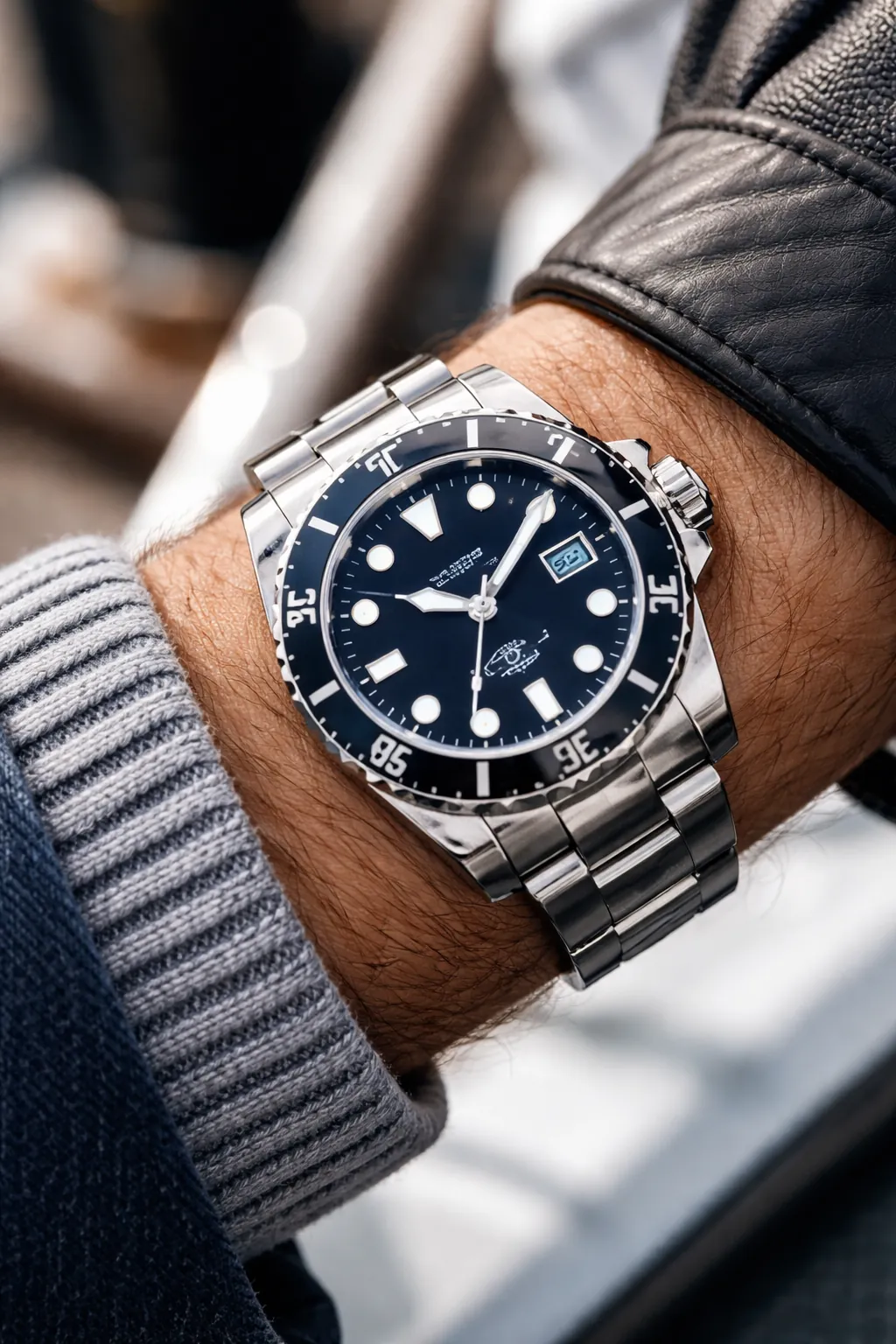
Replica Watch Terminology Explained: Common Terms You Should Know
If you’re comparing models, reading specs, or reviewing QC photos, terminology can either clarify your decision—or create confusion. This guide translates the most common replica watch terms into plain, practical meaning so you can judge details with confidence.
Why terminology matters (and how to use it well)
Replica watch discussions have their own “short-hand”: people compress case materials, movement types, and visual accuracy into a few words. The upside is speed. The downside is that the same word can mean different things depending on the seller, the factory, or the model family. A good rule: treat terminology as a starting point, then confirm it against photos, measurements, and movement description.
In this article, each term includes (1) what it typically means, (2) what it doesn’t guarantee, and (3) a quick way to judge it. That keeps the page informational and decision-supportive—without turning it into a sales page.
Core replica watch terms you’ll see everywhere
Replica / Rep
A watch produced to mirror the design language of a well-known model (shape, dial layout, bezel, bracelet, etc.). It describes the category, not the quality level.
1:1 / “Super Clone”
Common marketing shorthand for “high visual similarity.” Useful as a hint, but not a technical standard. Always judge by close-up photos: dial printing, bezel alignment, and case finishing.
Factory / Batch
“Factory” usually refers to the production source; “batch” refers to a run where small details may vary. When comparing reviews, check if they’re discussing the same batch.
Version (V1 / V2 / V3…)
An update cycle: factories adjust parts or finishing over time. “Newer” can mean better alignment or materials, but it can also mean trade-offs (e.g., different lume tone).
How to sanity-check “version” claims
- Ask: what changed? (dial font, bezel action, clasp engraving, crystal clarity, etc.)
- Compare: side-by-side macro photos, not just full watch shots.
- Confirm: measurements (case size, thickness, lug width) if fit matters.
Movement & function terms (the ones that affect daily experience)
Automatic
A mechanical movement that winds via wrist motion. In replica discussions, “automatic” often implies a smoother seconds hand sweep and a more traditional wearing feel.
Quartz
Battery-powered and typically very steady timekeeping. The trade-off is often in “feel” (tick behavior, movement layout), depending on the model being replicated.
Chronograph / GMT
Functional complications. “Chronograph” refers to stopwatch functions; “GMT” refers to tracking a second time zone. Here, terminology matters because not all implementations behave the same.
If you want a clean baseline for these terms, it helps to understand general watch mechanics first—then interpret replica descriptions on top of that. A practical reference is watch movement types explained, which breaks down mechanical, automatic, and quartz in a way that makes spec sheets easier to read. :contentReference[oaicite:1]{index=1}
Swiss vs Japanese movements
This phrase usually signals the movement’s origin pattern and parts ecosystem. It’s not a “good/bad” label by itself—more like a clue about servicing familiarity, parts availability, and expected behavior under daily wear. If you’re comparing these two options, see Swiss vs Japanese movements for a deeper, non-hype comparison. :contentReference[oaicite:2]{index=2}
Finish & visual terms (what the eye actually notices)
AR coating (Anti-Reflective)
A coating on the crystal that reduces glare and improves dial readability. Best judged under angled light—look for clarity without “milky” haze.
Rehaut / Engraving alignment
“Rehaut” is the inner ring between dial and crystal (common in certain Rolex designs). People use this term when checking text spacing and alignment.
Lume
The luminous material on markers/hands. “Strong lume” means brightness; “clean lume” means even application and consistent color tone.
Brushing / Polishing
Surface finishing on case and bracelet. High-end impressions often come from crisp transitions between brushed and polished surfaces.
A quick “visual accuracy” checklist (useful for any model family)
- Dial printing & fonts: uniform thickness, clean edges, consistent spacing.
- Hand alignment: centered, correct length proportions, no wobble or uneven gaps.
- Date window: centered, level, and with balanced margins; cyclops magnification (if present) should be visually clean.
- Bezel action & alignment: clicks feel controlled; triangle/markers line up at 12.
- Bracelet fit: links articulate smoothly; clasp closes with confidence (no “spongy” feeling).

QC & expectation terms (what people really mean)
QC (Quality Check)
Pre-shipment photo/video review. “Good QC” usually means alignment, finishing, and function checks match the agreed standard.
Tolerance
Acceptable micro-variation (e.g., tiny bezel play, minimal hand offset). In watchmaking, tight tolerances cost more—replicas are no exception.
Daily wear vs “special wear”
A practical framing: some models are built and finished for frequent wear, while others emphasize aesthetics and may need gentler handling.
Servicing / Maintenance
Not a “problem term”—just reality for mechanical objects. Regular use, impact, and environment determine when maintenance becomes helpful.
A helpful mindset: terminology should make your evaluation more objective. Instead of “Is this perfect?”, ask “Does this meet the level of finishing and function I expect for how I’ll wear it?” That keeps your decision grounded in reality—and reduces buyer’s remorse.
Related reading & collections (for deeper comparison)
If you’re using this terminology to narrow down what fits your lifestyle, these links provide next-step context without changing the page into a product list:
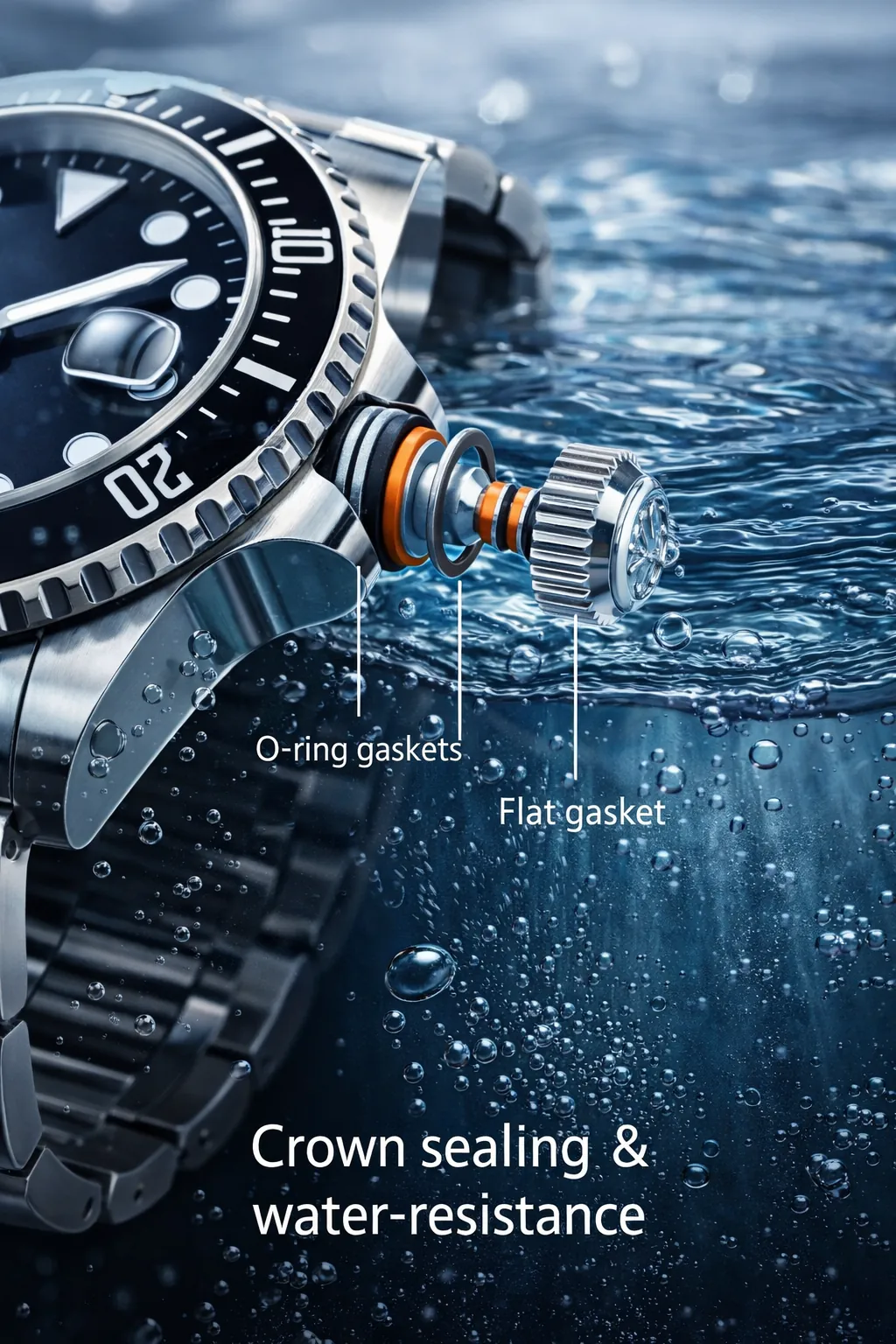
A strong reference point for terms like bezel alignment, bracelet feel, and water-resistance expectations across sports-style designs.
watch movement types explained
If “automatic vs quartz” is still fuzzy, this makes spec sheets and comparison posts much easier to interpret.
A deeper look at what those labels typically imply for behavior, familiarity, and day-to-day expectations—without hype (or fear).