

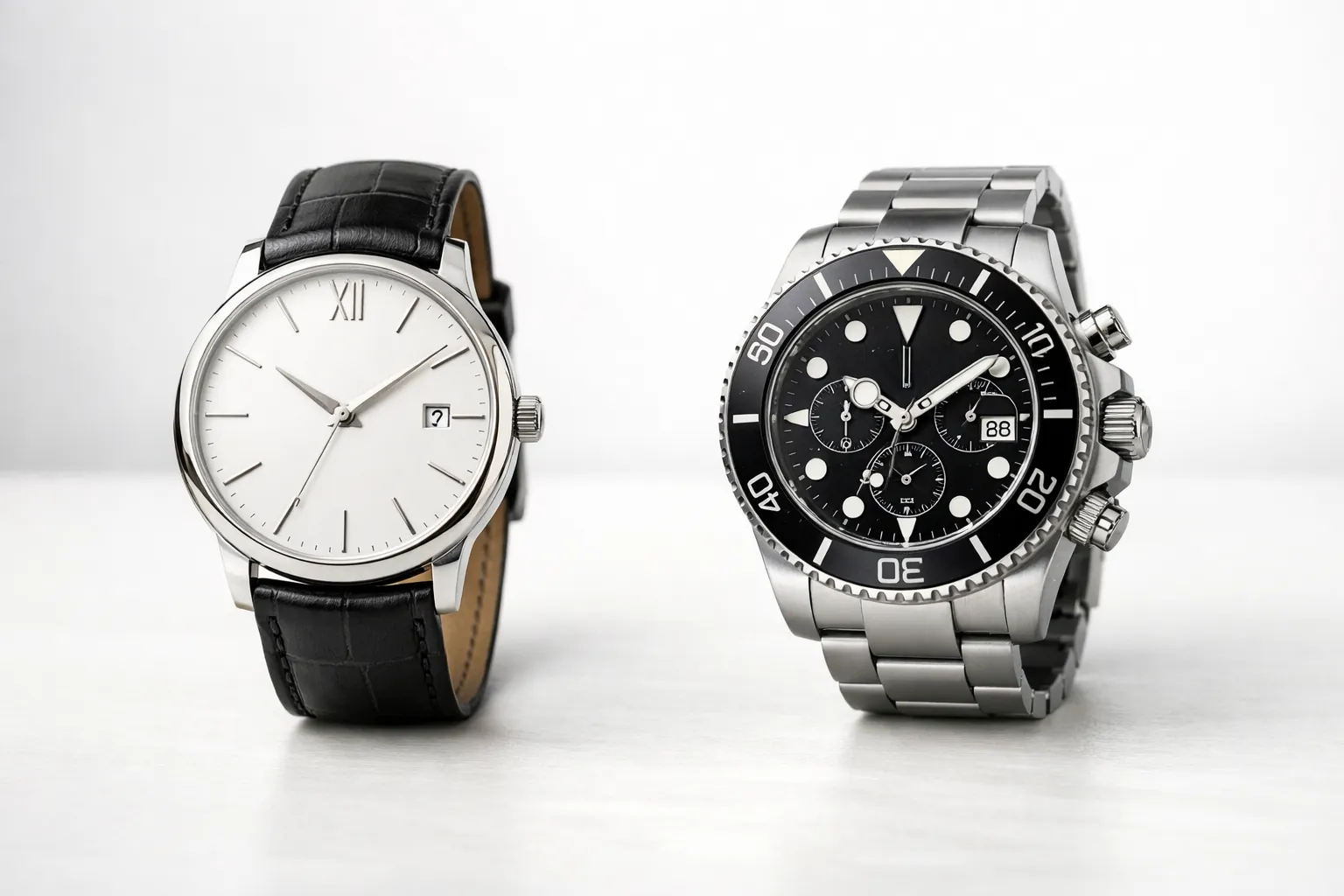
Dress Watch vs Sports Watch Explained: Purpose and Design Differences
If you’re searching dress watch vs sports watch, you’re usually not asking “which is better,” but which is more appropriate for your routine, wardrobe, and expectations. This guide breaks down the real-world purpose, design logic, and decision cues—without turning the page into a sales pitch.
What “Dress Watch” and “Sports Watch” Really Mean
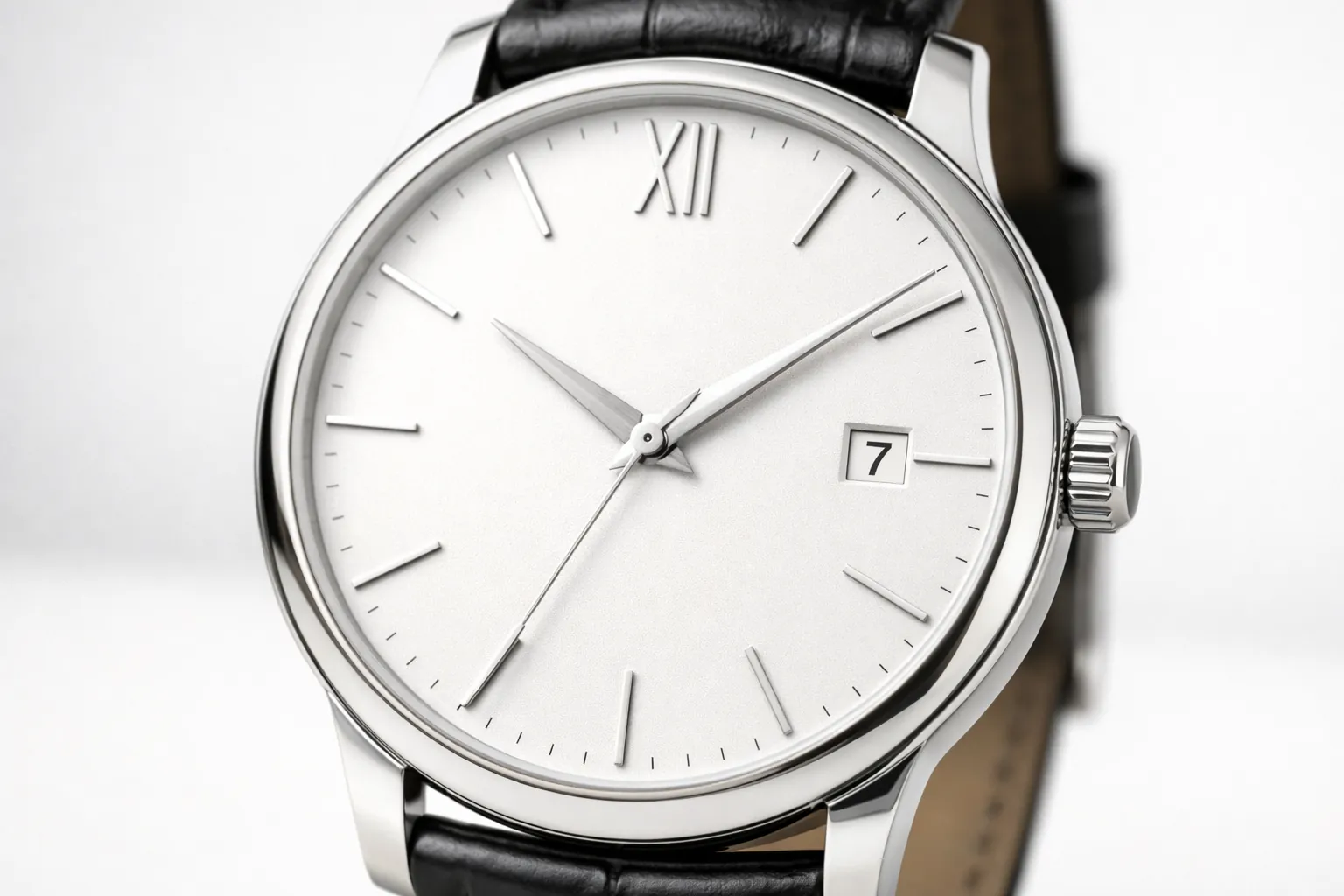
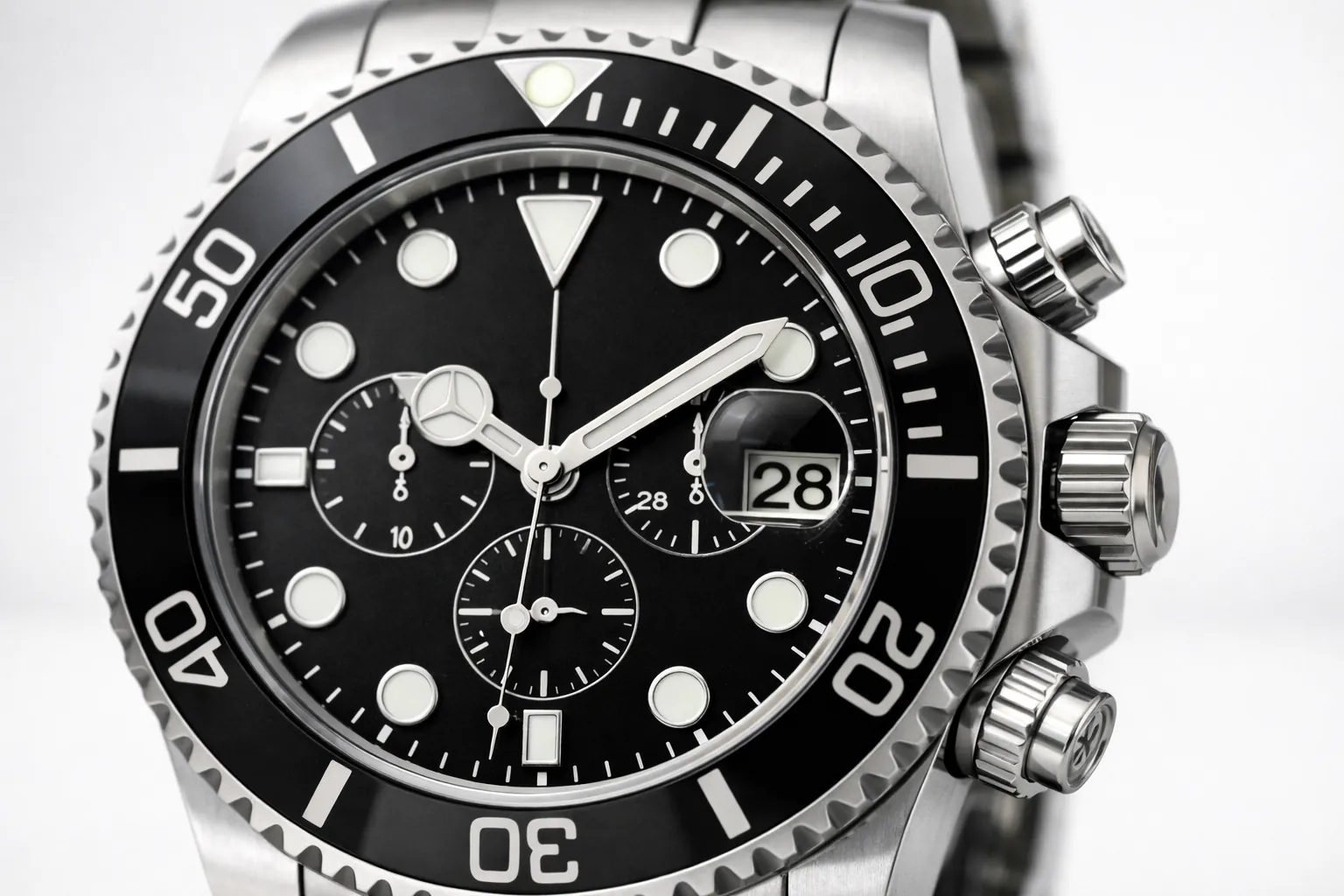
A dress watch is designed to disappear under a cuff and complement formal or smart outfits. It prioritizes clean proportions, restrained details, and visual harmony. A sports watch is designed to stay readable and durable in active contexts—think travel, water, impact, sweat, and daily knocks. It prioritizes functional visibility, sturdier construction, and features that support activity.
At a Glance: Purpose and Design Cues
| Dimension | Dress Watch | Sports Watch |
|---|---|---|
| Primary purpose | Formal compatibility, refined presence | Durability, legibility, versatility in active settings |
| Case profile | Thinner, smoother, less protrusion | Thicker, more protective geometry |
| Dial design | Minimal markers, clean symmetry | Higher contrast, bolder indices, often lume |
| Bezel / features | Plain bezel, few “tools” on the exterior | May include rotating bezel, crown guards, chrono pushers |
| Strap/bracelet vibe | Leather or elegant bracelet with subtle finishing | Bracelet or rubber; emphasis on security and comfort |
| Best use | Business formal, weddings, sleek office looks | Travel, weekend, water, daily wear, casual + smart casual |
Design Differences That Matter in Real Life
1) Thickness and how it wears
One of the quickest tells is how tall the watch sits. Dress watches aim for a lower profile so sleeves glide over them. Sports watches often accept more height to support stronger cases, gaskets, and functional components. If you spend most days in long sleeves, thickness becomes a comfort and styling factor.
2) Dial readability vs. visual restraint
Dress dials tend to be calmer: fewer lines, fewer textures, less contrast. Sports dials tend to be more “operative”: higher contrast, chunkier hands, and lume for low-light conditions. Neither is automatically “better”—it’s about whether you value quick reading at a glance or a quiet, polished look.
3) External controls and “tool” language
Many sports watches look the way they do because they’re shaped around function: protective crown guards, grippy bezels, or chronograph pushers can all add character—but also add bulk and visual intensity. Dress watches typically avoid these elements to keep the silhouette smooth.
How to Choose: A Simple Decision Framework
Instead of asking “dress or sports,” ask which trade-offs you prefer. Use the questions below to land on a category (or a versatile hybrid).
If you answer “yes” to more items on the left, you’re likely a dress-watch person. If you answer “yes” to more items on the right, a sports watch will feel more natural.
| Dress-leaning | Sports-leaning |
|---|---|
| I wear long sleeves / suits often and want a low profile. | I’m outdoors, traveling, or moving a lot day to day. |
| I prefer understated dials and clean finishing. | I value instant readability and lume at night. |
| I want the watch to blend with formal outfits. | I want a watch that looks right with casual clothing. |
| I rarely need “tool” features on the bezel/case. | I like functional design elements and sporty presence. |
The “Best of Both” Option: Versatile Everyday Watches
A lot of people end up happiest with a middle-ground: a watch that’s clean enough for smart outfits, but sturdy and readable enough for daily life. If you’re trying to evaluate that balance, it helps to think in terms of comfort, durability, and styling flexibility. You can explore the broader framework here: daily wear watch considerations .
Where Dress vs Sports Shows Up in Classic Model Families
Without turning this into a “buy now” page, it can still be useful to connect the categories to familiar watch families. In general, Date-style, polished-bezel profiles skew dressier, while diver-style bezels and robust cases skew sportier. If you want to browse these families as visual references: check the Datejust collection for dress-leaning cues, and the Submariner collection for sports-watch cues.
Bottom Line
The difference between a dress watch and a sports watch is not about which one is “higher end.” It’s about purpose-first design: dress watches prioritize refined restraint and cuff-friendly proportions, while sports watches prioritize legibility, robustness, and functional presence. Once you know what your routine demands, the right category becomes obvious—and you can choose a style that feels intentional, not forced.