
Grand Complications

Patek Philippe Grand Complications replica — an expert, design-first field guide

Purpose: This category page focuses on structure, materials, wearing experience, design differences, and collection value. No pricing, no sourcing, no authenticity advice.

Grand Complications, made wearable: the one-paragraph portrait

In modern dress-watch language, “Grand Complications” signals a dense orchestration of calendar logic (annual/perpetual), moonphase, chronograph/rattrapante, chiming, and auxiliary indicators arranged into a legible dial hierarchy. That density must still disappear under a cuff and read at a glance. The practical test is simple: curvature at the lugs, controlled crystal height, and crisp layer separation on the dial. This page translates those ideas into decision tools, so you can evaluate any Patek Philippe Grand Complications replica by how it wears before how it looks.

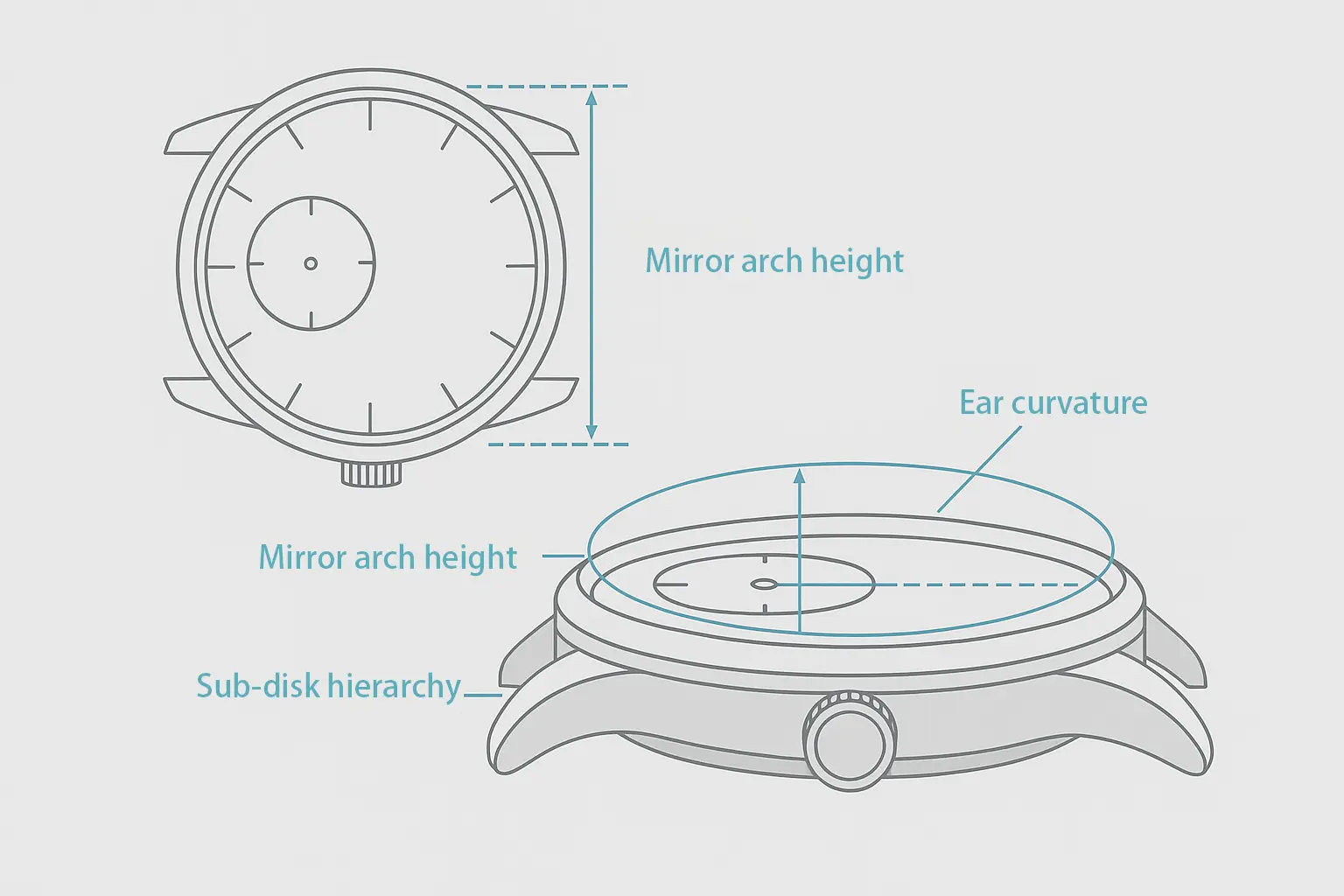
Top and side structural diagram illustrating crystal height, lug curvature, and subdial layering (educational schematic)
“One-sentence portrait” schematic — showing the top and 3D side view proportions of a Grand Complications case.
Blue annotation lines indicate crystal height, lug curvature, and subdial layer relationships.
For educational and structural visualization purposes only.

Methodology & reference scope (2025) — This guide reflects design-first assessment principles focused on wearability, dial architecture, finishing and functional clarity, excluding pricing, sourcing and authenticity topics.

The style spectrum: classic business to connoisseur elegance

What changes across the spectrum

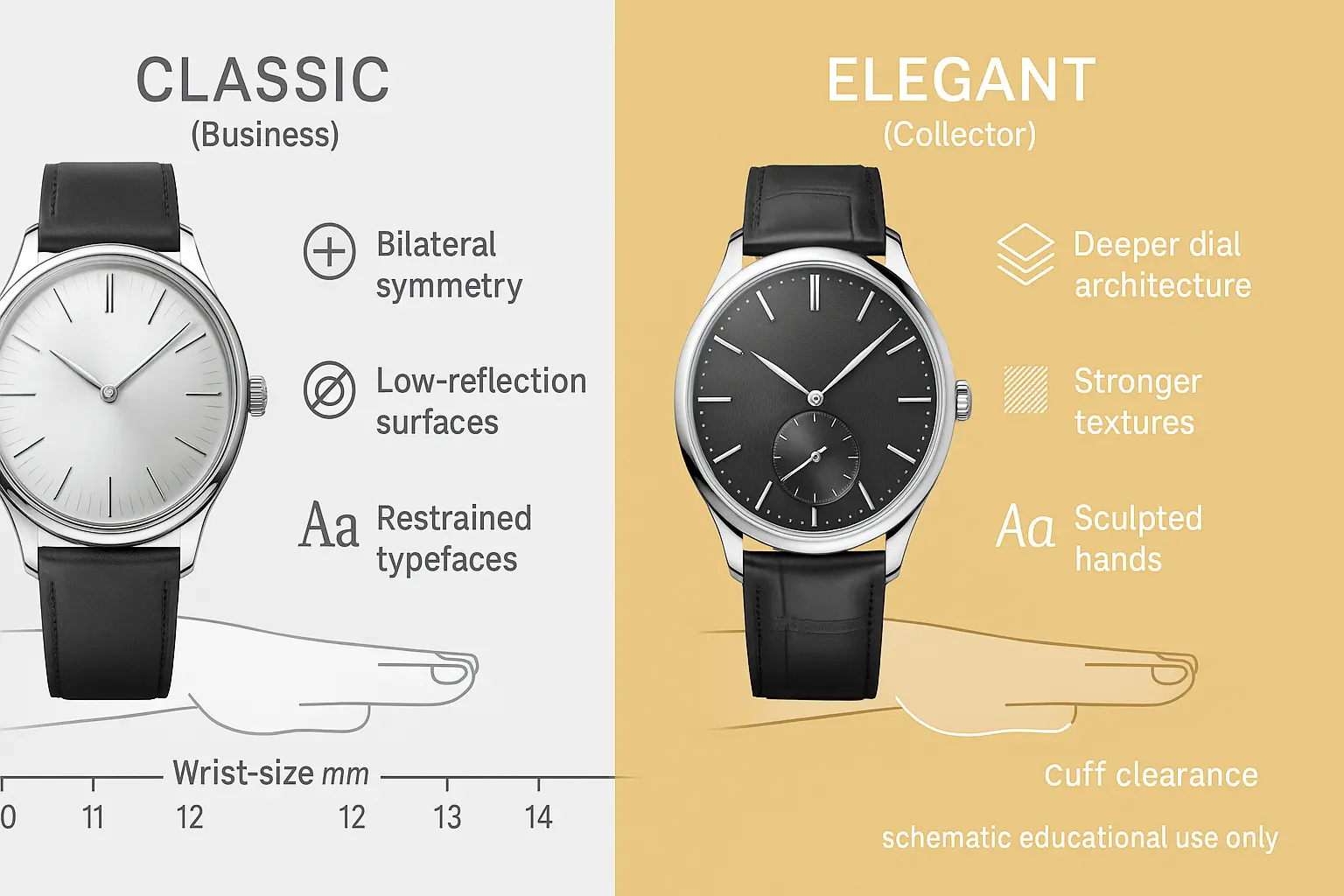
  • Classic (boardroom-first): bilateral symmetry, low-reflection surfaces, thin hour markers, restrained typefaces, and a sub-dial hierarchy that guides the eye in one sweep.
  • Elegant (collector-first): deeper dial architecture, applied numerals, stronger sunburst/galvanic textures, and sculpted hands that reward slow viewing.

Why that matters on the wrist

  • Sub-dial depth & placement influence hand occlusion: the closer to center, the more minutes/chronograph hands can hide data; great layouts counter with hand stepping and contrast.
  • Moonphase aperture size & position sets an axis of calm; centered at 6 creates order but compresses the date ring unless the dial diameter compensates.
  • Symmetry as “noise filter” reduces eye-travel and speeds time confirmation under pressure.

Fit guidance by wrist size

  • 37–41 mm is the formal sweet spot for most wrists. Short, downturned lugs and a modest dome reduce the “volume bump” under cuffs; larger wrists can host taller sub-dial stacks and bolder fonts without clutter.
Dual-panel style spectrum: Classic vs Elegant, with symmetry, glare, typeweight, wrist ruler and cuff clearance icons (educational schematic).
Classic ↔ Elegant style spectrum — left shows bilateral symmetry, low-reflection dial and restrained fonts;
right emphasizes layered textures, sculpted hands and warmer hue balance.
Includes wrist-size ruler and cuff-clearance icons. schematic educational use only.

Related reading on adjacent design languages: compare the minimalist discipline of Patek Philippe Calatrava replica [1] with the sport-elegant geometry of Patek Philippe Nautilus replica [2] and the modern-casual stance of Patek Philippe Aquanaut replica [3] to see how case architecture reframes dial depth and glare control.

Our data take: function × size × scenario matrix

We use an evaluative grid to make sense of complex dials without touching price or sourcing, based on our internal watch-design analysis framework (2025).

A. Function family — annual/perpetual calendar, moonphase, chronograph, chiming, 24-hour/week/day-night indicators.
B. Size family — diameter, thickness, and dome ratio (crystal dome height relative to thickness).
C. Scenario family — business formal, collecting/showcase, ceremonial evenings.

Core patterns (simulated; teaching intent)

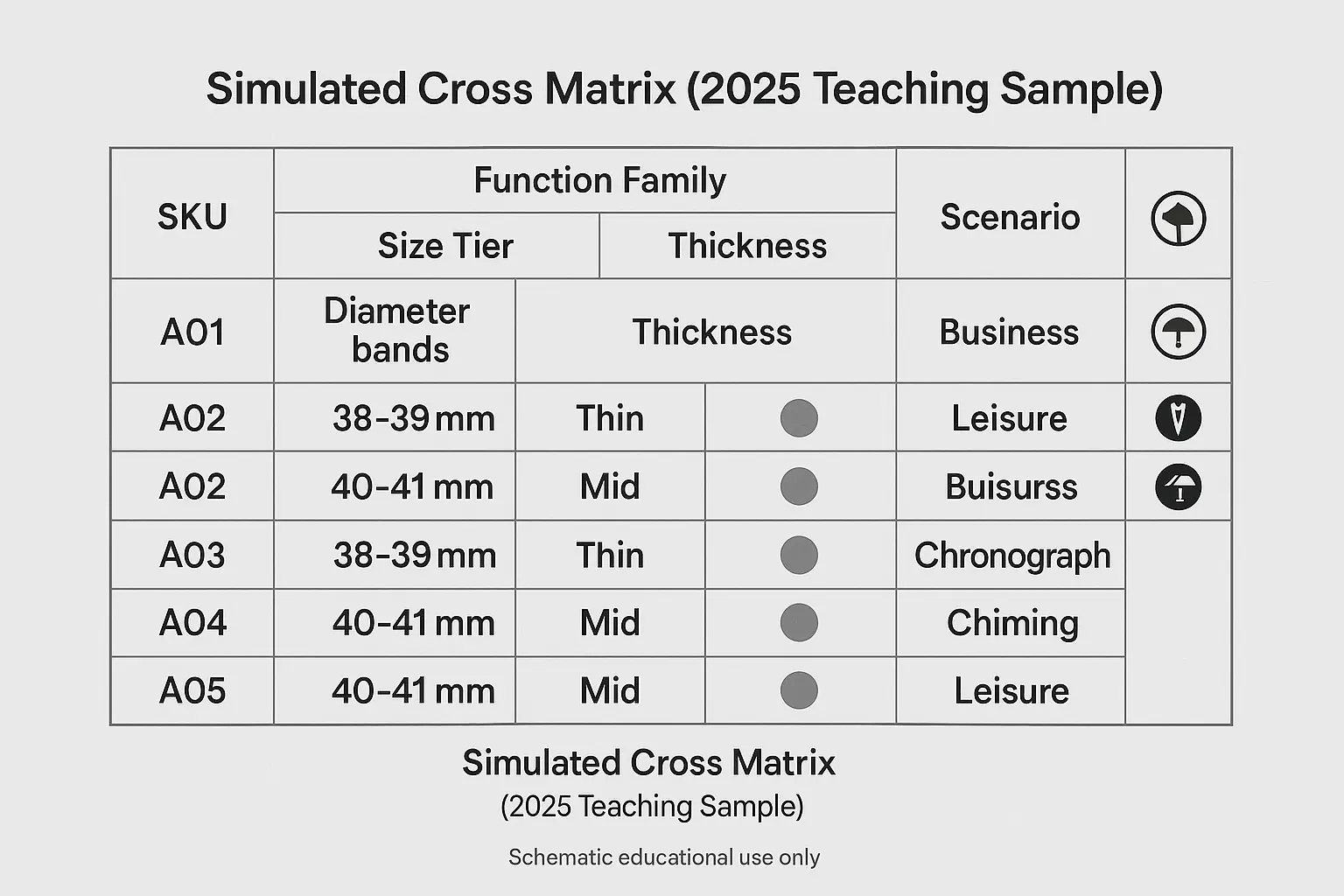
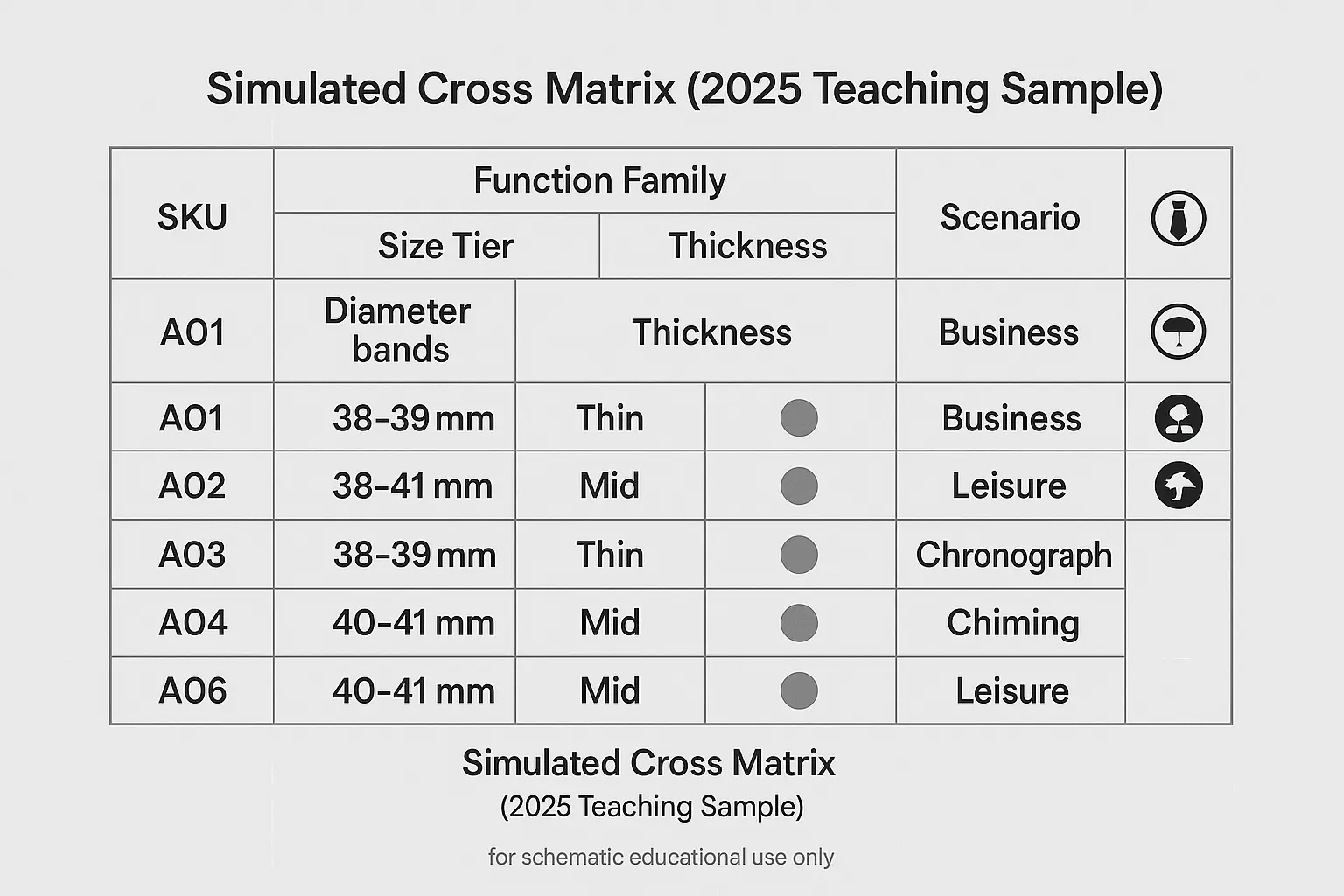
Visual matrix note: The function × size × scenario matrix summarises typical trade-offs (clarity, thickness control, dome ratio) at a glance; values illustrate patterns, not absolute performance.

  • Typically, more modules → more thickness → higher dome ratio. As complications stack, crystal height rises to clear hand layers, raising glare zones and cuff-interference probability.
  • Automatic + display back often strikes the “wear-look balance”; manual + display back leans into ritual appreciation and finish viewing.

Scenario-weighted picks (conceptual)

  • Business formal: clarity > thickness control > function count. A balanced set is annual calendar + moonphase with high-contrast hands.
  • Collector showcase: play value > movement theatre > thickness compromise. Perpetual calendar with chronograph (or chiming) rewards slow, stationary viewing.
  • Ceremonial evenings: presence & craft on display > raw readout speed. Sculpted bezels and domed crystals become part of the attire.
Simulated cross matrix showing function family versus size and scenario grouping (2025 teaching sample).
Function × Size × Scenario matrix — a teaching cross-table linking complication families
(annual, perpetual, chronograph, chiming) with case size tiers and wrist scenarios.
Simulated data, 2025 sample.
Scatter plot showing automatic vs manual winding against display-back type, with point size representing case thickness (simulated teaching data).
Automatic vs Manual × Display-back scatter — each point represents a simulated Grand Complications configuration.
Point size ≈ case thickness; axes classify winding type and back style.
Simulated teaching data only (2025).

Industry context (non-linked mention): recent summaries by the Federation of the Swiss Watch Industry (FH, 2025) and the Deloitte Watch Industry Report, 2025 Edition indicate stable enthusiasm for high-craft complications among collectors—useful backdrop when thinking about long-term enjoyment rather than trend chasing.

Data boundaries: Based on our 2025 internal sample of ~30 Grand Complications-style models (36–42 mm), measured visually and through non-destructive checks; figures are indicative/teaching-oriented rather than laboratory-certified.

Up close with materials & finishing: what your fingers will notice first

Case & bevels

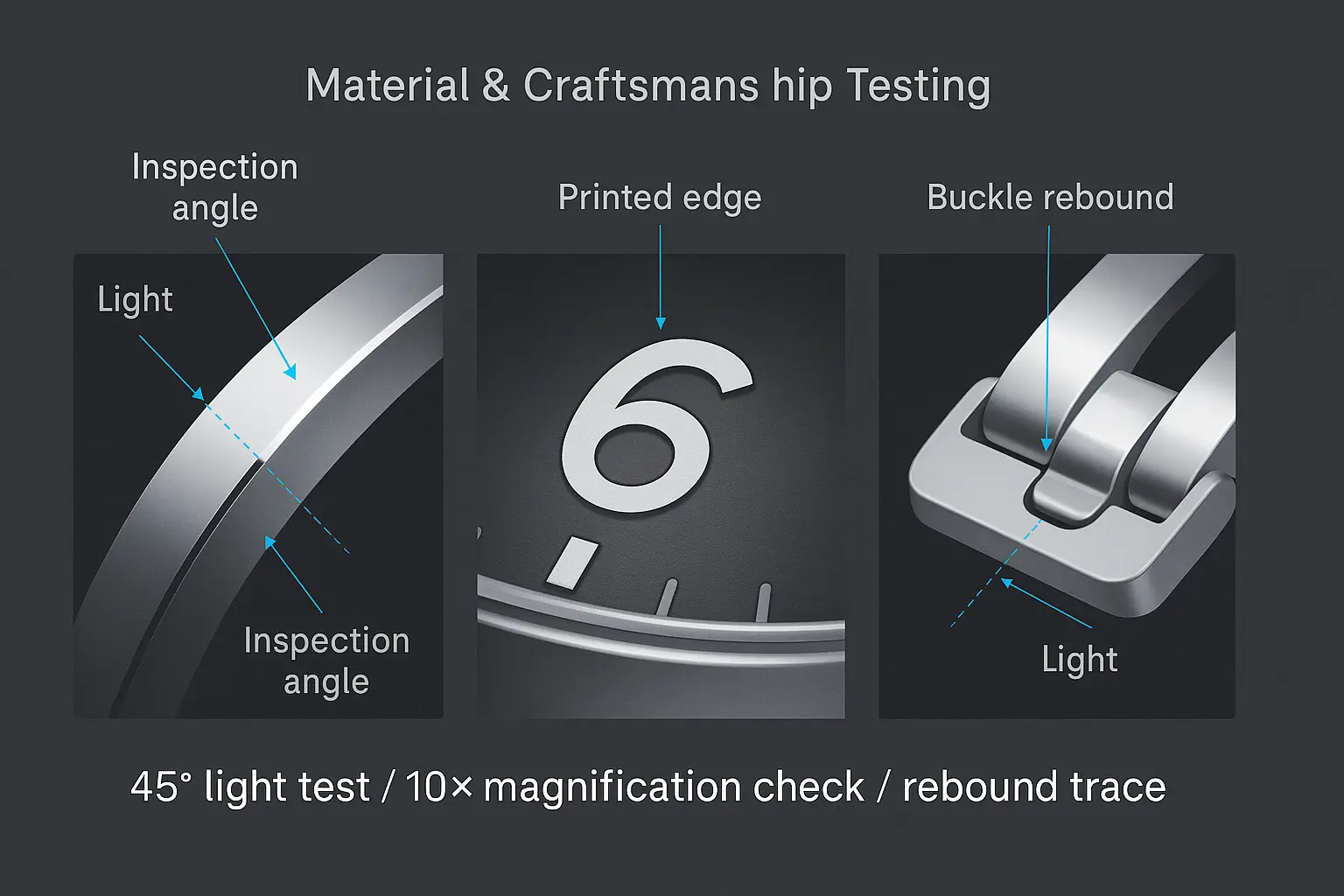
  • Look for a continuous mirror band along the bevel under a 45° side light. Breaks read as “waviness” and dilute the impression of precision.

Dial printing & index fill

  • Clean ink edges and even index fill maintain “quiet” micro-contrast so you can glance—then move on.

Strap & clasp feel

  • Supple lining and predictable clasp rebound remove micro-irritations during long wear.

Home testing (non-destructive, enthusiast level)

  • 45° side-light sweep around lugs/shoulders for continuity.
  • Soft-cloth glide along the caseback seam; snags mean edge refinement is off.
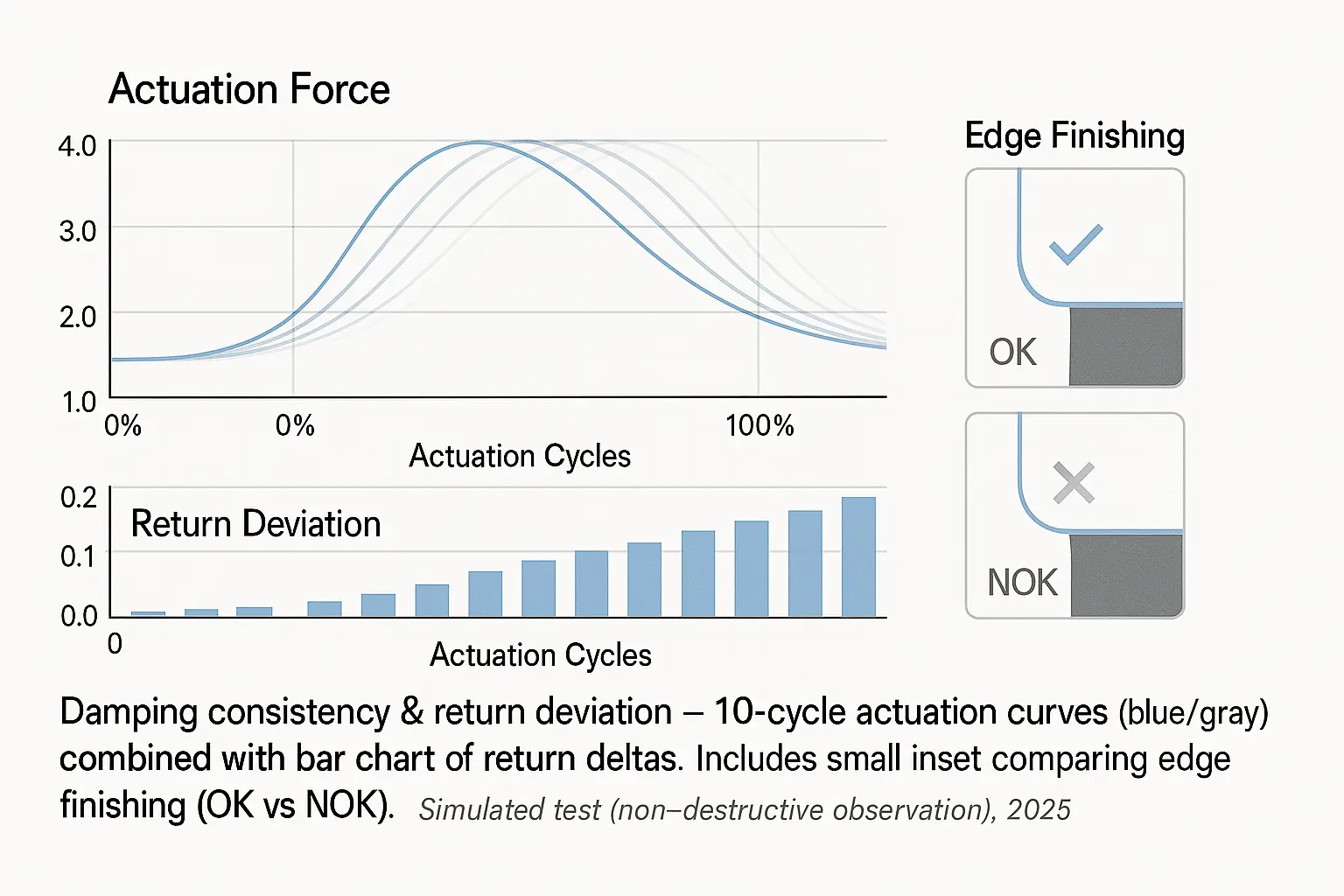
  • Slow-push/quick-release crown cycles (×10) to feel for consistent damping and return.

Methods adapted from established collector practices (e.g., Watchuseek community guides, 2024) and aligned where applicable with WOSTEP workshop good-practice notes (2024 edition).

Triptych macro schematic showing 45-degree bevel light band test, printing edge magnification check, and clasp rebound trace (educational illustration).
Triptych micro-inspection schematic — from left to right: ① 45° light-band bevel test, ② 10× magnification check of printing edges, ③ clasp rebound trace.
Blue annotation arrows indicate test angle and light direction. Educational schematic only (2025).

The design code: continuity, clarity, and type discipline

Interfaces that define the experience

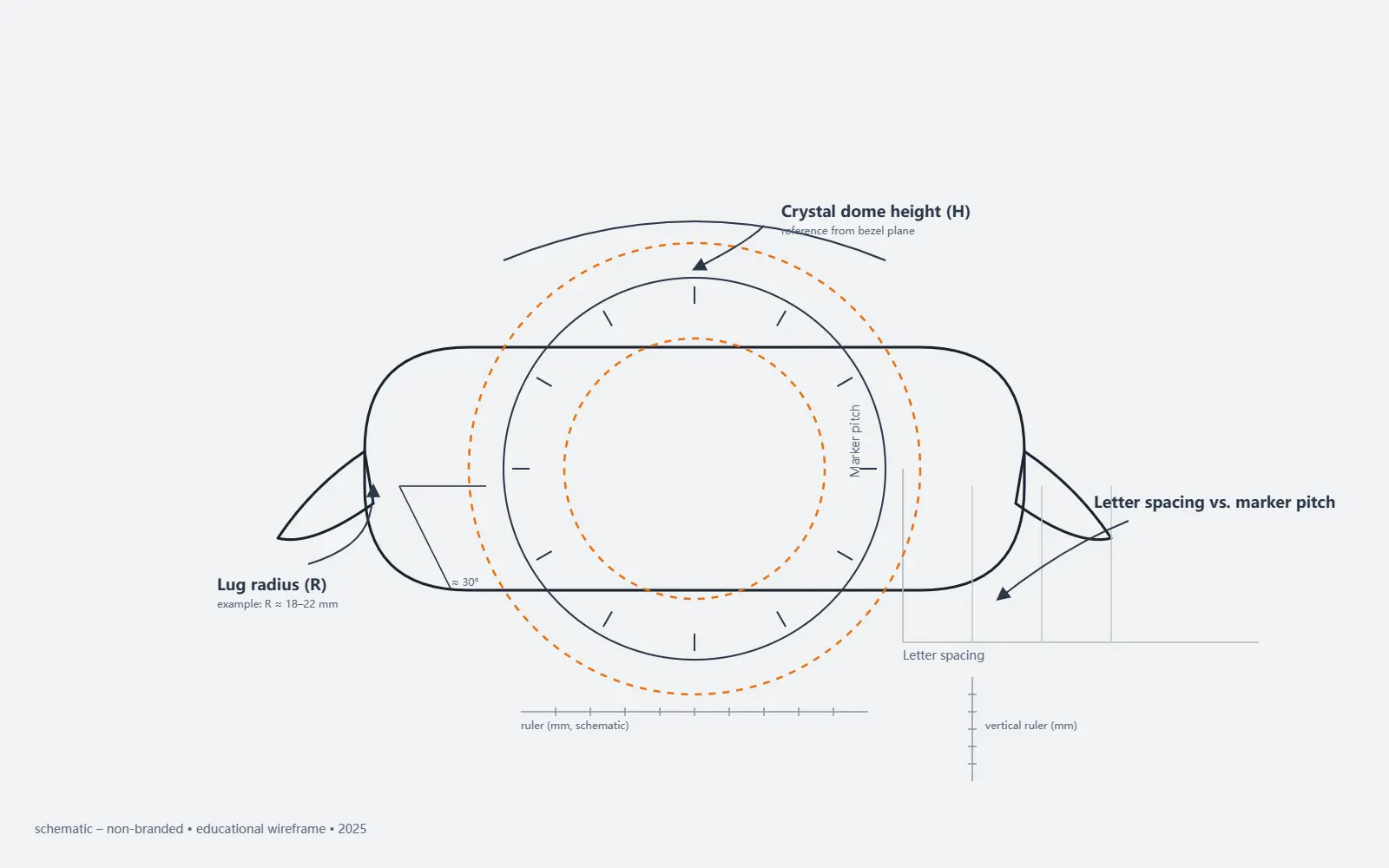
  1. Lug-to-midcase curvature continuity for seamless wrist contact.
  2. Crystal-to-bezel relationship—dome height, inner/outer chamfers, and anti-reflection strategy that break up hot spots without dulling the dial.
  3. Typography & scale—Arabic (modern-functional) vs. Breguet numerals (ceremonial-classic). Balance weight and letter width with minute-track density so font never “overpowers” markers.

Readout in 0.5–1.0 seconds

  • Layer separation via finish contrast (satin vs. gloss), controlled hand stacking (thicker short hands, thinner long hands), and obvious anchor hands for hours/minutes.
Parametric wireframe showing lug radius, crystal dome height, letter spacing and marker pitch — schematic, non-branded (2025).
Parametric wireframe … Schematic – non-branded (2025).

Configuration density, explained simply (Cpmm: a teaching tool)

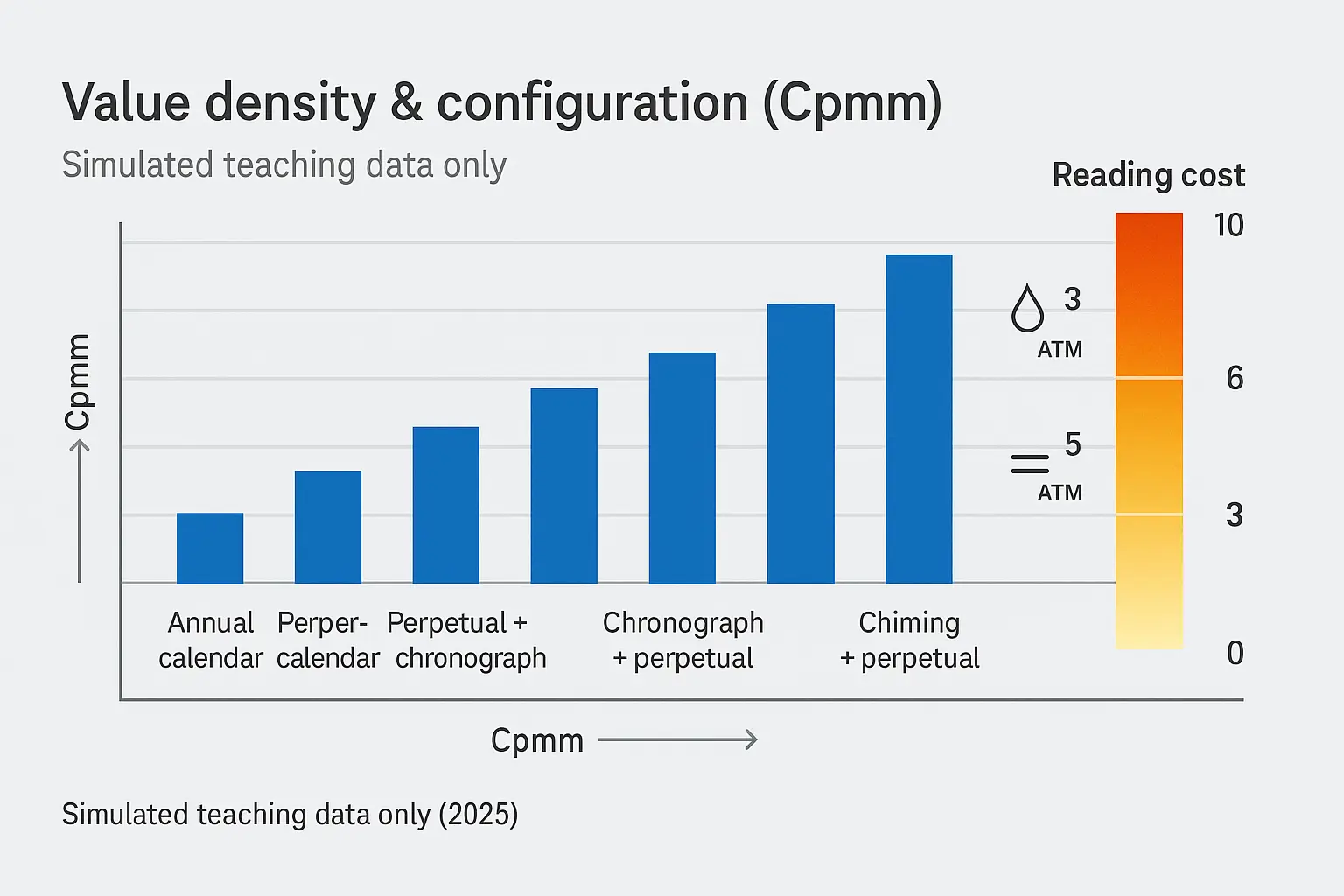
Complication-per-mm (Cpmm) = number of complications ÷ thickness (or normalized volume). It’s not a performance metric—it’s a teaching aid for comparing information load per unit thickness.

  • Higher Cpmm can mean richer theatre but harder reads and more glare risk from taller domes.
  • Within 3–5 ATM everyday boundaries (non-sport), extreme Cpmm raises cuff conflicts; in collecting, it translates into viewing value—bridge shapes, stripes, anglage.

Practical takeaways

  • Office-heavy life: aim mid-Cpmm—annual calendar + moonphase or a simplified perpetual; matte dials, dominant hour/minute hands.
  • Collector life: higher Cpmm with display back and sculpted hands for depth.
Cpmm teaching chart showing configuration density versus reading cost (simulated data 2025)
Value Density & Configuration (Cpmm) — Simulated teaching data only (2025).
Blue bars represent Cpmm levels across complication types; the orange heat scale shows reading cost;
3 ATM / 5 ATM labels indicate wearability scenarios.

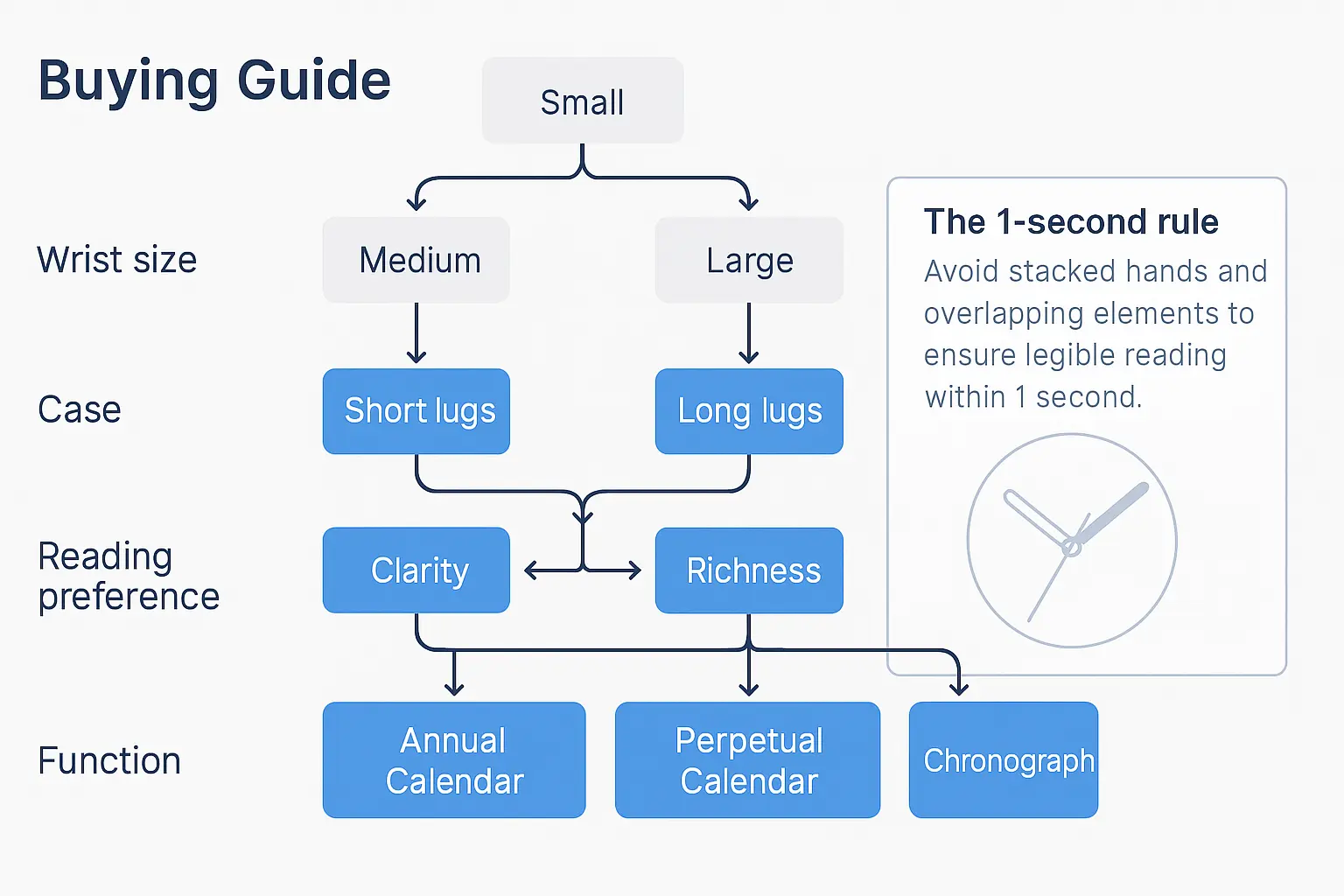
How to choose in three moves (zero pricing, zero sourcing)

Step 1 — Fit before features

Measure wrist and set diameter/height limits. Shorter lugs and a lower dome reduce cuff snag.

Step 2 — One-second read test

In bright and backlight conditions, confirm time within one second; if your eyes wander across sub-dials, you’ll fight the watch on busy days.

Step 3 — Function priority

  • Annual vs. perpetual calendar: lower-maintenance clarity vs. long-cycle completeness.
  • Chronograph need: extra registers and hand layers demand stronger contrast and careful stacking.
  • Chiming: acoustic romance suited to quiet, ritual spaces.
Four-level decision flow: wrist size → case design → readout preference → complication choice, with 1-second read test and hand-stack legibility inset (educational schematic).
Decision flowchart — wrist size → case shape → readability preference → function priority.
Includes a “1-second read test” guide box and small inset explaining hand-stack visibility.
Schematic educational use only (2025).

Deep dive into lunar aesthetics and quick readout practice? See replica patek philippe moonphase [4].

Quality signals you can feel (no lab needed)

A. Actuation damping

  • Crown pull/push, quickset, and pushers should show repeatable peak effort with no “double-step” mush.

B. Boundary refinement

  • Even caseback gap and soft edge breaks—no snagging your cloth.

C. Movement theatre (through the back)

  • Geneva stripes with coherent light bands, even pearlage, and bright polished bevels that catch and release light rhythmically.
Damping consistency chart: 10-cycle actuation force curves with return deviation bars and edge-finishing OK/NOK inset — simulated test, non-destructive observation.
Damping consistency & return deviation — 10-cycle actuation curves (blue/gray) combined with bar chart of return deltas.
Includes small inset comparing edge finishing (OK vs NOK).
Simulated test (non-destructive observation), 2025.

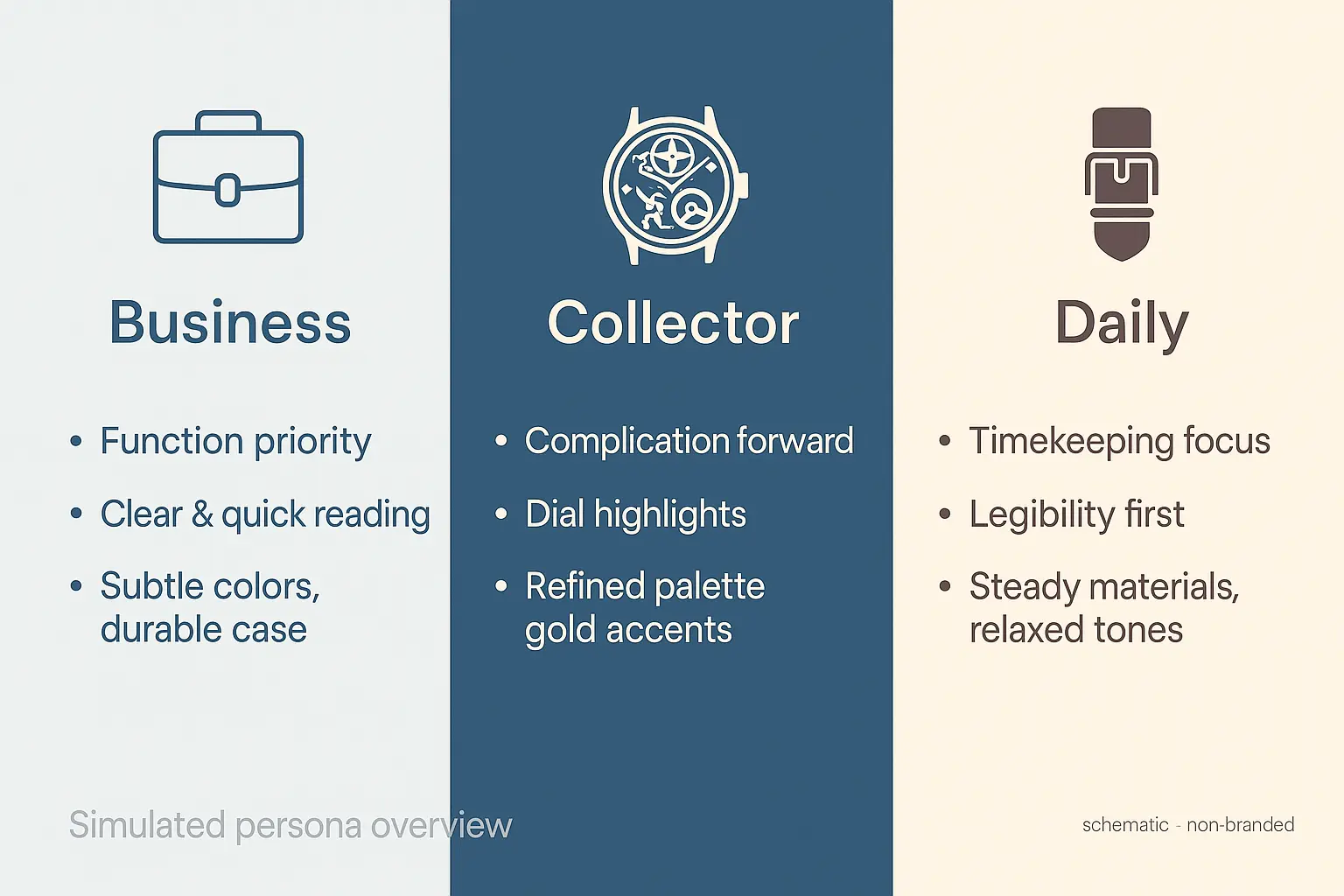
Audience matching: who thrives with which setup

Business & formal

  • Symmetric layouts, matte or fine sunray dials, high-contrast hours/minutes, subdued registers.

Collector-first

  • Perpetual + chronograph (or chiming), display back, layered dial metals—accept height for theatre.

Refined daily style

  • Warm metals or calm blue/green tones, outward-tapered lugs, medium thickness; two-strap strategy (dark calf for suits, small-grain lizard for texture).
Triptych audience-matching guide showing business, collector, and daily personas with icons and three key tips each—educational schematic.
Three-persona overview — left: Business/Formal (symmetry, matte dials, high-contrast hands);
center: Collector (high-complication, display back, sculpted metal hands);
right: Daily refined (warm metals, medium thickness, two-strap strategy).
Simulated persona overview (2025).

Model spotlights (design & wearing notes only)

Editorial scope: Evaluation is for educational design comparison only; no commercial intent, pricing or sourcing guidance is provided.

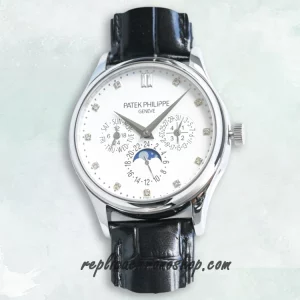
Grand Complications 5270P-001 — perpetual calendar + moonphase + 24-hour/day-date

  • Why it intrigues: Multi-layer calendar sub-dials and polished lugs with a display back create a stage for calendar logic. Diamond hour markers punctuate a dark dial to stabilize readout.
  • Wear translation: At ~39 mm with polished case flanks, sleeve glide is helped by a controlled dome and fold-over clasp; the contrast-heavy hand/marker set offsets register density.
  • Explore design details: Replica Patek Philippe Grand Complications 5270P-001 [5]
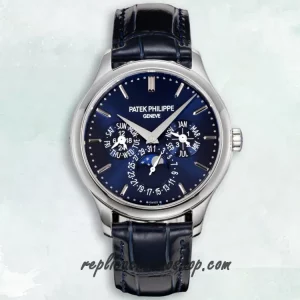
Grand Complications 5140P-001 — compact perpetual calendar

  • Why it intrigues: Deep blue sunburst dial with applied Breguet numerals telegraphs ceremonial elegance; compact case prioritizes cuff manners.
  • Wear translation: The perpetual display is dense yet contained. A deployant clasp and subtle dome keep formality intact for long meetings.
  • Explore design details: Replica Patek Philippe Grand Complications 5140P-001 [6]

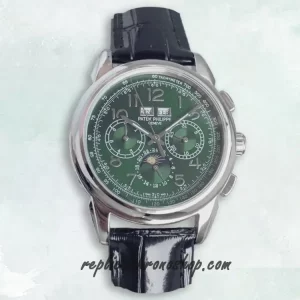
For those preferring a more contemporary palette or chronograph-forward layout, the broader Grand Complications lane includes green-dial chrono variations that redistribute readout anchors for quicker minute capture while keeping the calendar theatre intact.

FAQ: structure, not sales

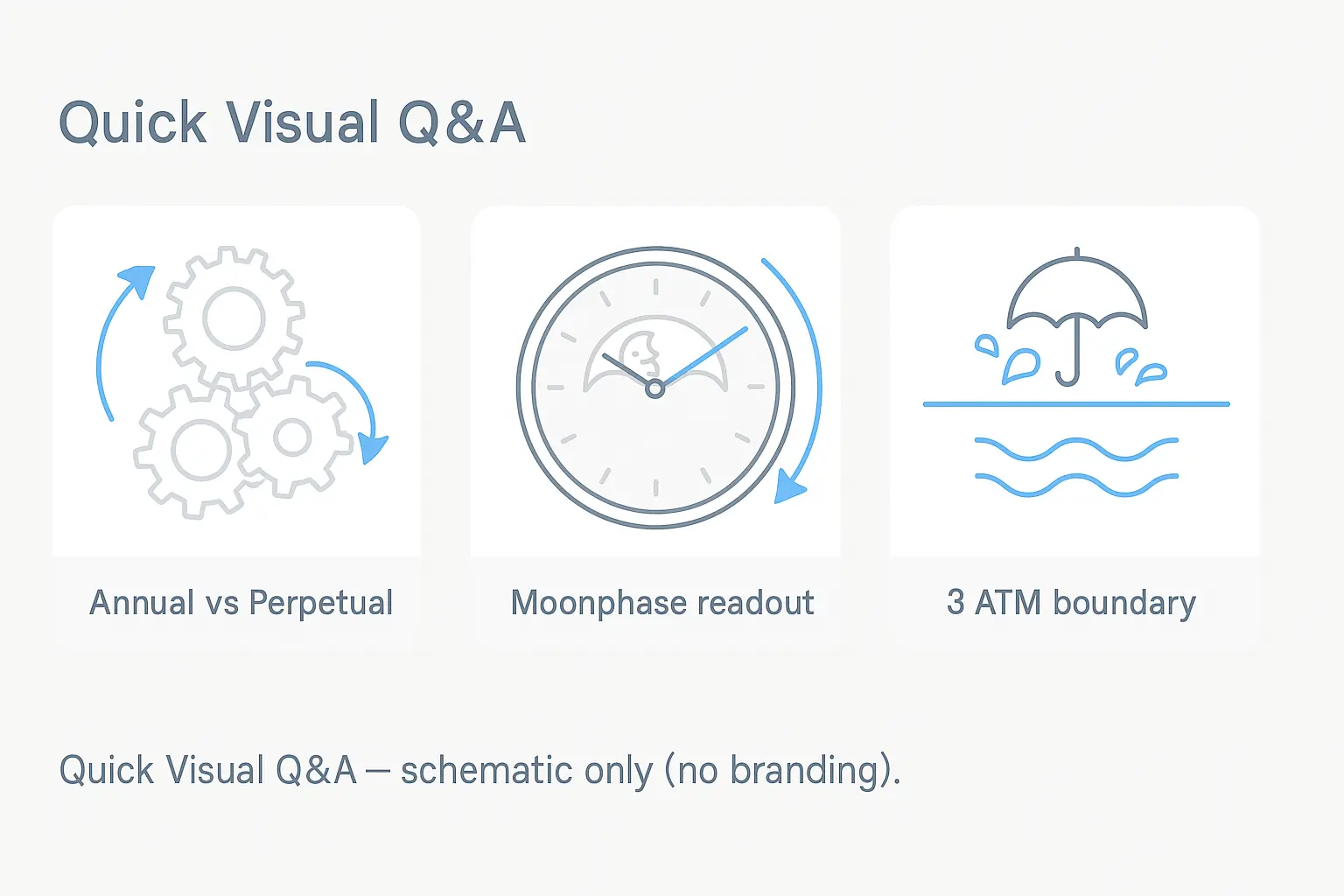
Q1. Annual vs. perpetual calendar—what changes structurally?

Perpetual uses additional cams/levers to handle leap years and month lengths autonomously—a marvel to study. Annual simplifies maintenance and can run thinner with more direct readout.

Q2. How do I read the moonphase fast?

Lock on full/new moon positions as anchors, then read waxing/waning direction. A high-contrast disc makes this near-instinctive.

Q3. Is 30 m / 3 ATM fine for daily life?

It meets the basic 3 ATM specification under ISO 22810—adequate for handwashing and incidental splashes only. Avoid heat/steam, prolonged immersion, and operate crowns/pushers only when dry; periodic seal checks are advisable for any dress-weighted piece.

Q4. Does a higher dome always mean more glare?

A taller dome extends hot spots, but inner/outer chamfers and coatings can scatter glare. Tilt slightly to find the “low-glare angle” and you’ll read instantly.

Q5. Will extra hand layers hurt legibility?

If the minute hand sweeps across sub-dial axes with no cutouts/contrast cues, expect masking. Skeletonizing or darkening secondary hands restores order.

FAQ visual cards: (1) Annual vs Perpetual calendar gear logic outline, (2) Moonphase readout path arrows, (3) 3 ATM usage boundary icons — schematic only.
Quick Visual Q&A — three-card overview:
① Annual vs Perpetual calendar structural outline,
② moonphase readout path,
③ 3 ATM boundary for daily use.
schematic only (no branding).

Reference note: Water-resistance expectations and maintenance guidelines are aligned with ISO 22810 interpretations used across dress-watch categories.

Closing notes: why it’s worth wearing—and collecting

A Grand Complications dial is architecture for the wrist. Decide function hierarchy first, then tune form (diameter/thickness/dome) and readout (contrast, symmetry, layer separation). Treat Cpmm as a teaching lens, not a trophy number: real comfort is decided by cuff clearance, glare control, and readout path, while collector joy comes from bridges, bevels, and calendar choreography. Follow that order and any Patek Philippe Grand Complications replica you shortlist will feel coherent in daily life and compelling in slow moments.

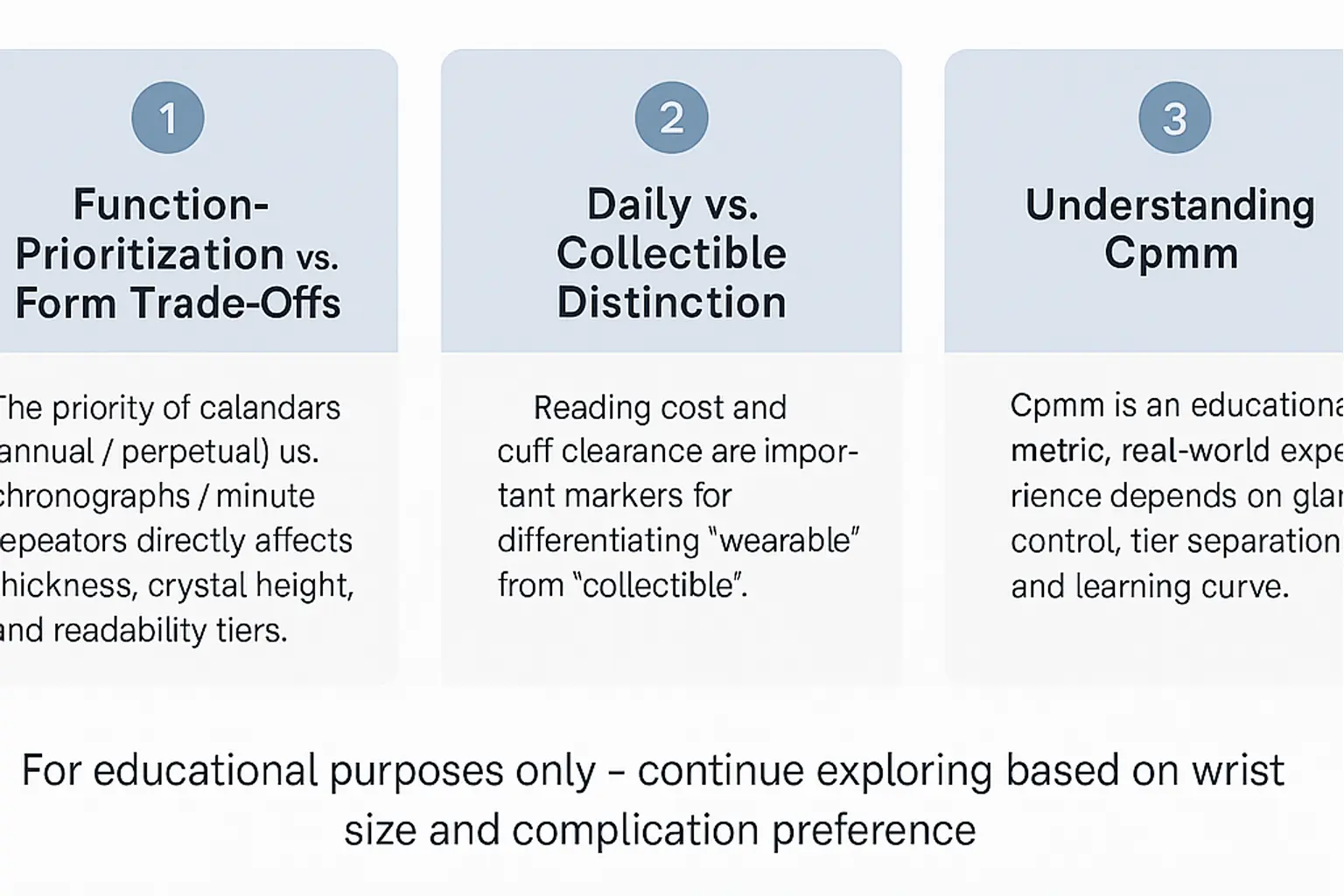
Summary cards and CTA area summarizing function hierarchy, wearability divide, and Cpmm understanding — educational schematic only.
Key takeaways — (1) Function hierarchy defines case form, (2) Readability cost and cuff clearance define use vs collection, (3) Cpmm is a teaching metric balancing density and comfort.
Includes an educational CTA zone labeled “Filter by wrist size and function preference”.
schematic educational use only (2025).

Method note: Observations are derived from non-laboratory visual evaluation and enthusiast-level handling protocols; they should be read as comparative guidance rather than factory measurement.

Last updated: 8 November 2025.

Showing 1–12 of 17 results

Shopping Cart