

Watch Buying Myths Explained: Separating Fact From Fiction
The watch world is full of confident advice—some helpful, some outdated, and some simply wrong. This guide breaks down the most common buying myths and replaces them with practical ways to judge quality, fit, and long-term satisfaction (without turning your research into a full-time job).

Myth 1: “Price always equals quality.”
Price can reflect craftsmanship, materials, finishing time, and brand positioning—but it can also reflect scarcity, marketing, distribution layers, and demand cycles. The mistake isn’t paying more; it’s assuming the number on the tag automatically guarantees the experience you want.
A more reliable approach is to separate build quality from market value:
- Build quality: case finishing consistency, bezel action, crown feel, dial printing, hand alignment, bracelet tolerances.
- Market value: availability, brand perception, resale demand, and how “hot” a model is this year.
When you evaluate a watch, start with what you can verify: proportions, finishing cues, comfort, and how it wears. Then decide whether the price makes sense for your priorities.
Myth 2: “Bigger watches look better (and feel more premium).”
Bigger can look bold in photos, but the day-to-day experience is governed by geometry: lug-to-lug length, thickness, weight distribution, and how the bracelet/strap drapes. A watch that is “too big” often feels top-heavy, slides around, and catches on cuffs—small annoyances that add up.
If you’re unsure, use this quick test: imagine typing, driving, and wearing a jacket for a full day. Comfort is a feature, not a compromise.
Myth 3: “Only mechanical watches are ‘real’ watches.”
This myth survives because it sounds romantic. Mechanical movements can be beautiful, but “real” is not a movement type. It’s a use-case match. Quartz can be remarkably practical; automatic can be satisfying and traditional; hand-wound can be engaging. Instead of ranking them socially, evaluate them functionally.
If you want a clear framework, start with a simple overview of movement types and decide based on how often you wear the watch, how much you care about set-and-forget convenience, and your tolerance for maintenance. :contentReference[oaicite:1]{index=1}

Myth 4: “Water resistance means you can swim anytime, no worries.”
Water resistance ratings are not a lifetime promise; they’re a test result under controlled conditions. Real life adds variables: aging gaskets, crown handling, temperature swings, impacts, and imperfect seals. Even if a watch is “rated” for water, sensible habits protect it: ensure the crown is secured, avoid hot showers/saunas, and treat water exposure as something you plan for—not something you assume.
A buyer-friendly mindset is: use ratings as guidance, not permission slips.
Myth 5: “Swiss is always better than Japanese.”
“Swiss vs Japanese” is often discussed like a winner-takes-all contest, but it’s more nuanced. Different movements prioritize different strengths: layout goals, servicing familiarity, robustness, and cost-to-value. The better choice depends on the model and how you plan to use it.
If you want a practical comparison that stays grounded in buying decisions, read Swiss vs Japanese movements and treat it like a decision tree: daily stability vs model-specific layout goals, servicing convenience, and budget balance. :contentReference[oaicite:2]{index=2}
Myth 6: “The ‘best’ watch is the one everyone recommends.”
Crowd favorites are popular for a reason—often because they’re versatile, iconic, and easy to wear. But recommendation culture can hide a key truth: people recommend what they like, not what fits your wrist, your wardrobe, or your daily routine.
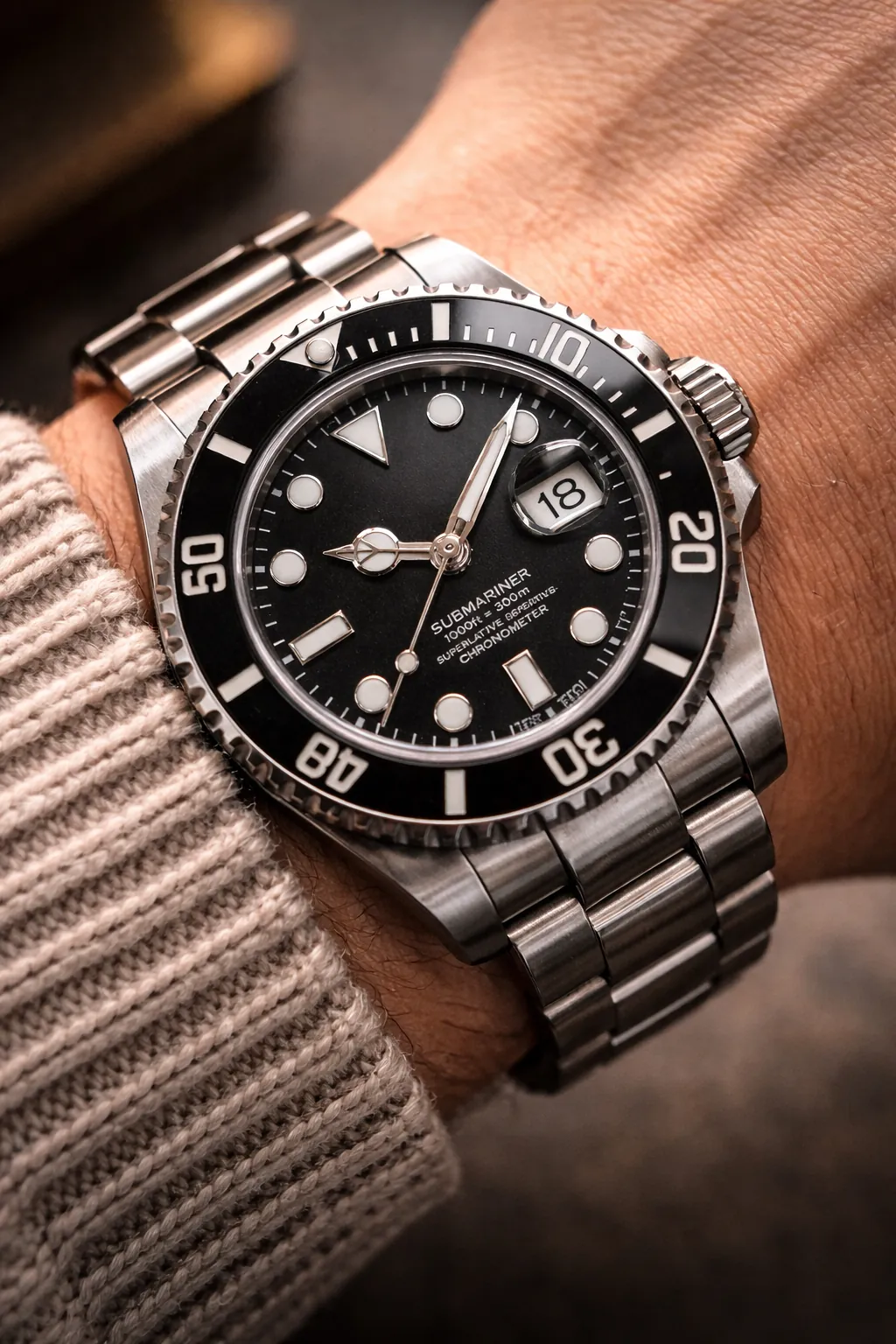
Try this instead: decide your wearing scenario first. Are you looking for an everyday sports watch? Something for travel? A dress-leaning piece? A tough daily tool? Once you know the scenario, browsing a model family becomes more meaningful. For example, when researching a robust everyday diver profile, exploring the Rolex Submariner line can help you compare common dimensions, bezel behavior expectations, and styling variations across references. :contentReference[oaicite:3]{index=3}
A simple, myth-proof way to judge a watch before you commit
You don’t need a microscope—or endless forum tabs. You need a repeatable checklist that keeps you honest:
- Fit & comfort: thickness, lug-to-lug, bracelet/strap drape, clasp comfort.
- Visual coherence: dial spacing, marker alignment, date window position (if present), hand stack neatness.
- Interaction quality: crown winding feel, bezel clicks, pushers (if chronograph), clasp action.
- Ownership reality: how often you’ll wear it, how you’ll store it, and your maintenance tolerance.
- Expectation clarity: what would make you disappointed after two weeks—and can you verify that risk now?
Final thoughts: facts beat folklore
If you remember one thing, make it this: the strongest buying decisions are based on fit, verification, and realistic expectations. Once you filter out myths—price worship, size ego, movement snobbery, and simplistic origin labels—you’ll find it easier to pick a watch you genuinely enjoy wearing.