

Replica Watch Case Materials Explained
A practical, neutral guide to common case materials and how their real-world properties affect appearance, wearability, and long-term durability.
Materials are best compared by properties (scratch behavior, corrosion resistance, weight, finishing). Choose what matches your daily wear habits rather than chasing labels.
Case material is one of the most talked-about specs in replica watches, but also one of the easiest to misunderstand. Names like 316L steel, 904L steel, ceramic, titanium, and carbon composites can sound definitive—yet the day-to-day experience is shaped by how these materials behave: how they reflect light, how they scratch, and how they age.
Why case material matters
The watch case affects comfort, perceived solidity, and how “clean” the watch remains after months of wear. For most people, three dimensions matter most:
- Visual realism: surface reflection, brushing/polish clarity, and edge transitions.
- Wearability: weight, temperature on skin, and how the case balances on the wrist.
- Durability: scratch behavior, corrosion resistance, and impact risk.
316L vs 904L stainless steel
316L is the industry baseline for many watches because it’s corrosion-resistant, stable in color, and generally easy to refinish. 904L is denser and can show a slightly brighter polish when finishing quality is high, though differences are often subtle in normal lighting.
If you want deeper context on steel grades and what actually shows up visually, see: stainless steel comparison .

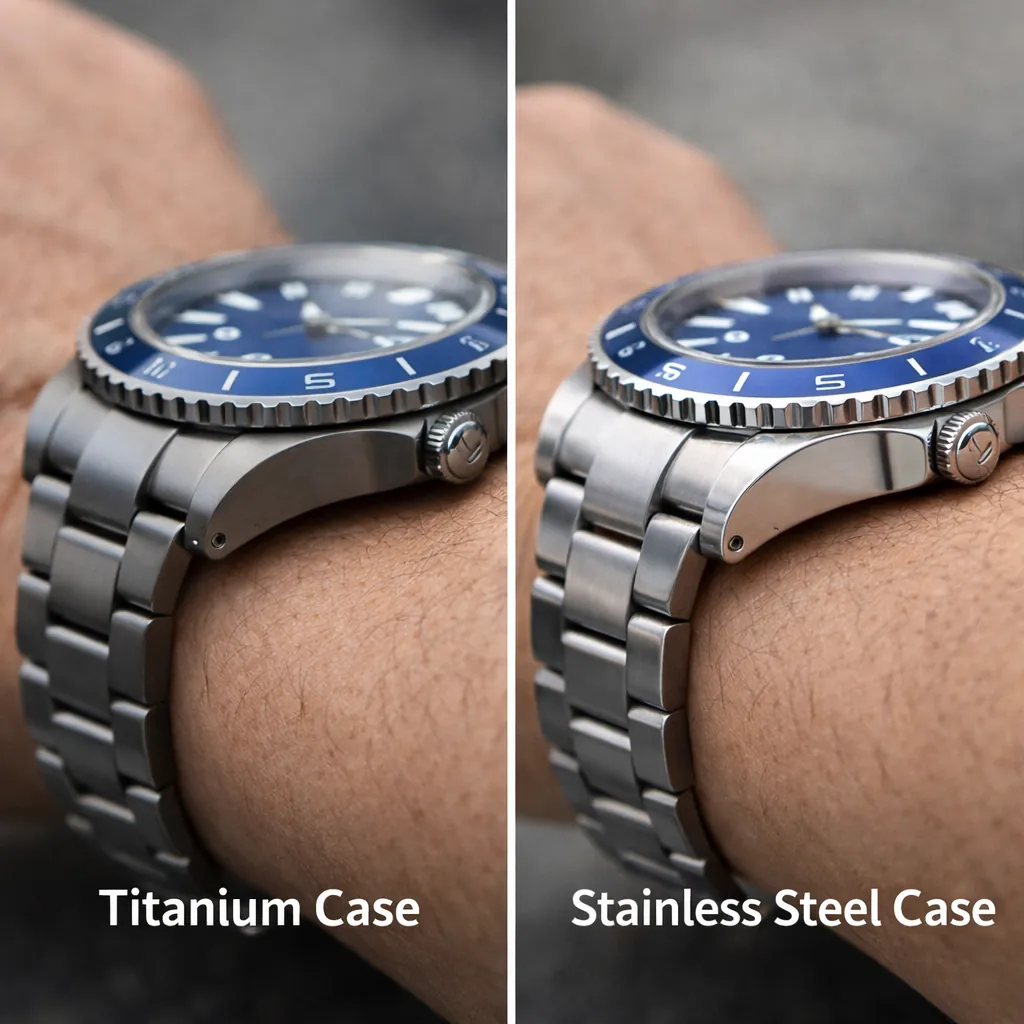
Titanium
Titanium cases feel noticeably lighter on the wrist and often present a more muted, tool-like surface. Some users prefer the comfort of reduced weight (especially on larger watches), while others prefer the heft of steel.
Ceramic
Ceramic is highly scratch-resistant and tends to keep a “new” appearance longer than metal. The trade-off is that it’s less forgiving under sharp impacts—chips or cracks are possible if the watch takes a hard knock.
Carbon & composites
Carbon-based cases are prized for weight reduction and distinctive texture. Patterns can vary slightly between pieces, which is part of the appeal for some users. For a focused breakdown of how these cases behave: titanium & carbon fiber cases .

Wearability: why “weight” is not the whole story
Material choice interacts with case size, bracelet/strap construction, and how weight is distributed across the wrist. If two watches have similar total weight, the one with better balance can still feel more comfortable. A deeper explanation here: weight distribution & wrist balance .
A practical way to choose
Instead of searching for a single “best” material, match material properties to your use:
- Daily wear, easy upkeep: 316L steel (balanced, refinish-friendly).
- Prefer lighter feel: titanium (comfort-first, muted surface).
- Hate surface scratches: ceramic (scratch-resistant, mind impact risk).
- Want ultra-light + distinctive texture: carbon/composites (visual character, low weight).
Note: Material labels are only one part of the experience. Finishing quality, edge transitions, and overall case geometry often have a larger impact on what you see and feel.