

Weight Distribution & Balance
Balance is the difference between a watch that stays centered all day and one that keeps rotating. This guide explains how weight distribution works, what it feels like in real wear, and how bracelet and clasp stability influence comfort.
A well-balanced replica watch should sit flat, avoid pressure points, and remain stable during daily movement. The goal is clarity and realistic expectations—not exaggerated claims.
What Balanced Wear Feels Like
Balanced wear is easy to recognize: the watch sits level and stays centered. Poor balance usually shows up as tilting, sliding, or crown pressure.
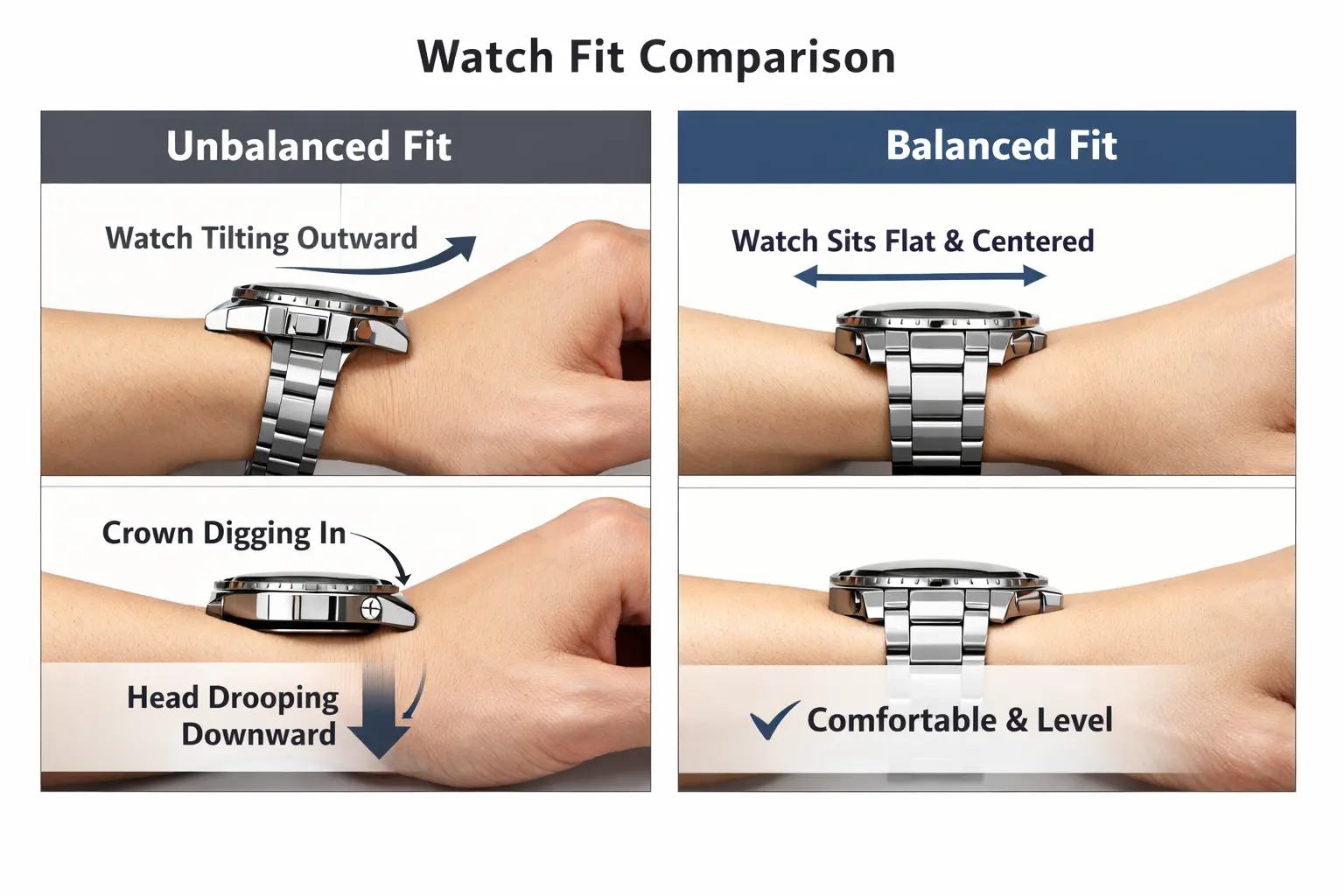
- The watch head pulls outward and “falls” to one side.
- The crown presses into the wrist during typing or bending.
- The watch rotates repeatedly during walking or arm movement.
How Weight Distribution Works
Most of a watch’s mass is concentrated in the case and movement. The bracelet or strap acts as support and counterbalance. When the center of gravity sits too high, the watch feels top-heavy.
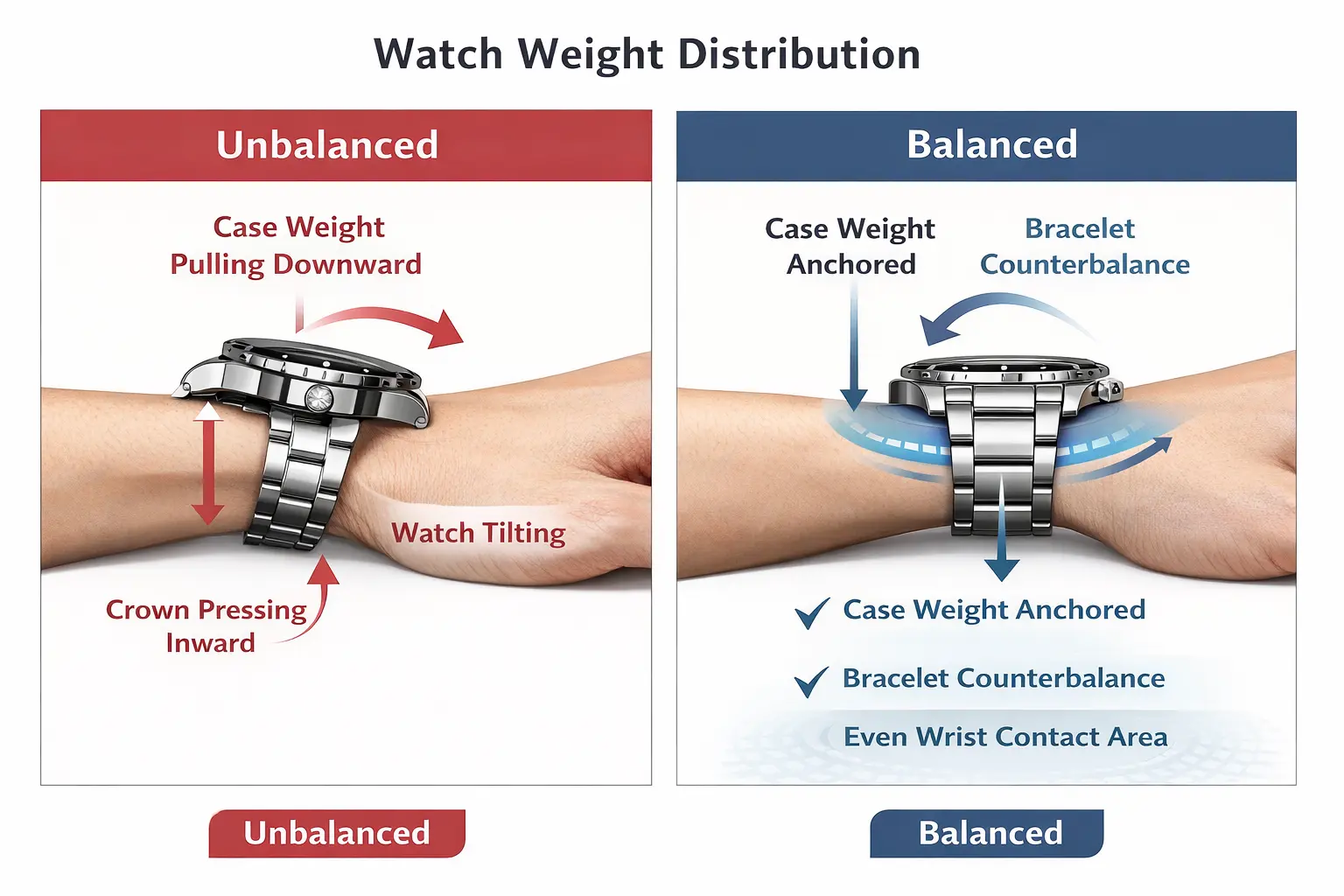
- Even contact across the wrist surface, not one pressure point.
- Bracelet articulation that follows the wrist curve smoothly.
- Fit symmetry so the clasp sits near the wrist centerline.
Bracelet & Clasp Stability
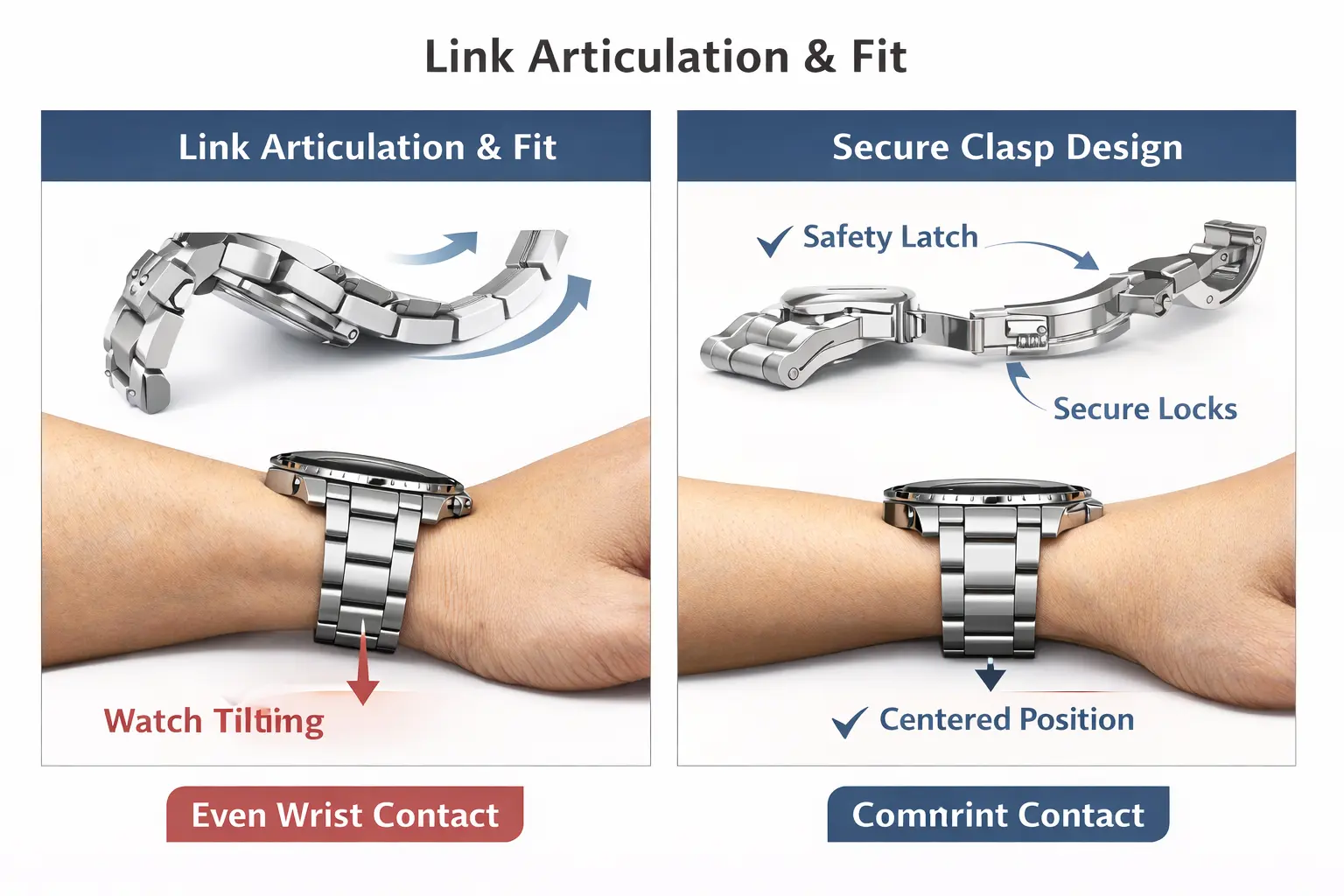
Balance is not only about case weight. Bracelet link behavior and clasp security determine whether weight stays evenly distributed during motion.
Key Takeaways
Weight distribution affects comfort and stability. A balanced watch stays centered, avoids pressure points, and feels predictable during daily movement.