

Clasp Design & Wear Security
In replica watches, the clasp is a safety system. It controls whether the watch stays secure in daily motion. This page explains common clasp types, stability factors, and practical checks—without hype.
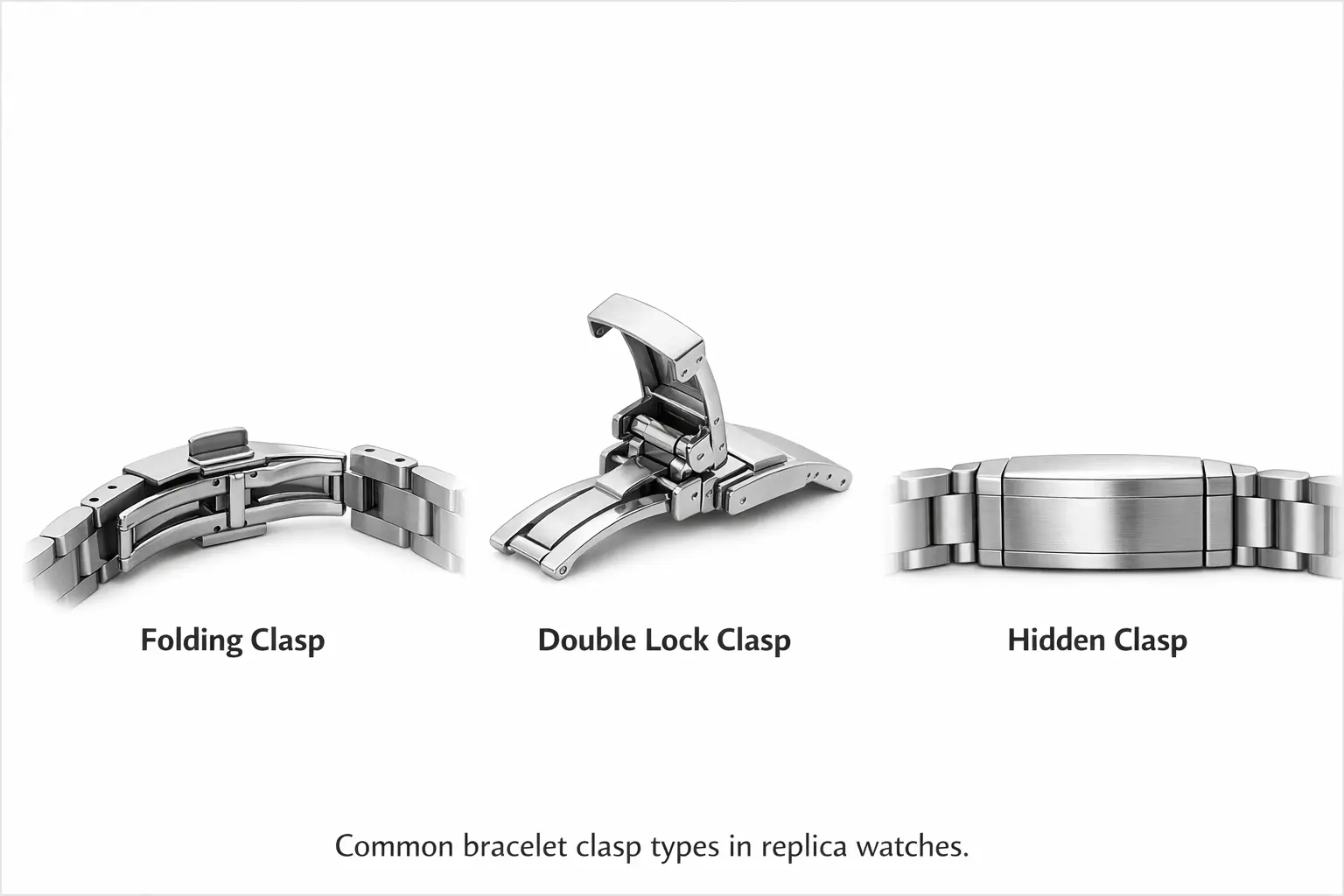
Common Clasp Types in Replica Watch Bracelets
Different clasp designs use different locking logic. Knowing the type helps you predict security behavior.
Folding Clasp
Simple deployant design. Stability relies heavily on spring tension and contact fit.
Double Lock Clasp
Includes a secondary safety layer. Lower accidental opening risk in heavier watches.
Hidden Clasp
Clean look, smaller locking surface. More dependent on precise fit and consistent tolerances.
Key Structural Factors Affecting Clasp Stability
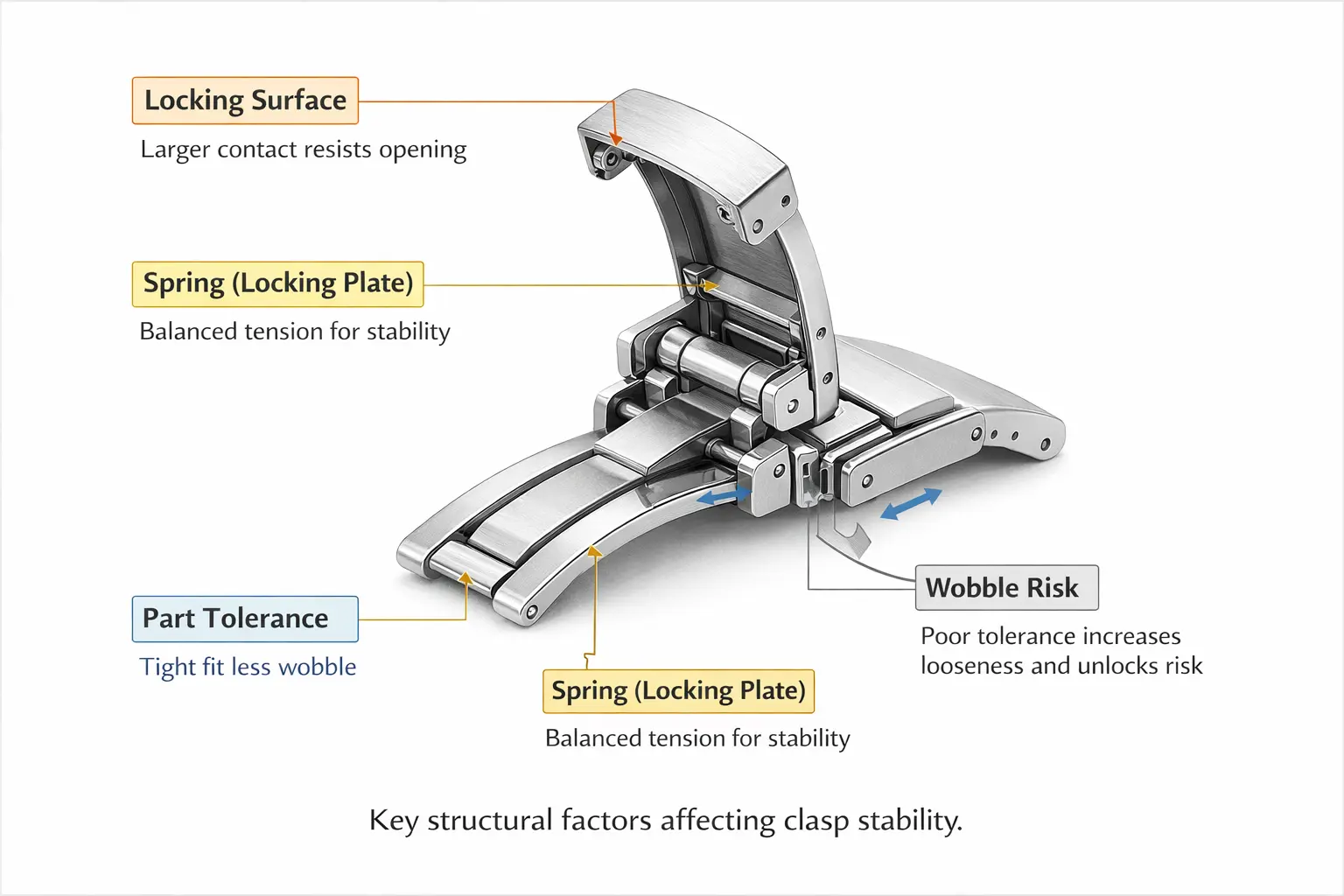
Two clasps can look similar but behave differently. The difference often comes from internal structure, spring balance, and part tolerances.
Locking Surface Contact
Larger contact areas resist opening. Poor contact can cause micro-slippage during repeated motion.
Spring Tension Balance
Too weak increases accidental opening. Too strong accelerates wear and deformation. Balance matters.
Part Tolerance & Fit
Excessive gaps create wobble, which increases unlocking risk over time. Tight fit improves consistency.
In QC, clasp stability is checked as a functional safety point, not as a cosmetic detail.
Quality Control Focus for Wear Security
Wear security is evaluated through repeatable checks. The goal is to reduce accidental opening and loose connections before shipping.
- Opening/closing resistance and consistent lock feedback
- Lock alignment and connection firmness at bracelet joints
- Edge smoothness to reduce skin irritation and snagging
Related reading: Case Size & Wearing Comfort
Quick Self-Check at Home
These checks require no tools. They help you spot early signs of looseness.
- Close feedback: you should feel a clear lock “click” or stop point.
- Light pull test: it should not pop open with gentle pulling.
- Wobble check: minimal side-to-side looseness around hinge/lock points.
If a clasp fails these checks, reduce wear frequency and seek adjustment or part support.